One of my biggest issues with Tumblr and how the popular consensus for analyzing media is that “Xyz isn’t a trope it’s real life/a serious problem in real life” or “ABC isn’t a story it’s someone’s trauma and a serious problem.”
But I’m just like… WHERE THE FUCK DO YOU THINK TROPES AND STORIES COME FROM!? OUT OF THE SKYS ASS!?
We’re going to need a little more information than that…
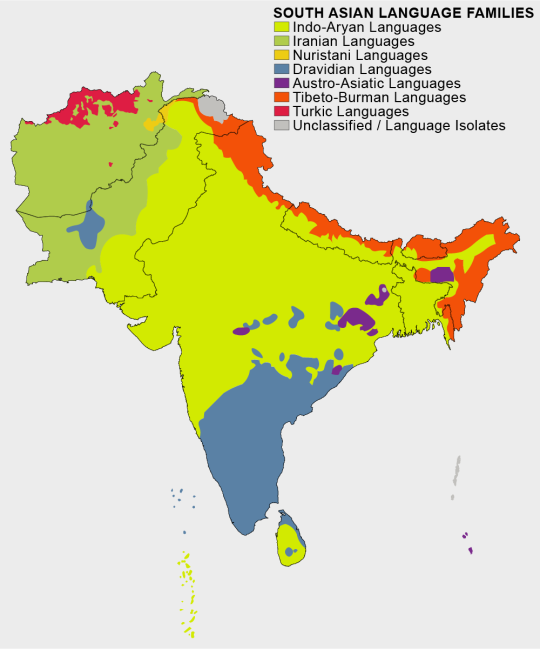
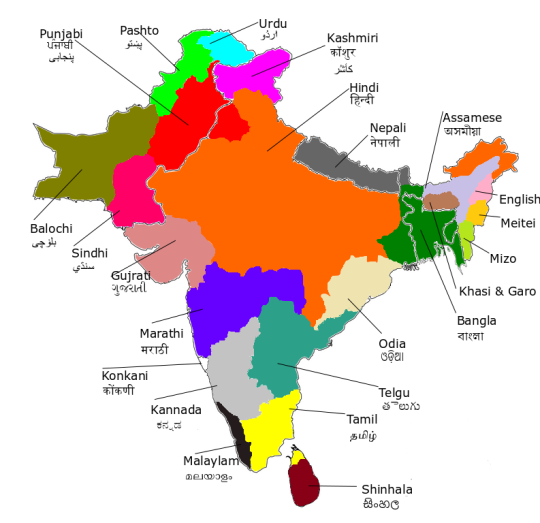
Please see the following maps of South Asia:
Image description: Two maps of South Asia. The top map depicts the South Asian region, including Afghanistan with color-coding of different regions by 8 color-coded language groups. The bottom depicts the official state/ province/ languages and scripts for countries in the South Asian region, excluding Afghanistan. See end of post for detailed image description under the cut.
Names in South Asian cultures are primarily dictated by religion and language. While there’s some overlap between cultures, we can make an educated guess of someone’s ethnicity & religion based on their name. For example:
Simran Dhillon … is a Punjabi Sikh.
Priyanka Ghosh … is a Bengali Hindu
Maya Srinivasan … is a Tamilian Hindu.
Harsh Patel … is a Gujarati Hindu.
Amin Usmani … is a Muslim from a traditionally Urdu speaking community.
Teresa Fernandes … is a Goan Christian.
Behind the Name is a good place to start looking as they state the specific language the name is from. As for religion, there are more factors to consider.
Sikhs
Sikh first names are gender neutral. The 10th Sikh guru designated Singh (meaning lion, for men) and Kaur (meaning heir to the throne, for women) as Sikh surnames. These surnames were designed to be equalizers within Sikh communities. However, many Sikhs keep their Punjabi surnames (many of these surnames are now primarily associated with Sikhs) and use Singh and Kaur as a middle name (eg. Ranjit Kaur Shergill, Amrit Singh Cheema). More devout Sikhs use only Singh and Kaur or use the same format legally but do not share their surnames.
Sikh first names are derived from gurbani (Sikh holy texts), so they are often uniform across cultures. Most Sikhs who aren’t Punjabi use Singh & Kaur or cultural surnames in the same format. The latter is usually seen among Afghan & Delhiite Sikh communities. While most changed their surnames to Singh & Kaur, some families still kept the surnames they had before they converted from Islam and Hinduism (eg. Harpreet Singh Laghmani, Jasleen Kaur Kapoor).
If you’re stuck on a surname for a Sikh character, Singh for men and Kaur for women is the safest way to go regardless of ethnicity.
South Asian Christians naming conventions depend largely on who brought Christianity to the region and when. For example, Christianity was largely brought to Goa by Portuguese Catholics so you’ll see Portuguese surnames, while many Christians in the Seven Sister States didn’t change their names. South Asian Christians will also often have Christian first names, either in Portuguese or in English.
Hindus, Jains, castes and gotras
Hinduism is the majority religion in India and the South Asian region overall. A key thing that many newcomers overlook when writing about Hindus is that rather like feudal Europe, a person’s last name can also tell you what their family used to do because of the caste system. Both Hindus and Jains employ gotras (or lineage systems) designed to keep people from the same patrilineal line from marrying each other. Thus, if your Hindu character is a Vaishya (tradesman/ merchant class), but you have chosen a last name for them related to farming, or if your Kshatriya (warrior) character has a last name that means bureaucrat, you’ve made a mistake. Most Hindus and Jains will have last names derived from Sanskrit, or a language with Sanskrit roots.
A note on middle names: in South India, Hindus will often use the father’s first name for the child’s middle name.
For what it is worth, South Asia is hardly the only region to have these particular features. Japanese society until the end of the Edo era was heavily segregated by caste, and to this day, many families with samurai last names occupy relative positions of privilege compared to other castes, even though the Japanese caste system ended with the Meiji Restoration.
A note of caution: Baby name websites tend to be inaccurate for Hindu names, often confusing Farsi and Arabic-derived Urdu names with the more traditional Sanskrit-derived names. Behind the Name is by far the most accurate website, but it doesn’t hurt to check multiple sources. For Hindu and Jain surnames associated with different castes, regions and gotras, Wikipedia is surprisingly thorough.
Muslims
Islam is the majority religion in Pakistan and Bangladesh as well as the second largest religion in India, but the differing ethnicities and arrival periods of Muslims in South Asia over the course of history can have a significant impact on a character’s name. For example, think of when your character’s family will have arrived in South Asia or converted to Islam:
During the Delhi Sultanate, when Hindustani would have been spoken?
Under the Mughals when Persian was more common?
Are they from Bangladesh and thus speak Bengali?
Do they have ancestors from Afghanistan or Swat Valley, and thus have Pashto last names?
Does the family speak Urdu?
All of these will impact what their name might reasonably be. As a general rule, Muslims will have last names that are in Farsi/ Persian, Urdu, Arabic and Bengali. Bangladeshi Muslims may have Hindu names (both first and last) as well.
Buddhists
When discussing Buddhists in South Asia, we are primarily talking about Nepal and Sri Lanka. The majority languages in these countries are Nepali and Sinhala, respectively. Both languages are part of the Indo-Aryan language family, and like many Indo-Aryan languages, show heavy Sanskrit influence.
Others
Don’t forget that India also has a large number of lesser known minority religions, including Judaism, Zoroastrianism, Tibetan Buddhism and a host of indigenous religions.
Judaism: There are a number of historical Jewish enclaves in India, as the result of specific waves of migration. Like South Asian Muslim names, Jewish last names will vary depending on the ethnicity and arrival period for each particular wave of Jewish diaspora.
Zoroastrianism: People who practice Zoroastrianism are likely to have Farsi last names.
Tibetan Buddhism: Tibetan Buddhists will obviously have Tibetan names and are often a part of the Tibetan diaspora who entered India as refugees during the Chinese government’s invasion of Tibet.
In Conclusion
An in-depth coverage of name etymology in South Asia would probably be the size of an encyclopaedia. The above is hardly exhaustive; we haven’t scratched the surface of the ethnic and linguistic variations in any of the South Asian countries displayed on the maps above. We hope, however, that it motivates you to research carefully and appreciate the cultural diversity South Asia has to offer. Just like in any setting where issues of lineage are plainly displayed by a person’s name, names in South Asia tell stories about where a person is from, what language they speak, and what their ancestors might have done, even if this has little bearing on the character themselves. It may seem a little elaborate to try and imagine the ancestors of your character before you even decide who your character is, but the reality is that most South Asians know these things instinctively, and whether or not you do your due diligence will be part of how we judge your work.
Name a thing to fight over, and South Asians have probably fought over it at one point or another, whether it be religion, ethnicity, language, or caste. However, one thing many South Asians have in common is pride in our individual origins. Respecting this love of identity will be invaluable as you plan your story.
At the end of the day, there is no substitute for actually talking to people who share your character’s background. We will always recommend having someone from the community you’re writing about check your naming.
my favorite trope is the thing star trek does where when a character lists something and they’ll list real things/people but add 1 thats fictional, like “great writers such as shakespeare, robert frost, edgar allan poe and zaxar the giant rat man“
This is for the slow writers out there. Those who take weeks to write one chapter. Those who take years to finish one manuscript. Those who regularly write only 100-300 words in several hours. Those who take months to put out a new chapter. Those who haven’t touched their stories in years but it’s still a WIP because they can’t stop thinking about/taking notes for scenes/etc.
Ooh, this is actually kinda a neat thing, because you can think of it as a checklist:
Who: Main character(s)
Why: Character goal or desire (stated)
Why: Character need (implied)
When: Inciting Incident
What: Means (that achieves the goal/need)
Where: Place A >> Place B
How: The Plan
Obstacle(s): antagonist or challenge
For example:
Who: Bilbo Baggins, a respectable hobbit of Hobbiton
Why: Treasure, wealth (stated)
Why: Adventure, self-respect (implied)
When: After supper
What: Quest
Where: Hobbiton >> The Lonely Mountain
How: A company of dwarves, a wizard, and an ancient map and key
Main antagonist(s): a dragon
Thus, in less than 100 words:
Bilbo Baggins is a respectable hobbit in Hobbiton, never making any trouble or having any adventures. But when a wizard and a company of dwarves invite themselves to dinner, Bilbo finds himself joining their quest from the shires of Hobbiton to the legendary Lonely Mountain, the home of a long lost treasure, and quite, possibly, a dragon.
~~~~
The Anatomy of Story by John Truby is a really good book by the by, if anyone’s interested in this sort of thing.
if it doesn’t have a happy ending then what’s the point. i’m already depressed i don’t need ur help
would like to clarify that a happy ending doesn’t mean that no one dies and no one goes through hardships. a happy ending means the characters who survive the story don’t go through everything for nothing. they made it and there’s some good waiting for them at the end. there’s still hope
Hope is essential for humans to thrive. And I think in today’s world, many of us have forgotten it. We’ve forgotten where real beauty comes from. We’ve conflated pleasure with happiness. We’ve embraced despair. And our media reflects all of these things. It’s long past time for us to turn that around.
[Orders enough food for several people] and whatever you guys want
‘Sorry I’m late’ ‘You’re right on time’
Two characters having a conversation while on opposite sides of a wall/door
The hero is snooping some place they shouldn’t be and is about to get caught. The baddies enter and the room is completely empty. Bonus points if they then show the hero clinging to the ceiling
Someone turning up in the nick of time to save the heroes in a car/plane/spacecraft/etc and asking ‘need a ride?’
Someone tells a (true) story and it is later revealed they were one of the people in the story
‘Get down!’ *tackles them to the floor*
‘Hi [name]’ *immediately begins escorting them out of the door/hangs up on them* ‘bye [name]’
Character walks past a doorway and sees something strange, carries on walking for a few steps, then realises what they just saw and backs up for another look
Someone charges at another character who dodges it by calmly stepping to the side. Bonus points if the charging character carries on through a doorway
A has been delivering a monologue for quite some time and when they are finished B slowly blinks and says some variation of ‘I don’t understand a word you just said’
New character meets the Team for the first time, who are being their usual absurd/intimidating selves, and asks ‘who the hell are you people?’
Everyone has to leave the restaurant/bar/coffee shop and one character frantically tries to finish their food/drink before they go
’[Name], I presume?’
Random character discovers some important new evidence and has to race to find the other characters to tell/warn them in time
Dramatically putting up or taking off their hood
[Badass declaration]. Any questions?
That one character who is always coming up with new slang words and hoping they will catch on
‘My friends call me [nickname/shortened name]. You can call me [full name/title]’. Alternatively, ‘you may not call me anything’
A and B are together when A’s phone rings and they answer it. After a beat they hold it out for B and say ‘it’s for you’. Bonus points if the caller had no way of knowing A and B would be together. Alternatively, bonus points if B didn’t answer their own phone because they don’t want to speak to the caller, prompting them to phone A instead
B comes to A’s house and knocks on the door. When A answers it, they barge straight in and start talking, leaving A still standing at the door and prompting them to say ‘please. Come in’
Someone tries to shoot the character but misses and hits their hat or something instead, so the character gets angry and is like ‘that was my favourite hat!’
Character wants to know the time so they grab their friend’s wrist to check the watch they are wearing
Character begins speaking about a traumatic event that happened in the past and cuts themselves off to rephrase so they won’t have to say the specifics of the event eg. ‘after he – …after what he did’
After a tragic event, the token evil teammate/morally ambiguous ally starts helping the gang and becomes one of the good guys full time
It is increasingly obvious that most people have no idea how to indicate an illness is slowly killing someone without making them cough up blood. Doesn’t matter what it is or if it has anything to do with your respiratory system, if you’re dying, you’re coughing up blood.
Writers found out about tuberculosis and were like “damn this slaps” and we’ve been stuck with it ever since


 ifesbob