Hello friends! I’ve been asked how long do some insects live! This is an important factor when choosing a pet arthropod. They require as much commitment as a cat or a dog and you should not get a pet that you can’t see yourself caring for after a year.
Please note that these are average numbers. Some species have sub species that can live longer or shorter lifespans. Obviously I cannot list every single subspecies, so it’s still up to you to look up the particular bug. I am giving out average estimates so you can make a decision if you are willing to spend that much time caring for a bug.
Remember, females tend to live longer than males.
SO! Let’s start off!
Short Lifespans
These species have rather short lifespans compared to other animals, rarely lasting a season or two. With care however, they can live a few months longer.
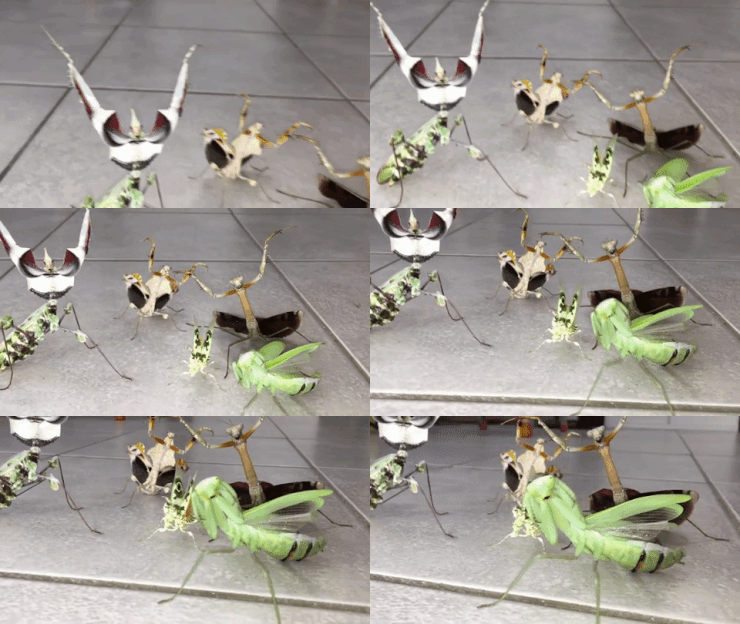
Mantids. – 9-12 months
Stick insects and Leaf insects – 1year
Jumping spiders – 10-12 months
Camel Spiders (Solifugae) – 3 months (estimated)
Eastern Hercules beetle (adults) – 3 – 4 months
Please note that with Camel Spiders, it is currently unknown just how long they actually live for. This species does badly in captivity, and it’s unknown if they require some sort of unknown mineral or conditions required to have them thrive. They are perhaps one of the most sensitive species in the pet trade.
Intermediate Lifespans
These are arthropods that live a few years, much like pet mice and rats. In the wild they may only last a season or two, but in captivity with proper care, they can live well on an extra year or so.
Whip spiders – 2 – 3 years.
Spiders – 1-3 years
Caterpillars/Moths/Butterflies – 1 year as larvae / 6 months -1 year as adults.
Hellgrammites/Dobsonfly larvae – 2-5 years as larvae / 1-2 weeks as adults
Assassin bugs – 1-2 years
Long Lifespans
These are species that live well up to a decade, which is quite old for little buggies. These are definitely insects that you must consider carefully before owning one, they require as much dedication as a rabbit.
Millipedes – 7-10 years
Blue Death Feigning Beetles – 7-8 years
Centipedes – 5-10 years
Ancient Lifespans
These species live well over a decade and beyond! Consider these like getting a dog or a cat!
Mealworms/Darkling beetles – 15 years
Female tarantulas – 20-40 years
Vinegaroon – Males – 10 years/Females – 20 years.
Arizona Desert hairy scorpion – 20 – 25 years
Helix pomatia snails – 15 – 25 years
Colony Lifespans
Colony insects thrive together and can reproduce like crazy. As long as you have the space and the food, the colonies can keep going for years and years. These are just the ages of how long an individual lives. Some of these species, like cockroaches, need buddies!
Ant Queens – 30 years / Workers – 1-3 years
Hissing cockroaches – 2-5 years
Death’s Head Cockroach – 1 year
Slugs – 1 – 3 years
Isopods/pill bugs/rolly pollies – 2-5 years
Honey Queen Bee – 2-4 years / Workers – weeks to months depending on climate.
I hope this helps you guys decide on what is the best bug for you! :3
millipedes are just great bugs to accommodate people into being comfortable with them. they only eat plant matter, have lots of legs but theyre short and slow moving so not as intimidating as centipedes, are pleasant and smooth to the touch. really high quality animals
I agree wholeheartedly. Though I think saying that millipedes are “not as intimidating” as centipedes may be the understatement of the century.
Their faces are so kind though and their feets so gentle
This face?
These feets?
Millipedes are sweet and gentle little veggie-munchers. Centipedes are fast, venomous cobra-beasts that wish to devour the living. A centipede is exponentially more intimidating than a millipede.
I mean they will leave you alone if you leave them alone and most aren’t seriously dangerous to people, but they are not to be trifled with. Also, fun fact, their “fangs” are modified legs so a bite from a centipede is technically a hug.


 ifesbob