For decades, astronomers searched the cosmos for what is thought to be the first kind of molecule to have formed after the Big Bang. Now, it has finally been found. The molecule is called helium hydride. It’s made of a combination of hydrogen and helium. Astronomers think the molecule appeared more than 13 billion years ago and was the beginning step in the evolution of the universe. Only a few kinds of atoms existed when the universe was very young. Over time, the universe transformed from a primordial soup of simple molecules to the complex place it is today — filled with a seemingly infinite number of planets, stars and galaxies. Using SOFIA, the world’s largest airborne observatory, scientists observed newly formed helium hydride in a planetary nebula 3,000 light-years away. It was the first ever detection of the molecule in the modern universe. Learn more about the discovery:
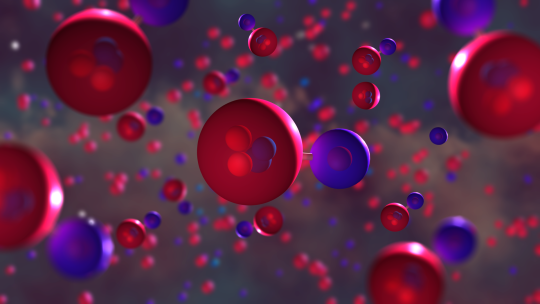
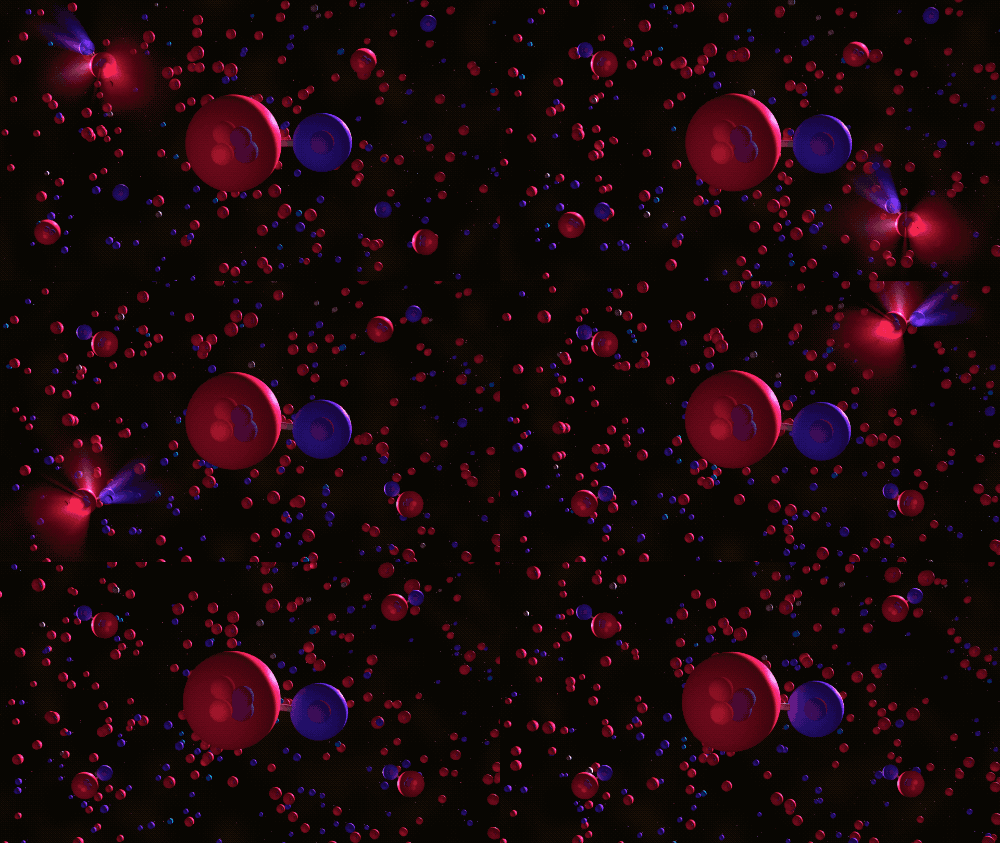
Helium hydride is created when hydrogen and helium combine.
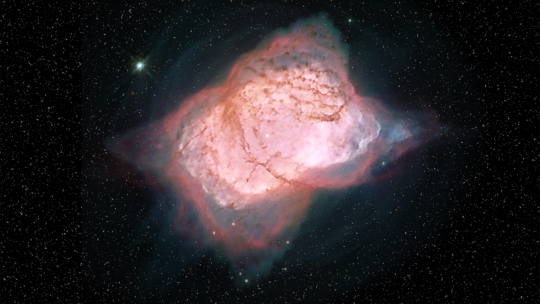
Since the 1970s, scientists thought planetary nebula NGC 7027—a giant cloud of gas and dust in the constellation Cygnus—had the right environment for helium hydride to exist.
But space telescopes could not pick out its chemical signal from a medley of molecules.
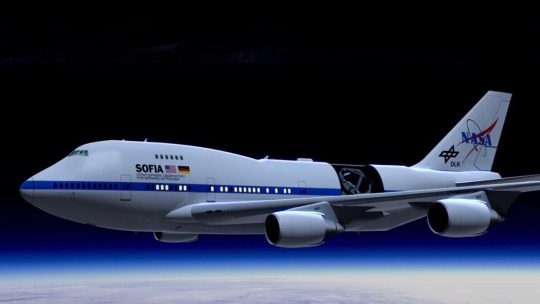
Enter SOFIA, the world’s largest flying observatory!
By pointing the aircraft’s 106-inch telescope at the planetary nebula and using a tool that works like a radio receiver to tune in to the “frequency” of helium hydride, similar to tuning a radio to a favorite station…
…the molecule’s chemical signal came through loud and clear, bringing a decades-long search to a happy end.
The discovery serves as proof that helium hydride can, in fact, exist in space. This confirms a key part of our basic understanding of the chemistry of the early universe, and how it evolved into today’s complexity. SOFIA is a modified Boeing 747SP aircraft that allows astronomers to study the solar system and beyond in ways that are not possible with ground-based telescopes. Find out more about the mission at www.nasa.gov/SOFIA
NASA’s Galileo spacecraft acquired its highest resolution images of Jupiter’s moon Io on 3 July 1999 during its closest pass to Io since orbit insertion in late 1995. Most of Io’s surface has pastel colors, punctuated by black, brown, green, orange, and red units near the active volcanic centers. A true color version of the mosaic has been created to show how Io would appear to the human eye.
The puzzling, fascinating surface of Jupiter’s icy moon Europa looms large in this newly-reprocessed color view, made from images taken by NASA’s Galileo spacecraft in the late 1990s. This is the color view of Europa from Galileo that shows the largest portion of the moon’s surface at the highest resolution.
Explanation: Do underground oceans vent through the tiger stripes on Saturn’s moon Enceladus? Long features dubbed tiger stripes are known to be spewing ice from the moon’s icy interior into space, creating a cloud of fine ice particles over the moon’s South Pole and creating Saturn’s mysterious E-ring.
These six infrared images of Saturn’s moon Titan represent some of the clearest, most seamless-looking global views of the icy moon’s surface produced so far. The views were created using 13 years of data acquired by the Visual and Infrared Mapping Spectrometer (VIMS) instrument on board NASA’s Cassini spacecraft.
Image credit: NASA/JPL-Caltech/University of Nantes/University of Arizona


 ifesbob