1. As a general rule, don’t keep plants in the soil they come with. They’re usually put in soil that will help them keep on the shelf, not grow and thrive long-term.
2. Leaf shine is a waste of money. To clean plants just use a damp paper towel; you can use milk or mayo for extra shine. Also, please don’t wipe the white powder off your succulents – they need it.
3. ALWAYS use pots with drainage holes. You can get around this by putting the plant in a plastic pot to put inside the other pot.
4. With water, less is more. It’s easier to kill most plants with too much water than not enough.
5. To repot spiky plants, fold a plastic bag longways a few times and wrap it around the part with spikes. Then hold the slack and avoid getting spines in your hands!
6. Don’t stress if you can’t collet rain water or buy distilled/spring – tap is fine.
7. Don’t grow plants in glass containers unless they’re growing in water. Don’t put succulents in terrariums.
8. Always research the care for your specific plant. You can usually find help from experienced plant parents on Instagram, Tumblr, or Reddit.
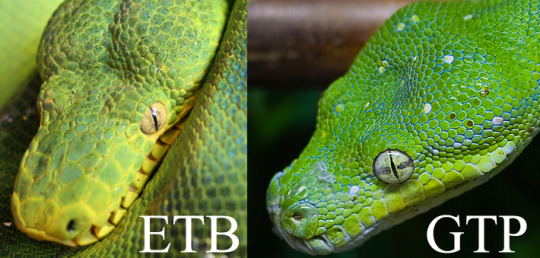
when you look up emerald tree boa, like 30% of the photos are mislabeled green tree pythons
if u look up corallus caninus, the latin name for ETB, it’s better, but still some are green tree pythons, omg how confusing for the world of google
TWO EASIEST WAYS TO TELL:
1. The heat pits: ETB have a long line of heat pits above their mouth that starts from the front of their snout and continues all the way back to the back of their mouth. GTP only have six distinct triangular-shaped heat pits above their lip in the very front, like other morelia species.
2. Scale count: ETB have some distinctive large, flat scales on their snout. GTP have a much higher scale count on their snout- small and round and all over the place.
AND THERE YOU HAVE IT, ONLY TWO EASY WAYS, NOW YOU BRAG THAT YOU CAN DISTINGUISH BETWEEN ETB AND GTP, SUCH A SNAKE EXPERT!!!
This is by no means a be-all end-all guide but I just pulled a few of the highlights from the guide I’m working on to share for the anon that asked earlier.
Everyone has their own way of cleaning dead things and I always encourage experimenting with various methods to find what works best for you. These are methods and things I’ve found personally useful.
First off, respect the law! Conservation laws are in place for a reason and it is our duty as responsible collectors and nature enthusiasts to respect them. In the US all songbirds, birds of prey, and pretty much all native bird species are protected by the Migratory Bird Treaty Act and you cannot legally possess any part of them. Same goes for all sea mammals which are protected by the Marine Mammal Protection Act. And then there is CITES which covers all endangered species like great apes, pandas, tigers, great white sharks and so on. It’s a good idea to familiarized yourself with the species on their list.
The US also has very strict laws about exporting and importing wildlife to and from other countries. You need a license and permits to export wildlife parts and you also need to go through a USDA approved import facility and fill out the proper paper work with US Fish & Wildlife to import it legally, otherwise you could be prosecuted for illegal smuggling. So that awesome deal you see on eBay for that skull in Indonesia or Africa? Purchasing it legally is not as easy as clicking But It Now. And unfortunately most of those skulls—especially from Indonesia and China—are from poached and protected species.
Individual states have their own laws too so either check out The Green Wolf’s fantastically helpful site here or contact your local wildlife resource agency. For example, in some states possessing black bear and cougar parts is illegal. And some states allow collecting roadkill while in others you need a permit to do so and in others still it is completely illegal and will get you fined if you attempt it.
If you live in a state where collecting roadkill is legal then you will want to keep a roadkill collecting kit in your car. I always have mine stocked with gloves, trash bags and other smaller plastic bags, a bucket with a lid for anything especially gross I might encounter, alcohol wipes and hand sanitizer, and good sharp knives.
Practice basic road safety when stopping to collect roadkill. Put your flashers on so other drivers can see you, don’t stop in an area with heavy traffic or in any area that you don’t feel safe, don’t accidentally lock yourself out of your car, and so on.
Lonely country roads are excellent places to find roadkill to collect and I also enjoy scavenging in woods, pastures, ravines, and around any body of water, especially creeks and rivers where things can wash in from miles around with flood waters.
If you plan on exploring and hunting for bones in nature practice basic outdoor safety. Wear bright colored clothing so you won’t be mistaken for wild game by hunters, respect Private Property and No Trespassing signs, take a friend with you especially if you are going into unfamiliar territory, keep your phone with you, make sure someone knows where you are going and how long you plan to stay, use bug spray (Deep Woods OFF is my favorite), wear good shoes/boots, and I always wear jeans to keep from being mauled by briars and barbed wire.
Use all your senses when scavenging. Look for disturbances in the leaf litter or blood or fur and you might find the remains of a predator’s kill. Watch for buzzards too! They can lead you to some cool finds! Listen for the buzz of flies and follow your nose if you catch of whiff of decay on the breeze. And hunt around for quiet, tucked away places where an animal might feel safe eating a meal or crawling off to die.
Once you find an awesome dead thing then you want to clean it! Most diseases carried by wild animals die off shortly after the animal’s death but it is still important to wear gloves and wash your hand thoroughly with hot soapy water after handling any part of a dead animal.
Check out my skull cleaning or bone cleaning tags for loads of bone cleaning tips! I’d add it here but this is turning into a novel already.
Supplies I always have on hand for cleaning:
Hydrogen Peroxide (for whitening bones; 3% solution is what I use) Baking Soda (I’ll make a paste with this and peroxide to use for whitening larger skulls some times) Dawn Dish Soap (for degreasing) Latex or Vinyl Disposable Gloves Plastic buckets, totes, coffee cans, and various other containers Knives Pliers Tweezers Wire Scalpels and or X-acto knives Old Toothbrush Various other scrubber brushes Protective Eyewear (if you plan on drilling bone) Face Mask or Ventilator (also if you plan on drilling bone; face mask is a good idea if there is a risk of inhaling hair or dirt while cleaning) Fish Tank Heater or other heat source for buckets (for maceration and degreasing)
If the smell of decay turns your stomach keep some vapor rub on hand to dab under your nose while you work.
Be extremely careful while working with knives and dead things. Even professionals that have been doing this for years have accidents so you really can’t be too careful. If you do cut yourself clean it immediately and watch it closely for signs of infections (redness, inflammation, hot to touch, ooziness, etc). If you see of any of these signs seek medical attention immediately and don’t be afraid to tell them what happened. You know they’ve encountered stranger things than a taxidermist/bone cleaner cutting themselves with a gunky knife.
So yeah. There you go. Hope that was helpful! Keep an eye out for my bone collecting and cleaning guide that I’ll hopefully ready to sell soon! It will be even more comprehensive and cover cleaning and such in greater detail. 🙂
Hey guys, I was browsing around on YouTube and came across the channel US Skull Hunter. Thought his videos about skull cleaning were useful and worth sharing over on here. He shows how he does it, he does multiple skulls with slightly different variations so you can get a full idea of how each method works, shows the end product, talks about the pros and cons, doesn’t use any bad methods like bleach-bleaching or boiling skulls, and all of the videos are well made and well edited. Feel free to browse through the comments sections for additional info! He’s got other great videos on additional bone-related topics as well.
Burial Method:
Maceration Method:
Ant Hill Method:
Pond Method:
Sadly nothing on dermestid beetles, but I can tell ya from personal experience the end results are better than the ants. They’re a lot more of a commitment though.
Sorry, I do not. Most of my experience is from a classroom setting and it can also be difficult finding videos on platforms due to gore restrictions. If any of my followers have any thought they may share
I’d *highly* recommend watching the Temple Grandin glass walls project series. It’s all on YouTube and has humane cattle, pork, sheep, and poultry slaughter footage.
I second that series! I love how she walks through it and makes the entire situation very calm. She explains how and why things are done a certain way along with interpreting their body language the whole time.
Take a cake mix from a box. Betty Crocker, Pillsbury, Duncan Hines, whatever the hell is on-sale.
They usually ask for you to add in some water, some cooking oil, and egg whites.
Fuck that bullshit.
Instead, replace water with milk (or buttermilk), use butter instead of oil, and use the whole goddamn egg. Toss in some extra vanilla extract.
If you want to make it a bit spiced, add in some cinnamon/nutmeg/allspice
Want to make it gently lemony? Zest some lemon peel into the batter.
Want it extra dense and moist? Add another fucking egg, half a package of vanilla pudding powder mix, and make sure to whip that batter extra hard and long.
No joke if youre a young American with a job go open up a Roth IRA and start saving money
My first day of classes, my professor doesn’t even hand us a syllabus. He begins instantly talking about retirement accounts. We were all a bunch of history-loving college kids who probably wanted to go into academia and we were the perfect audience for such a talk. He specifically told us to open a Roth IRA. We were young, low income, and probably all unmarried.
A Roth Individual Retirement Account (Roth IRA) is meant to hold post-tax income and accrue interest tax-free. It’s meant for young lower-income workers looking to invest early and its most effective when done then – Anyone who has made income from a job can open one (which includes child actors apparently). Roth IRAs have eligibility requirements. if you are single or the sole head of your household and your Modified Adjusted Gross Income (google that) is less than $120,000, you can put in the maximum of $5,500 a year (although you cannot contribute more than you earn if you make money below $5.5k). Married couples and old people have slightly different requirements and outcomes.
“… if a 20-year-old puts $5,000 a year into a Roth for 10 years and then stops contributing, … the 10 years of Roth contributions and growth – let’s say about 8% interest a year to age 65 – could total about $1,070,944 tax-free dollars [for retirement].”
I’d read more about it to see if youre eligible and if itd right for you but pretty much any high school and college student with a job will benefit from one. If you think you’ll need money later in life after retirement, you need to open one of these.
It’s also worth noting that in order to comfortably retire it’s recommended that you contribute at least 10% of your income and try to begin by age 20.
Many workplaces (even shitty retail jobs if you jump through enough hoops) will match your 401k contributions. My workplace (a factory), for example matches 100% for the first percent and 50% for the next 5%, meaning by contributing 6% of every check, my employer will contribute a total of 3.5% of what I make, but out of their own pocket. Make sure to find out about and take advantage of any such program you can find










 ifesbob