Easter is coming up! And it’s a terrible time for pet store bunnies!
Rabbits are marketed as “easy”, short-lived, starter pets, especially during the Easter holidays, but that couldn’t be farther from the truth! A healthy, well cared for bunny can live just as long as the average cat or dog- 10-12 years!
What’s more, they have more complex needs than a cat or a dog. Rabbits are prey animals and do not behave or show affection in the same way as predators like cats and dogs; they don’t deal well with being outside-only animals; they can get sad if they’re on their own and don’t receive enough attention; and if they’re bought as a male and female couple, they can start reproducing from as early as 5-6 months of age, and they can carry multiple litters at the same time!
They have a specialised diet (NOT carrots!), need a specialised living area (unless you want all your things to get chewed up!), and they need specialised vets! Caring for them costs as much as caring for a dog!
Preparing for a T: -Research the species of T you think would be right for you. DO NOT use Google! Go on a forum like arachnoboards.com or tarantulaforum.com. There you can talk experienced T owners and ask for help/advice. Google is full of misinformation and flat out lies.
-Buy an appropriately sized enclosure for the size T you plan on getting. Despite what you might think, tarantulas don’t need loads of space. Too much space is not only a waste (since they tend to stick to one or two spots) but it can also make it harder for them to find prey.
-Make sure to get substrate (I use a mixture of coco-fiber and creature soil).
–DO NOT buy regular potting soil for your Ts! Regular potting soil has pesticides in it.
-Find somewhere near you that sells feeders (the insects you’re going to feed to your T).
-Wash anything you get for the enclosure before putting it in there. I use diluted vinegar and water.
-Make so none of your decorations are sharp or pointy to avoid injuring your T.
-Fill the enclosure up with enough substrate to where your T has space to climb, but not enough space to get injured if they fall.
–DO NOT BUY ENCLOSURES WITH GRATED TOPS! Tarantulas can get their feet stuck in grated tops, which can lead to lost limbs. Buying a simple plastic container and poking some holes in the lid will suffice. Just make sure they have enough depth so that the T can burrow in the substrate.
-DO NOT use heat lamps or heat mats! Direct heat is VERY harmful to Ts!
Buying a T: (I only have expo experience, so I don’t know anything about buying Ts online) -If at an expo, try to avoid buying from herpkeepers (people who sell snakes and reptiles). They often don’t actually know how to care for the T, and can sell you Ts that are in bad conditions.
-ALWAYS. ASK. QUESTIONS. Never be afraid to ask questions. You won’t always get a truthful answer, so take the dealer’s reply with a grain of salt. People at expos will say anything to sell you their specimens.
-Look at the conditions of the Ts before you buy them. If they look sickly (shriveled abdomen/beginning to death curl) DON’T buy from that dealer. If you’re not sure, go with your gut. This also goes for pet stores.
Behaviors: -Climbing: Ts climb for multiple reasons. Including, but not limited to: simply wanting to climb, stress, substrate is too wet, not used to the feeling of new substrate, etc. Climbing is normal behavior for a T.
-Staying in their hide for long periods at a time: Totally normal. Your T will come out every now and then, but they spend 90% of their time in their hide or burrow.
-Webbing (or lack thereof): Some Ts simply don’t web. My G. pulchra doesn’t web at all. Other Ts web A LOT.
-Premolt behavior: Lethargy, fasting, spending lots of time in and around their water dish, a darkened spot on their abdomen, dull colors, are all symptoms of premolt. Your T will not eat during this time.
Molting: -If you suspect your T is in premolt, make sure they have PLENTY of water!
-If you see your tarantula on its back, don’t panic! They’re molting. Leave them alone.
-DO NOT touch, breathe/blow on, or touch the enclosure of a molting T! If you disturb them, they will abort the molt, which will 100% kill them. Simply leave the room for an hour or two, and come back in to check up on them later.
-Some Ts molt upright and will simply rise out of their molt instead of laying on their backs and wiggling out. My G. pulchra does this.
What to do after a molt (step by step): 1. First thing you do is remove the molt. The tarantula does not care about the molt once it’s molted. The molt is trash to them.
2. CHECK FOR THE SUCKING STOMACH!! ALWAYS check for the sucking stomach!
3. DO NOT feed your T until its fangs have hardened! Ts fangs are normally black, but after a molt, their new fangs are white and soft. Their fangs will gradually harden and turn from white, to red, to black. Don’t feed them until their fangs are black.
Feeding: -Feeding your T often boils down to whether or not they want to eat. Fasting is completely normal for tarantulas, and they can live a very long time without food.
-Try to feed them at least two to three times a week.
-NEVER leave live feeders in your T’s enclosure for more than 24 hours! Heck, I wouldn’t even leave them in there for that long! Feeders will hurt your T if they’re in there for too long without being eaten.
-You can prekill a feeder for your T by crushing its head. It will still move, but it will no longer have the capability to hurt your T.
Ailments: -Most afflictions that affect tarantulas are fatal, although, if the damage is exterior, there is a possibility of them molting it out.
-Missing legs: Missing legs aren’t detrimental to Ts. They grow back. Still, it must suck to lose a leg.
-Fecal impaction: Almost always fatal. Impaction occurs when there is a blockage in or around the tarantula’s anus that prevents them from pooping. I have heard only one survival story, when a T molted out the blockage.
-Fall damage: Internal fall damage is 100% fatal, as far as I know. External fall damage has a possibility of being healed through molting.
-Deformation following a bad molt: If your T has a bad molt and comes out deformed, depending on the severity, there are ways you could help it if you’re lucky.
-Failure to molt the sucking stomach: If your T does not molt its sucking stomach, it cannot eat or drink. All you can do is wait until its next molt and hope it survives until then (and there have been cases where Ts who haven’t molted their sucking stomachs molt them out later on).
Helpful facts:
-Tarantulas are cannibalistic, and will try to eat/kill each other if you put them in an enclosure together.
-Your tarantula will NOT drown itself in its water dish. Tarantulas can not only swim, but they can dive as well. The “hairs” on their body trap air, which enables them to spend up to 30 minutes underwater. So don’t worry if you think your T’s water dish is too deep.
-Tarantula’s breathe from their “book lungs” not their mouths or a “nose.” Their book lungs are located on the underside of the abdomen. They’re square and look like, you guessed it, books.
-Ts clean themselves like cats do. They are very clean animals, and don’t usually require a substrate change or a mass cleaning of their enclosure. Spot cleaning is the only kind of cleaning you really need to do. The only time an entire enclosure cleanse would be necessary, is if there is a mite infestation.
-Slings/spiderlings are much more durable than juvenile and adult spiders. My G. pulchra has fallen three times, and she’s been fine each time. I still wouldn’t recommend handling your Ts, though.
-Tarantulas are naturally attracted to heat, like moths are to light.
-Larger Ts often take longer to molt than smaller Ts.
-Females often live much longer than males do.
Other advice:
-Don’t worry about giving your feeders a “balanced diet.” Just throw some fruits and veggies in there for them, just make sure they don’t get moldy.
-Tarantula’s almost never die upside down unless they died in the early stages of the molting process.
-Captive bred Ts are your safest bet. Often times wild caught Ts can come with ailments or parasites (although, this isn’t always the case).
-Experiment with feeders. Some Ts are very picky. My G. pulchra only eats mealworms, for example.
–DO NOT HANDLE YOUR TARANTULAS! It is VERY dangerous to handle them! If you absolutely HAVE to handle them, do it very low to the ground to avoid the risk of a fall. Tarantulas are very fragile and have a tendency to bolt.
-Rehome your Ts on the floor to avoid the risk of a fall.
-Your T will not eat immediately after you rehome it. Try to feed it every now and then, but it can take several days until it’s ready to eat.
-Keep your Ts in dark places.
If I missed anything, am incorrect about something, or if you have anything to add on, please feel free to reply!
Dogs might think they’re human, but their physiology is not like ours. Humans might eat a wide variety of foods with little concern, but there are some very common human foods which you should not feed to your canine companion. You’ve probably seen the foods on this list before, but this is WHY these foods should not be fed to dogs.
Chocolate, Theobromine and Caffeine:
Everybody’s heard that chocolate is bad for dogs, and it’s true. Chocolate contains a compound called Theobromine. Theobromine is a type of compound called a methylxanthine, and another methylxanthine you might be more familiar with is caffeine. We know quite a lot about these compounds, as humans use them both medicinally and recreationally. The long version is that they all inhibit phosphodiesterase and antagonise adenosine receptors. The short version is that they increase muscle activity, including the heart, and stimulate the central nervous system.
This presents as dogs that have fast and irregular heart rates, high body temperatures and increased muscle activity that can progress to seizures.
It takes a reasonable amount of chocolate to poison a dog. One M&M isn’t going to do it. For a 35kg dog it’s going to take at least 3500mg of theobromine, which is about 5kg of typical milk chocolate. But only 1.2kg of dark chocolate or 600g of cooking chocolate, which is possible.
A 10kg dog needs much less. 1.5kg of milk chocolate would do it, which is only about 3 large Easter Bunnies, or 300g of dark chocolate, which is one packet from the cooking isle.
Chocolate is super tasty, dogs will absolutely gorge themselves on all chocolate available, so it’s not too difficult to poison smaller dogs with it.
And even if you get the dog through the toxicity, the high fat content of chocolate can go on to cause other gastrointestinal problems.
Onions & Garlic:
Yes, I said onions AND garlic. All allium species contain the same potentially toxic compounds, whether raw or cooked. That goes for spring onions too, it’s just really difficult to convince a dog to eat enough of them to be poisoned. These plants cause a Heinz body anaemia by inducing oxidative damage to the surface of the red blood cells, and for some reason breeds of Japanese origin like the Akita and Shiba Inu seem particularly prone to this toxicity.
It usually takes 10 to 15g per kg of body weight to poison a dog, but those breeds can be affected by as little as 5g per kilo. So for a big, 35kg dog, that’s about three medium sized onions.
Poisoning can happen all in one go, or it can happen by eating small amounts over a longer period of time, which is why it’s infuriating to see garlic being suggested as a natural remedy for things.
Bad cases will have to be treated with a blood transfusion as there is no direct antidote. And for interest, there are other things that can cause Heinz body anaemia too, like zinc.
Shrimp are a ubiquitous part of the aquarium trade. It seems most every keeper has a colony somewhere, from casual hobbyists with red cherries cohabiting with their bettas, to hardcore shrimp breeders with racks and racks of color varieties.
However, it’s important to remember that shrimp have their own specific requirements in the aquarium and can’t just be tossed into any tank. While shrimp are wonderful inverts and great pets, care must be taken to set up tanks appropriate to their needs!
Keep reading to see some brief overviews of the most common aquarium shrimp, with links to more in depth guides. Please note there may be some disagreement within the shrimp hobby on exact pH, temperature, etc ranges and this post is merely a starting point. Please do not treat it as an extensive care guide, because it isn’t.
Ghost / Glass Shrimp Paleomonetes sp Size: no more than 2 inches Feeding: omnivorous. algae, detritus, leftover fish food, vegetables, shrimp food, etc pH: 6.5-8.0 Temperature: 65-80 kH: 3-15 Minimum Tank Size: 10g Decor: Well planted, some algae, plenty of hiding spots, soft substrate
be responsible and don’t smoke with your pets in the room and don’t ever leave your weed within their reach. weed is very fragrant and seems tasty to them. trust me when i tell you you don’t want the vet bills or insane emotional stress of letting them eat it. do you know what it’s like to see your young and healthy dog unable to walk and completely none responsive to your touch or voice?? no?? lets keep it that way. please.
Also, if you pet eats your stash, just tell the vet. They won’t judge you. They just need to know what to treat for.
Bringing Your Dog Ate Weed back, because it’s an important message – tell your vet what your pet ate, and how much. They just want to save your pet.
Also remember that birds are super super sensitive to chemicals on inhalation, so you shouldn’t even smoke in the same building to keep your pet safe.
Same for reptiles and amphibians! They’re extremely sensitive to inhaled chemicals. Amphibians can absorb stuff through their skin, so wash your hands before handling them.
since its summer and getting hot: dont shave ur huskies/any double coated dog
Wait how come?
its because theyre double coated and if you shave them that coat will never grow in correctly again. it will permanently mess up their ability to thermoregulate bc they dont have their different fur layers to insulate them or use for sun protection. heres a link going into a little more detail why
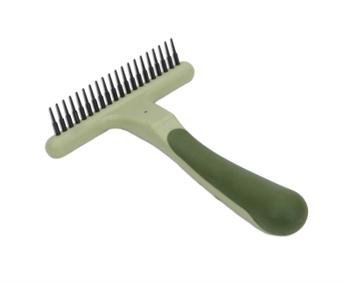
Shaving your husky can actually raise the chances of it suffering from heat stroke! The best thing to do in summer months is to comb out the undercoat that’s already shedding on its own using a rake. It looks like this:
This takes time. If you don’t have time to maintain their coat, don’t get a husky. On a side note, the Furminator grooming tool seems popular, but can cause damage to the coat if overused or used improperly. Do your research before using it.
I hated shaving double coated dogs when I was a groomer. It’s really not good for them, unless there is a medical reason to remove the hair in the first place. If you want a double coated dog they need to be brushed daily in hotter months, at the very least every other day. Spending 10-15 mins brushing them will go a long way to cutting down the shedding, and making them more comfortable while they’re blowing their coat.
The furminator is a pretty good tool, but like @end0skeletal it can cause damage. It is basically a 40 blade (surgical) that someone stuck on a handle. Brushing too long and too hard will damage skin and cause brush burn. If you plan on using one, you’ll need to lift up the coat to check the skin every so often to make sure the brush isn’t causing damage.
I preferred a tool called a coat king for dogs like huskeys. They look like little rakes, and are great at pulling out hair while being gentler than the furminator.
Another great brush is a rubber curry brush. My favorite was the zoom groom. I use this on my friend’s Shiba and get a ton of hair off of her in minutes. And because it is rubber you can use it a lot longer than the metal brushes.
last post about this, but please please please don’t get a rabbit for easter unless you are FULLY capable of caring for one.
They are not good for young children, they don’t like to cuddle, and they don’t like being picked up. They eat a lot of food and require constant care and attention.
Do lots and lots of research, and encourage any family/friends to do the same ❤
Why you shouldn’t put goldfish in a bowl – WTF fun facts
By the way, bettas are the same. It’s a myth that they live in puddles. Wild bettas live in rice patties that look like this:
And you know how males fight in captivity? Yeah see, in the wild, each male betta has a territory of roughly one square meter [X]. That’s over 260 gallons of water per betta! Of course they’ll fight in a tiny 1 gallon tank! (The myth about puddles exists because, in the dry season, a betta may get trapped in a puddle, and it is equipped to survive that, but only for a short period of time). Also, notice how much is growing in that water – bettas need a lot of places to hide in and rest on, not just a single bamboo shoot in the center of a vase! They will get stressed and even more aggressive without the hides.
Fish are animals just like your other pets. Do your research before buying and treat them appropriately. If you can’t afford a proper betta or goldfish set up (at LEAST 5 gallons for a betta with a heater and hides, at LEAST 20 gallons for a goldfish with a strong filtering system and NO GRAVEL, and I recommend adding at least 10 gallons to those minimums for healthy and happy fish), don’t get one. They are living things, not decor pieces.
Here is more information on how to properly care for: Goldfish: 1234 Bettas: 123
THIS is why all those videos of people feeding deer aren’t cute but destructive. Yes, I mean the ones like the deer walking into the little campsite shop and then bringing the rest of the herd later, or the old man who feeds a buck through the window. They are anything but harmless. They lull people into a false sense of security and encourage them to treat deer like pets rather than wildlife. No, you aren’t some Snow White character or animal whisperer or whatever if wild animals don’t run from you. They’re likely already accustomed to humans, and all you’re doing is reinforcing the idea that they shouldn’t be afraid of us.
The same goes for people who feed or even keep as pets raccoons, opossums, non-domestic rabbits, foxes, etc. Wild mammals in particular are prone to being dependent on us; birds, at least, are accustomed to their food sources being temporary and having to move on somewhere else for more food. But mammals stick around, so if you’re putting food out for them all you’re doing is setting them up to die, whether through getting hit by cars, getting sick from eating something they shouldn’t, disease from overpopulation because there’s an unnaturally high amount of food in the ecosystem thanks to you, injury from fighting over food, or being euthanized like the deer in the story above because they became dangerous.
Find an abandoned baby animal or an injured one? Take it to a wildlife rehab who will nurse it back to health and release it back into the wild while making sure they haven’t habituated it to humans. Or leave it where it is, let nature take its course, and let it become food for other wildlife who need meals, too. Ignore stories of so and so’s dad or aunt or whoever who would rescue baby raccoons and raise them up; not only were they likely not handling the animals in the best possible way, but they were almost certainly breaking state laws. Leave the rehab to the professionals who are working with science-backed techniques and resources.
Tempted to buy a “domesticated” wild animal? Think again. Many species are being decimated by the pet trade because they’re being taken straight out of the wild and therefore the wild gene pool, reducing both numbers and genetic diversity. This further weakens species that are already endangered. And some end up being tortured in order to make them “suitable” pets; those slow lorises you see in the “cute” videos had their canine teeth pulled out, likely without anesthetic. Captive wild cats in the pet industry also frequently are declawed and have teeth removed. If you have to disarm your pet in order to make it safer to be around, you don’t have a pet. You have a bad idea.






 ifesbob