Your pet is sick. You’re scared! You panic. You’ve even Googled and it’s no help.
But one of the steps to solving this issue is most certainly not to:
1: Stress your pet by transporting it unnecessarily
2: Stress your pet by putting it in a tiny, dirty, and/or unsafe carrier or container
3: Waste what could be precious time by taking your pet to someone that *can’t* appropriately help you
Certain petstores like to bill their employees as “experts”. And depending on the store you may find people with knowledge and experience with different animals.
But regardless of this experience, we can’t and shouldn’t be asked to treat your animal or tell you what you can do to treat it. It takes many years of expensive schooling and experience to become a vet. And even vets have specialties (ones who treat reptiles and birds versus cats/dogs versus small pets like hamsters and gerbils).
We don’t have the knowledge. It is UNFAIR to us and to your animal to even ASK us.
Now, depending on store/employee you may get “advice”, especially if you throw a fit or emotionally manipulate the employee into doing their best. But you follow this advice under your own risk and at the risk of your animal’s health. We do not have the tools to do an exam of your animal in the first place.
(Personally, I will straight-up tell people that I’m not a vet and can’t replace one, but that doesn’t mean that people wouldn’t be fired for doing that at a different store).
There seems to be misunderstanding when it comes to what minimum cage requirements for parrots are intended to be. Often the sizes you’ll find are not for a bird to spend 8 hours alone but that’s how they’re being used and using them this way negatively impacts their health.
Minimum cage requirements for a sleeping cage state that a bird must be able to fully spread their wings in any given direction. This is to avoid feather damage and ensure that the bird isn’t cramped in the space, easily able to stretch, preen and turn around, anything smaller for a sleeping cage and the bird will become distraught. A sleeping cage is meant to be used for just that, sleeping, times when the bird is inactive, any time where the bird is awake and mobile they should be out of the cage in a bird-safe enriching environment, an exception being during travel.
Minimum cage requirements for day cages are the absolute minimum a parrot needs to not immediately experience heightened stress when left alone. Typically the bare minimum numbers you’ll find are intended for a bird who will be left alone for 1-2 hours during the day. These sizes ensure the bird can walk around, spread their wings out to stretch and have enough room for a couple toys without impeding their mobility. All this cage size is for is to ensure that the bird doesn’t become stressed or bored during short periods of alone time, it is not intended to be used for permanent residency. As an example the minimum cage requirements for parrotlets is 18″x18″x24″, in there I could fit some decent perches, 3-4 toys and still have enough space for the bird to stretch and climb around. Below is an image of the bare minimum cage requirements for a parrotlet sitting inside of a cage that is capable of providing adequate enrichment for around 4-6 hours (30″x18″x32″)
Due to the high activity levels of parrots they can not stay in bare minimum spaces for very long without becoming stressed. In the wild they do experience stressors such as predation but over the millions of years these species have lived they have adapted ways to cope with those experiences in their lives. In captivity birds are exposed to stressors that they haven’t adapted coping mechanisms for such as isolation, overcrowding and boredom, due to the lack of coping mechanisms birds frequently present psychological distress and obsessive behaviours as a negative result. This is why many birds will pluck, scream, bite or present nervous ticks in captive environments and these become more prevalent when the housing is incorrect. It’s important to understand that a bird who is adapted to having the whole world as their habitat suddenly moving to have just a measurement of inches does have a poor impact on them, it doesn’t matter if they were born in captivity that minimal breeding does not replace the millions of years of evolution!
If any bird is living in a cage 24/7 they should be in a large flight cage or aviary depending on the species to ensure their health, nothing less. Typically I am home all day so the cage doors are always open and they’re spending the full 12 hours outside of their cages or going in and out to play. The large cage above is a place for my birds to stay for if I’m gone a max of 4-6 hours, the other 6-8 hours they’re awake is spent outside of their cages, getting plenty of exercise, all sorts of toys in their room, human interaction, doing anything less would put them in a stressful situation as they just aren’t adapted to cope with this lifestyle. Understanding that fact means that we need to be providing the largest possible enclosures we can, no amount of space can possibly be considered ‘spoiling’ them. They can not live happy and healthy lives without it, this excess space isn’t an over achievement, it’s a basic necessity!
This is why I wish there was a nationwide database for owners like this to prevent them from being able to adopt at any other shelters. They want a challenge? Dogs are not your project to use so you can justify your own pathetic existence. They are creatures with feelings who want to love and be loved. They put up with all our bullshit and love us anyway! They feel sadness, grief, lost, and shelter pets only get so many chances at a good home and you treat them like this?
People like this spend too much time on Instagram or looking at The Dodo of people who take on these hard cases and think they want a piece of that? Why? It is not because they wanna help..it’s because they want praise and attention, a way to feel like they are such a selfless hero when they are really just vain asses.
I
seriously hope there isn’t some layperson going around chopping off the
last bone of a cat’s toes because a veterinarian declined to do it. If
that is happening, both the owner seeking the procedure and the
non-veterinarian should be heavily prosecuted for animal cruelty and
performing acts of veterinary medicine without a license.
Some
vets will reluctantly agree to perform declawing of cats as a last
resort because they feel that they understand just how much pain the cat
will be in and use a higher quality analgesia protocol than another vet
might. They feel that if it’s going to be done somewhere, it might as
well be done by them with practiced surgical technique and the best
quality pain relief available.
They
may also believe that the cat will be rehomed, abandoned or euthanised
due to not being declawed, and that therefore performing the procedure
effectively saves the cat’s life. I think this belief is false, as the
procedure is illegal here in Australia with no difference in the
oversupply of cats. If someone is going to surrender their cat, they will
do so. If they don’t have the surgical declawing option, which they
perceive as an ‘easy’ solution, they are more likely to pursue a better
compromise like soft paws or regular nail trimming.
Ear
cropping is a little different in that it is a 100% cosmetic procedure
with zero medical benefit for the dog. It’s only done for human
aesthetics because somewhere along the line dog breeders decided that
surgically altering a dog’s ears to the desired shape was easier than
breeding them that way. It should be banned and universally condoned. If
you want a breed with straight ears, then breed them to have straight
ears. No breed should require surgery to ‘look right’.
Cat
declawing, dog ear cropping and dog tail cropping are banned in
Australia without a specific medical intervention, as it should be. Dog
breeds that were traditionally docked and cropped have had no downturn
in popularity, no increase in injury, and more and more breed clubs have
banned surgically altered dogs from being shown. These are steps in the
right direction.
If
somebody attempts to dock tails or crop ears at home, they can be
prosecuted for animal cruelty and I have had no hesitation in reporting
them in the past. When I graduated the ban had only just come into
effect, and many old school ‘breed enthusiasts’ were moaning about it.
They complained that ‘young vets these days didn’t really understand
dogs’ and similar such nonsense. They’ve had to get over it, and dogs
get to keep their natural ears and tails as a result. Interestingly,
Rottweilers in general seem much more confident with tails.
As
veterinarians we are supposed to promote good animal welfare. That’s
what started us on this path, right? Most (all?) professional veterinary
associations condemn declawing, ear cropping and tail docking.
If
we don’t decline to do unnecessary cosmetic surgery, then public
opinion will never change, and the demand will never lessen. We owe it
to the countless future dogs and cats yet to be born to speak out
against these practices. This it why even if they were legal down here, I
would personally refuse to do them.
(As
a side note, desexing is entirely different. Desexing has a proven
medical and social benefit, and is only soft tissue surgery compared to a
partial amputation or cutting away cartilage. Far less pain, far more
benefits.)
In medicine there are many shades of gray and multiple ways of doing something. Without the proper training it can be difficult to determine if something is “right” or not and the internet more often than not gets it wrong. Unfortunately now days it is very easy for something to get put up online that spreads and gets taken as gospel when it is far from the truth. I applaud people that take time to read up and learn but it isn’t the same as being trained in that subject. Reading something on the internet does not ever make anyone more knowledgeable than someone that went to school for a specific degree. Ever.
There a few things to look for though. Does your vet at least offer the very best medicine? That means if your dog is vomiting, a good vet will take a thorough history and suggest blood work or maybe radiographs.
A good vet always provides pain relief when an animal might be in pain.
A good vet will recommend testing a lump and not just look at it and say it’s fine. This is often where the internet and reality diverge. To most people the better vet is the one that simply gives medications and doesn’t bother with “expensive testing”, however without knowing what is wrong with your pet they are actually doing harm. Often the cheaper vets are truly not the better ones, they are simply perceived that way.
Good vets take time to answer questions and make you and your pet feel welcome and cared for. Good vets do this for all of their patients so sometimes will run late because they are helping a client or have to ask you to email or call in with your other questions so they can move on to the next.
Good vets will refer you out to a specialist if they know they are not the best person to take care of your pet.
Good vets recommend preventative medicine like vaccines, fecal tests, annual blood work, etc.
Good vets truly care about your pet and when they know there is no other option, will suggest euthanasia to end any suffering.
Good vets don’t provide treatments or advice over the phone or internet without seeing your pet because they know they could do harm.
Good vets are often the ones that commit suicide because they simply cannot deal with the hatred and vitriol they are all too often treated to. Instead of sacrificing their morals ,they sacrifice themselves.
This is such a beautifully done graphic! It shows, really well, why declawing your cat can be so excruciating and disabling for the rest of their life. Notice how the bottom of the 3rd toe bone is mostly what’s weight bearing? If you amputate that bone (which is the most common surgery) the end of that 2nd toe that’s never meant to bear weight will be what your cat puts weight on when it steps. Also, notice how the tendon runs the whole length of the toe? That means when you cut the tendons to that final, amputated digit, you’re going to mess up tendon function in the entire toe.
Personally, I quite like Arm & Hammer Slide. My cat tends to urinate in the corner of the boxes and this definitely helps, I don’t have to chisel it out this way, and even though it’s not scented the odor control is outstanding.
I’ve heard a lot of good things, consistently, about Dr. Elsey’s brand of litter. I’m still having a little difficulty and am considering trying Cat Attract, I’ve heard from a customer that this litter was really beneficial in conjunction with a pheromone diffuser in addressing their problem.
If you want to avoid clay litter, which is understandable because it’s not the best for the environment, the SmartCat litter is one I’ve heard many good things about. I’ve heard mixed reviews about other natural products, like World’s Best Cat Litter, what SmartCat has going for it is that it’s grass-based as opposed to corn- or wheat- based which is an allergen to some cats.
I recently discovered there’s, uhm, Garfield cat litter which is… interesting, to say the least. I’ve only seen it in-person at the grocery store, but the ‘tiny granule’ formula actually seems incredibly soft and may be a good alternative to silica for cats that require a soft litter. The cassava mix is also an interesting choice.
When selecting a cat litter, though, I recommend to main things – it should be unscented, and it should be clumping, although there are situations where the latter is not applicable.
I use Dr. Elsey’s & like it a lot. I’ve also used the Cat Attract litter to help resolve a brief issue with Ebony when she first came home, and my bf has used it successfully with one of their cats as well. It was also on a handout of ways to help resolve litter box issues that my vet gave me & they specifically suggested it out of the list of options.
Also double check how much litter you have in the box – deeper litter is going to do better at soaking up the urine before it reaches the bottom of the box so it doesn’t get stuck/caked there. I keep my “regular” litter box at least half full (I think it works out to maybe 2-3″ deep?) & the tote litter boxes usually have 4-6″ (they use the tote boxes way more).
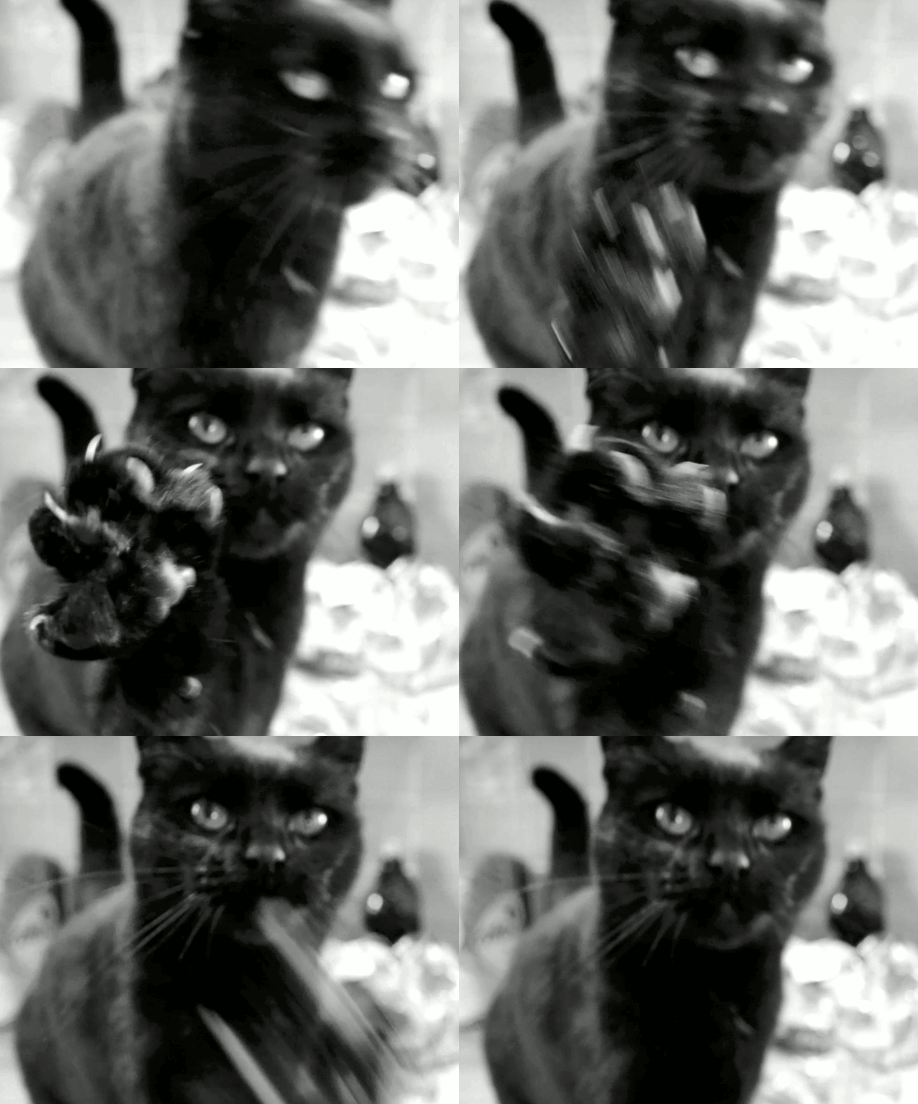
‘I don’t want a black cat because they don’t photograph well or look good in selfies’
Well beyond the shameful idea that you see a sentient creature only as a decorative item to photograph for the sake of internet points, it also just sounds like you’re making excuses for being a shit photographer.
Black cats don’t PHOTOGRAPH WELL?!
There’s nothing cuter than the VOID WITH EYES
What is WRONG with people??????
reblog if you would love a void with eyes as a pet


 ifesbob