If you wanna potty train something, I recommend finding a human toddler and teaching them. I don’t recommend toilet-training cats. It goes against essentially every instinct. Now we CAN train cats to go against their instincts, but again, I only really support it when it’s for the benefit of the cat. Training them to tolerate travel is better for their overall stress, mental health, and well being. Training them to walk on a leash keeps them safe while still providing great (though not mandatory) outdoor enrichment. EVEN “useless” tricks like sit, stay, place, or even more advanced techniques still offer enrichment and learning opportunities, but the end goal is to keep a cat from using the litter box, and with the HUNDREDS of issues I hear about litter box problems, NOBODY needs to add to that kettle of fish.
How on earth does toilet training a cat benefit them? Scooping is essential for monitoring your cat’s health, and teaching them to drop a turd in a toilet is NOT letting you monitor their health. It’s a REAL fast track to developing other litter box issues, too. Cats do not WANT to use a toilet, and there is no real benefit to them doing it. So unlike cats not wanting to go to a vet but doing it anyway for their own safety and well being, I don’t see the benefit, or even appeal. As a general rule I do not instruct people on how to perform this stunt.
And for the record to anyone commenting/reblogging. If you trained your cat to shit in a toilet and they turned out “just fine”, neat. You are an outlier. This is not the common reaction, and I do not recommend it. I also don’t recommend letting cats outside (outside of using a leash and/or catio) and I still feel like I’m screaming into a void on that one.
I’m sick and 100% not dealing with whatever fallout this brings lol.
Also it’s not suggested to put cat or dog poop into the human waste system because it adds pathogens that the system may not be set up to deal with, if I remember correctly. Also toxoplasmosis from cat poop is infecting & killing ocean wildlife like sea otters. So it’s not a good idea to flush litterbox waste either, even if it the litter is supposed to be flushable.
(That said, I don’t know of any recommended/best ways to deal with the waste to minimize impact. If anyone knows of better options than just throwing the stuff in the trash, feel free to mention.)
There’s also the issue of elderly cats as well. What happens when your cat becomes arthritic and can’t climb onto the toilet anymore? Are you going to make them continue to do this despite pain, or will you set up a normal litter box again (which makes the toilet training moot)? If you choose to switch back to a litter box, will your elderly cat be able to relearn that, or will they just start going to the bathroom in innapropriate places instead? Are you willing to deal with any bathroom problems in the future?
Honestly I think scooping litter is much less effort than training your cat to use the toilet (and then still have toilet issues in their elderly years). If you really hate scooping that much, then maybe try a self-cleaning litter box.
a small backyard, a decent fence and the will to make a safe coop for your fluffy dames is all you need to make it happen
they will eat your vegetable scraps and gobble down pretty much any kind of food waste, turning discarded crusts and mushy fruit into big fat eggs full of protein!
and depending on which breed you buy, they will lay an egg almost every day. free, nutritious food every morning! what other pet will do that?
it’s a misconception that eating eggs is inherently cruel, or that you need a rooster for your chickens to lay eggs! all the eggs you buy in supermarkets are unfertilised, which means there is no chance of that egg ever hatching. you’re not eating a potential life, your chickens will lay eggs regardless of whether there’s a rooster around
so only buy a rooster to go with your lovely ladies if you want baby chicks – otherwise, just get some girls and enjoy those omelettes!
the way cage egg farms are run is terrible, and you can’t always be sure that a free range farm is as idyllic as the picture you see on the carton. lots of sad chookies who can’t perch or scratch or eat grass and clean themselves. 😦
this way, you will always be certain that your girls are happy, healthy, doing what chicken are meant to do and eating what chickens should be eating, which means bigger and better eggs for you!
you can give eggs to your friends! give eggs to strangers! eggs for everyone!
tiny and furious lawnmowers. chickens LOVE grass, especially clover. if you have a small backyard, they will do all the work of keeping the grass trimmed.
a caution, pls buy your chicken a friend – they will get lonely if you only buy one. my friend had two chickens and one died, leaving Gizmo all alone. she got depressed and stopped laying, so they put her in the rabbit hutch. now she has a best friend bunny called Jimmy and she’s very happy! she often sits on him and purrs.
chickens are good around most other pets – cats and chickens usually regard each other with mutual indifference and disdain, but they generally bond with dogs. however, if you know your pooch or kitty is particularly aggressive, make sure you check it won’t be a problem!
scratch scratch scratch, scratch party!!
one time I was cleaning out the stables and my chicken came over, saw that I was using a big rake and went !!!! scratch time!!! and she started scratching furiously next to me like she was trying to help
they’re very clean animals and will clean themselves every day with a dust bath and a thorough preening
when it starts raining it takes them a good 10 seconds to process what’s happening, then they RUN to shelter
gloriously stupid tiny velociraptor running
peck peck peck. is food? I check! peck. not food!
rip all snails and slugs that live in your garden
they will also go after mice and spiders
chicken poop is great fertiliser! when you clean out their coop, spread the poo on your garden and watch your flowers and veggies grow!
kiddos LOVE chickens!!
seriously, looking after chickens is a great job for little kids – any little fella can fill up their water and give them some food, and collecting a warm, fresh egg every morning is so rewarding for them!!!
hours of entertainment watching their antics
some (not all) like a cuddle! the ladies will let you know what their preference is. they may also gently peck and groom you because they love you.
you can give them fancy names like lottie, ethel and lady beatrice so it sounds like they’re a supporting cast in a Jane Austen novel
in conclusion give a pretty chicken a happy home today
Also: you want a bird friend? well it is PSYCHOLOGICALLY HEALTHY for you and the chicken to be friends! After thousand and thousands of years of domestication, chickens are basically genetically programmed to be happy to live with humans.
So the thing about cocks: they’re more than just fertilizer. They prevent the hens from bickering, they look out for danger, they fight off predators, they feed the hens and make them little nests, and they’re GOOD friends! Presently we have about 20 cocks and cockerels, many of which are rescues, and they’re really amazing little birds! I have a bachelor flock of silkie boys that I LOVE, they’re so sweet and when I go near them they all dance into me and try to feed me treats, surrounding me with their fluff and making their little noises. My freerange bantam boys? The best! They hop on my shoulder or run over to me to beg for a snuggle. All I have to do is put my arm up and they fly right onto it (as do many of the hens)!
Then we have some big boys like Phillipe, an American game cock who we rescued at 3 years old, for the first year of his life he was stuffed in a tiny cage that caused him to lose parts of his toes, then isolated at a humane society who took very good care of him but he didn’t have any friends so he developed WEIRD habits, he makes very strange noises. However after just a few weeks after adopting him he became the boss of our flock and the ladies love him!
Yes, some roosters can have nasty attitudes as a result of being bred to have high hormones, however often they can be trained out of aggressive behavior with positive reinforcement! Sadly sometimes it can’t be helped because their genetics play too big of a role, but these cases are rare. But most of the time perfectly sweet lads are abandoned simply because they “don’t have a use” or town ordinances don’t allow them because they’re “too noisy” (AS IF, crowing is definitely not more disruptive than barking or sirens 🙄).
Know what needs to stop? Parents allowing their children to mistreat their pets. Its not cute. It’s not harmless. It puts both children and pets in danger. If your child can’t play gently and safely with an animal (and like most toddlers for example can’t) then you need to create separate spaces for them. And closely supervise any interaction (in general even if they are gentle) and teach your child how to treat animals properly.
I’d like to add onto this about replacing pets and not telling the children (goldfish, hamsters, etc).
That is not “an educational experience”. That is letting the child mistreat the animal repeatedly and not allowing them to learn from their mistakes or learn that there are consequences to their actions.
Guys, omg. Something happened at this conference that I never ever thought would happen–I found invertebrates super interesting. And I kind of want to work with them. I didn’t even know that was an option! Also I’ve always been terrified of insects and arachnids but THEY’RE SO COOL I’VE BEEN SO WRONG ABOUT THEM. Look at this:
Look at that anatomy!!! How cool is that?? Their heart is just…dorsal. Like why?? And you can hear it with a doppler! You can anesthetize a tarantula with isoflurane and monitor their heart rate with a doppler. That blew my mind. You can perform surgery on them and suture them with 6-0 ophthalmic suture! You can give them IV and sub q fluids. That’s crazy!! And look how they drink:
Apparently they just drink like that?? I dunno why but that’s kind of cute?? They use hydrostatic pressure to move (which is crazy cool) so dehydration is actually a serious issue with them.
He also talked about scorpions, snails, shrimp, roaches, centipedes, crabs and a bunch of other animals I never would have even imagined you could treat. And honestly, I never imagined I would care enough to want to treat them but they were actually so interesting I ended up grabbing his email! Am I gonna be a spider vet?? Like that’s the last thing I EVER thought I would want do but hey, if I’m gonna treat exotics might as well include invertebrates, right?
Can’t really treat spiders/Tarantulas since a fatal injury(ruptured “butt”) kills them very quickly and minor injuries(scratches, lost limbs) heal themselves very quickly.
It’s very uncommon and kind of complicated, but you can treat them. The vet I got this info from was giving us information based on an actual abdominal rupture that he treated. He had other invertebrate cases that he had seen as well. I don’t think these kind of procedures happen often (as the number of vets willing to treat spiders is probably less than the number of people that would seek out medical care for them) but it can happen. Mostly he talked about how to deal with dehydration in these species, which seems to be a fairly common problem.
I love everything about this post but can I just add that ruptured abdomens absolutely can be treated if all conditions are favorable? Invertebrate Medicine, 2nd ed. (Lewbart, 2012) writes:
Treating trauma
Although several treatment options are available, many spiders cannot be saved. The mainstay in hemostasis is cyanoacrylate adhesive. Veterinary tissue adhesives may be used, but hobbyists normally just use commercial superglues. Although tissue adhesives (n – butyl cyanoacrylate) are reportedly less toxic, in the author’s experience, commercial formulations are just as effective and do not cause intoxication. Super Glue gel formulations are not effective, and liquid adhesive must be used. When using cyanoacrylate, several layers should be applied to build a sturdy repair. Even large opisthosoma wounds can be sealed in this way. The spider will often shed normally at the next ecdysis if the trauma has occurred more than 2 – 4 weeks before molting. If ecdysis occurs sooner than this post trauma, the new cuticle may be damaged, and this should be sealed similarly with cyanoacrylate. The cuticle will be normal after the following ecdysis. Successful use of fingernail hardeners has been reported for arresting hemorrhage from damaged legs, where the application of cyanoacrylate glue may be diffi cult (Breene, 1998). One benefit is there is no risk of legs being glued together. There are numerous other reports among hobbyists of alternatives for hemostasis, including talc, cornstarch, tissue paper, and hematinics. None of these appear to be reliable. Pizzi and Ezendam (2002) showed sutures to be ineffective and result in greater trauma (see the “Anesthesia and Surgery” section). Fluid administration may be necessary in some cases. This topic is covered under the “Dehydration” section.
It’s amazing the comments I get on those posts. I usually just block and ignore now because there’s no point of me saying the same things over and over again to people who really don’t give a shit about their cats.
I’ve been getting alot of comments from people not realising cats lived for so long because they also grew up with outdoor cats that died young. It’s really upsetting and I’m glad people are becoming more educated on basic cat care now.
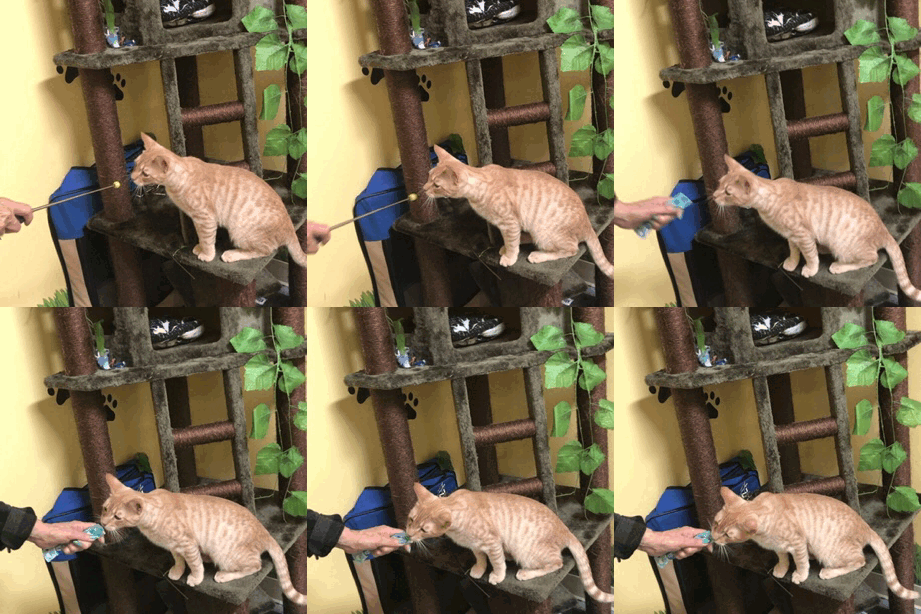
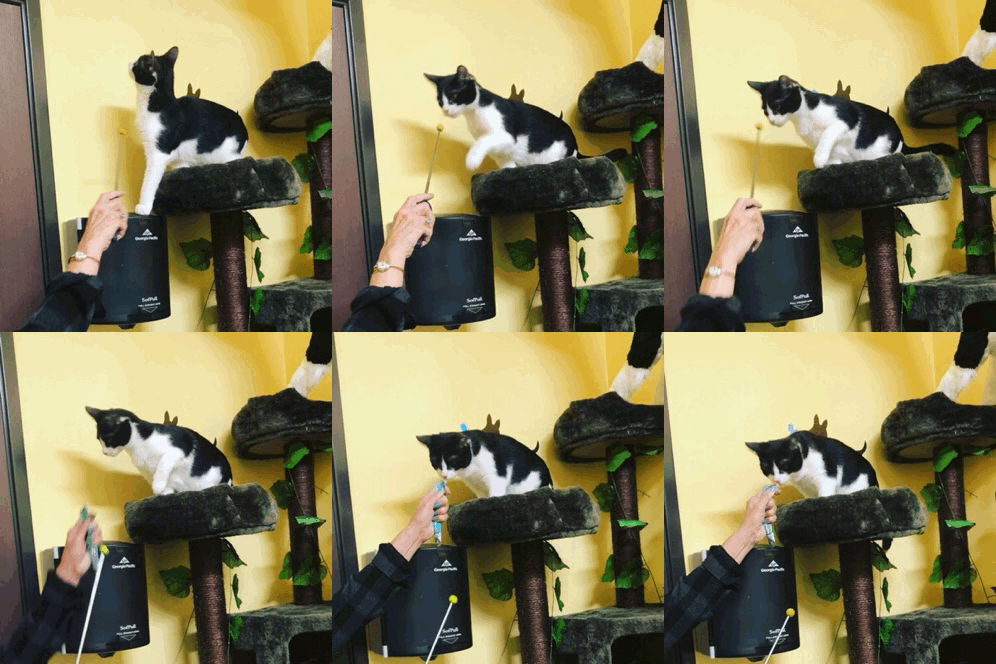
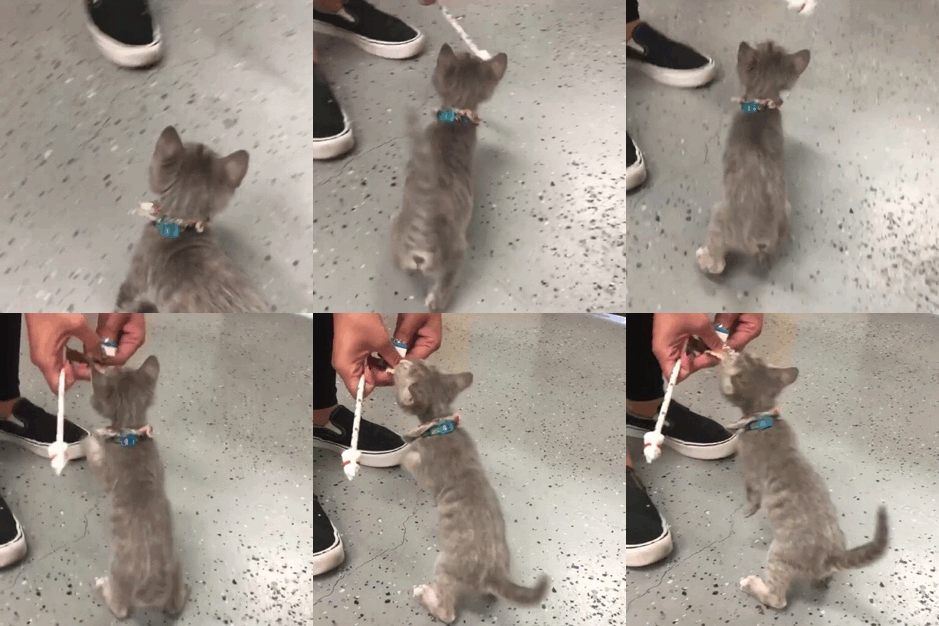
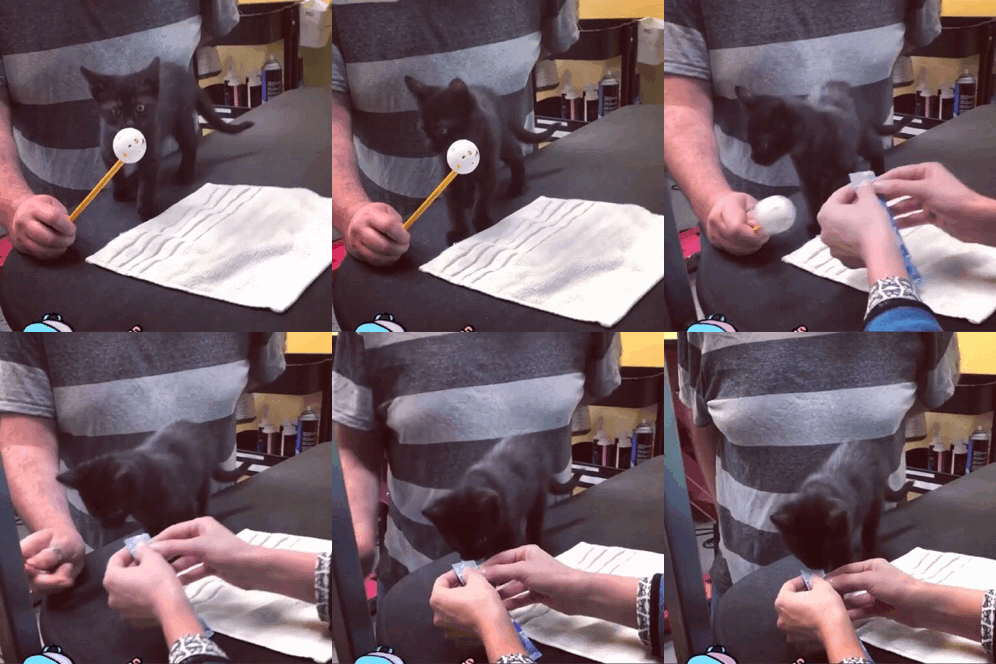
I’ve been teaching Kitten Kindergarten classes for a few months and it’s been a super interesting process. Kitten behavior is so different from puppy behavior, so I had to play around with the class structure quite a bit to find something that works. Each class we work on socialization to new people, animals, stimuli and places, introduce a behavior to train, and walk the owners through cooperative care strategies.
Thanks to the classes, Bebe has learned bite/claw inhibition, Porky has learned to love his carrier and car rides, Furiosa sleeps through the night, and Blossom (foster kitten) found a forever home. And of course everyone learned targeting! I really hope these kinds of classes become more common, since early training and socialization can prevent so many behavior problems and keep cats out of shelters. Every time I hear someone tell me cats are untrainable I roll my eyes up into outer space.
Hey, could you possibly provide photos of all the little things youve got in the degus cage, Im worried that I dont have enough or the right stuff and Im not sure what everytging on your guide looks like, obviously i understand if this is too much to ask. Thanks!!
Hey! (I can’t arrange the photos how I want when answering an ask so I’m doing it this way instead)
What do my degus have in their cage?
They have hammocks and bed boxes
Various hiding places and kitchen roll to use as bedding and to hide in – if you look closely you can spot an ear in the seagrass tube
Hollowed logs are good not only for hiding but also for sneaking up on your brother to steal his food!
Ledges and branches
Standard upright wheels and a flying saucer wheel
They also have their water bottles, hay balls and heat pads (but I’ve already added as many photos as it will let me). The heat pads usually get microwaved in the morning unless it’s a hot day, they seem to enjoy lying on them even if they’re not heated up though. They also have twigs and other things to gnaw on to help keep their teeth healthy.







 ifesbob