I think I’m going to start an advice chain of lessons learned since first getting exotic animals
I’ll go first
Don’t use white sand in aquariums. Dear lord please don’t, it looks good for two weeks but after that cleaning it is a nightmare.
Axolotls are really sensitive when it comes to temperature. Extremely sensitive. One degree over 70 ([~21.1 C], even that is bordering on too warm) and bam, you have fungal infections and stressed axolotls.
It’s a whole lot easier to just start your pet out in the size enclosure that they will need as an adult rather than upgrading as they grow, especially with aquatics. Transferring aquatic animals between tanks is a tedious and aggravating process.
Feel free to add your own below
I just remembered another one
If you get axolotls, don’t expect any plants in the tank to do well besides marimo. Axolotls love uprooting things.
Another axolotl related tip, axolotls have poor eyesight and are sensitive to light due to this. That means that if you were hoping to keep your tank lights on during the day, sorry to say this but you probably won’t be able to do that. Try to avoid leaving the room lights on overnight too. They like it a little dark.
The cat doesn’t understand why its human is sad, just that they are, and their legs don’t work.
The cat doesn’t understand that its pelvis has been crushed like a coke can and that recovery would require multiple thousands of dollars for surgical repair and would more than likely result in chronic, lifelong pain from an intra-articular fracture (through the joint surface).
The cat doesn’t understand the repeated insistence that “I’m sorry, I’m so sorry,” over and over again, nor does it understand that its only had one year of life, when it could have had fifteen.
But the human, the human understands that the cat’s life is about to be tragically cut short, thanks to the massive trauma sustained from the car when the cat just didn’t come home one night.
“Who did this to you?” the human asks, over and over between their apologies and tears.
And the vet knows they’re lucky their cat came home at all to say goodbye. And the vet knows in her heart which human it is that’s responsible for this outcome, and it wasn’t the one driving the car.
The next consult is so understanding about the wait. They know what it’s like to loose a cat. Theirs didn’t come home one day, at only four years old. And other cats that used to visit their backyard disappeared around the same time.
They always suspected someone had poisoned them, put paracetamol into saucers of milk and left it out to get rid of the cats.
The new cat, this one will be indoor only. Maybe on a harness if it shows interest in the outside world.
The world that should only be visited under supervision. Because the world is not kind to cats.
This post was viewed early by my Patreon Supporters.
PSA To anyone who allows their cats near their reptiles:
It is extremely dangerous no matter how much you trust or know your cat and this is why.
This is our Nova, no we didn’t purposely allow her near our cats; she somehow managed to escape her locked tub while we were sleeping two days ago.
Thankfully, we aren’t near the polar vortex, however, we do have two cats; one is a known hunter and killer, our other just likes to play with things rather than kill them. “Luckily”, she was only found by the one who likes to play rather than kill. They have both seen Nova before, but were never allowed anywhere near who ever was handling her at the time for this exact reason.
We are extremely lucky that this was best case scenario – she is alive, she ate, and the injuries aren’t deep nor severe bites, they are only small punctures and scratches from curious claws.
We are keeping a very close eye on the injuries; we have her in a sterile environment, and have Betadine on hand to keep the wounds clean.
It doesn’t matter how well you know or trust your animals, do not put predatory pets and prey pets together on purpose. Zootonic diseases and bacteria can be spread through one small scratch or bite.
An extra PSA:
Be aware that cat scratches and bites are full of bacteria that can easily kill many small animals. Even if the animal stops bleeding, or the bite “isn’t that bad” or it was “just a scratch” the animal is likely still in danger. If your animal ever gets bit or scratched by another (especially a cat) even if you don’t know for sure, take them to the vet. Keep the wound clean/sterile, keep the animal warm, make sure they’re eating and drinking, and contact your vet the best advice for continual treatment. Puncture wounds are exceptionally hard to treat and you will need informed help if you don’t know what you’re doing.
There is always a risk in owning multiple animals of many species, please keep your animals separate, even if they seem to get along. Even the calmest dogs can attack your pet rabbit, even the sweetest old cats can kill your bird with a scratch. Always be cautious and never allow predatory animals around your prey animals; and never let different species that do not mix go together (such as rabbits and birds, or ferrets and cats).
Colombian common boas (boa constrictor imperator – BCI) and true Red Tail boas (boa constrictor constrictor – BCC) are two different subspecies, but the weight sits on them the same.
Photos are pulled from various FB groups.
Overweight – the boa is rounded, not square, with fat build up on the hips and/or fat rings – especially on the tail. Fatty deposits can also be seen and felt down the sides along the lateral line.
Obese
Obese + latter stages of fatty liver disease
Chunky monkey
Healthy – Boa is square-shaped (like a loaf of bread), lean, and has great muscle tone on its back and sides. The body tapers nicely into the tail, no fat deposits are present.
~8′ adult in prime coniditon
Adult BCC with great loaf-of-bread shaped bodies
Underweight – Boa loses its square shape and becomes more triangular. The spine becomes more prominent, as do the ribs, and there is a distinct lack of muscle tone. The skin may sag in places.
Underweight
Severely underweight (his one is gravid/potentially underweight because of being gravid)
Underweight animal that was a rescue
Hope that helps!
This is s fantastic example of proper boa weight. Too many people over feed their boas. I believe this is partially a result of all the “giants” you see on forums and reptile groups, but slow and steady wins the race. They will get big, trust me, but doing so slowly instead of racing to get there will result in a longer, healthier life.
^ I saw this reference come around again, and it is always worth reblogging!
Ok so I’ve covered why you should not actually clone your pet. But to be honest, I’m not sure how many of you were actually considering dropping 50 G’s for the procedure. Still, maybe you want some sort of memory of a pet who passed away. So let me tell you about CUDDLE CLONES
Basically it’s this company that will make a PLUSH replica of your pet. A cat, dog or horse is $249, and smaller animals like rabbits and guinea pigs are $179.
In addition to being much cheaper than actual cloning, it doesn’t require any invasive surgery on innocent surrogate ovum donors and mom dogs! Note that this isn’t the only company that does something like plush replicas, for example Feltpets will make your animal out of felt.
But OK Cuddle Clones look particularly quality to me, look at how close they look to the original
they also do figurines
Furthermore, they’ll do any animal you like
cat? dog? horse? gerbil? donkey? it don’t matter to cuddle clones, they will MAKE YOU THAT PLUSH
Also, they donate money to animal-related charities Did I mention they will do any animal? it doesn’t even have to be real. it can be the fursona you made when you were 14 for deviantart
hell, they’ll make your How to Train Your Dragon OC if you want it
Cuddle Clones is there for you, and i need one of my blob monster please
W
That might actually be really helpful for some people.
I have checked the site to see what other animals they have done, and they have made many birds, fish, and turtles before! In case anybody had any worries on what animals they’ll do.
I believe that brachy Persians, Munchkins, and Scottish folds should NOT be bred and here’s why:
Brachycephalic Persians- these are the guys with the super smushy faces. They have similar health problems as pugs. It’s hard for them to breathe. Oh, and their brains are deformed. It’s thought that this might be why Persians tend to be a bit… a bit dim, tbh. Doll-faced persians aren’t as affected, although the shape of their skull is still different from a typical cat’s. Care must be taken that they aren’t deformed further.
Munchkins – these are those little cats with the cute stubby legs. VERY adorable, I have to admit. Those little legs are due to a form of dwarfism. They also have long spines that are prone to lordosis. This puts a lot of pressure on the internal organs, and can lead to a kitten’s death as those organs grow. Munchkins also frequently don’t have the same mobility as a typical cat. They can’t jump as well.
Scottish folds – those cute ears? Yeah. Way more of a problem than expected. That’s due to a cartilage malfunction, and it indicates that ALL the cartilage in the cat’s body is malfunctioning. This means that their bones don’t grow correctly, their muscles aren’t up to snuff, and they tend to get arthritis at very early ages. I’ve seen severe arthritis in kittens as young as one year old.
The straight-eared variety is completely unaffected. Maru is a good example of a straight-eared fold.
Here are some cats with unique issues that can be handled with careful breeding:
Sphynx – severe heart issues are VERY common in this breed. Breeders should screen their cats with EKG’s to judge their heart health.
Maine Coons, Ragamuffins, and Ragdolls – Hip dysplasia is pretty uncommon in cats, but it can be seen in larger breeds. Luckily, OFA offers certification. This means you can search a registered cat’s hip history. Breeders should make this information easily available to you.
Bengals, Siamese, Orientals – PRA. Progressive retinal atrophy means a cat can slowly go blind over a few years. There are genetic tests available to clear cats. Breeders should take full advantage of this and not breed cats affected by PRA or are carriers of the gene.
There’s currently some debate about rex (all varieties, including Cornish, Devon, selkirk) and and sphynx cats, and whether or not their curly (or entirely absent) whiskers should be considered a quality of life issue. Whiskers are a sensory tool. They’re highly sensitive, and cats who have had their whiskers cut are frequently disoriented. I don’t know enough about the issues to really talk about it in depth, but I think it’s important that it’s an open discussion right now.
Since the standards of the above cats allow for whiskers, I think it’s better to just… breed cats with whiskers, ok.
Since I haven’t seen a general animal post yet – anyone who’s going to be in the way of the polar vortex today & tomorrow and has warm temp animals, please be prepared!! I’ve been seeing a lot of warnings that furnaces will have a hard time keeping up, house temps will likely drop, etc. If you have safe space heaters, that might be a good thing to get out. Keep an eye on cage temps, move cages to warmer inside rooms (away from outside walls), insulate cages, etc. Smaller enclosures are easier to keep warmer, maybe keep in a travel cage overnight if you have one.
If anyone has additional suggestions, feel free to add.
Also some general warnings I’ve seen as well – make sure your thermostat is set to stay on and not dip at night if that’s your usual program. Don’t use an oven for heating, and be very careful with heating items – both for fire hazards and animal safety (cats & dogs tipping over space heaters & such).
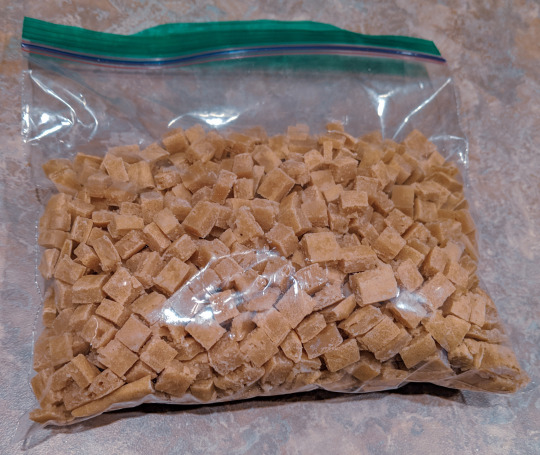
Around 800 high value training treats for the price of one can of tuna, an egg, and a cup of flour?
WHY HAVE I NOT MADE TUNA FUDGE BEFORE NOW?
How do you make these please???
I did one cup tuna, not drained. One cup flour. One large egg. Blend it into a dough, spread it as thick as you want the treats on a parchment lined or greased baking sheet, and pop it in the oven at 250F for 30 minutes. Cut into the size pieces you want.
This is brilliant, thank you so much!
Seems like a good high protein treat for chickens too!
i understand that having a pet is really good for mental health (TRUST me i know) but otoh… if u cant consistently take care of ur pet u shouldnt own it. if u cant regularly change ur cats litter or walk ur dog daily or clean ur fish tank or WHATEVER then its cruel to keep ur animal in those conditions… ur their entire world u gotta treat them right. and if u cant do that then you need to reasses if youre really ready to look after another living being like that


 ifesbob