First, congrats on the decision, I’m sure your local ruler (cat) will be thrilled.
Second, I don’t know how much construction experience you have, but building something like this that’s totally functional is actually pretty complicated. In the world of knitting, crocheting, and sewing it’s not at all uncommon to pay for a pattern, so I think it’s entirely reasonable to ask for money for the building information.
You also might want to reach out to a local builder/handyman (or handywoman, or handyperson) to make sure that the design you do select will be strong enough to resist your neighbor’s dog. Think about how big the dog is, how strong it is, how high it can jump, etc… It would also be agood idea to consult a professional before buying a plan or materials to make sure that they’ll be strong and safe enough.
From the digging that I’ve done, it seems like you are going to need to pay for plans or a kit, because at the end of the day someone has put their time, effort, and expertise into designing these things– think of it like an IKEA bed frame, or any other piece of furniture.
Honestly not enough people know that I taught my deaf blind dog to skateboard
I love this as an example of how training novel behaviors can be enriching for any animal!
This is also a great example of really good training, and an obvious trusting relationship between owner and dog. The cue to begin the behavior is a tactile cue – touching the leg to indicate a lift. The dog has obviously been taught to add the second foot and start moving once their foot is positioned correctly on the skateboard. Bitsy isn’t ever left to try to navigate solo: the food reward in the trainer’s hand functions both as a lure / motivator and a guide. As soon as the pup comes slightly off the skateboard, the immediate response is to stop and reset. This clip makes me so happy to see, because the behavior Bitsy is learning requires a huge amount of trust in the trainer to position and guide (since a lot of the dog’s tactile feedback about the world through their paws is negated by them being on the skateboard) and it’s so obvious how well they’re working together.
@why-animals-do-the-thing not sure if you’ve already seen this or not, but this post raises about a million red flags right?
Yes, absolutely. I’ve gotten tagged in this post a ton of times (not a bad thing!) so let’s take a look at it. This story is a prime example of how clickbait news sites perpetuate really dangerous interactions with animals as cute.
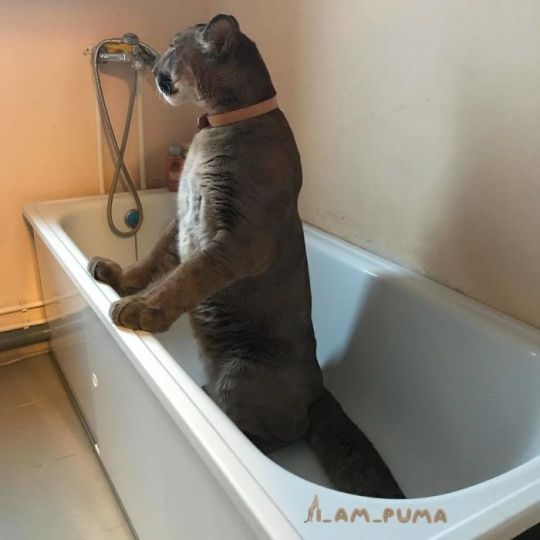
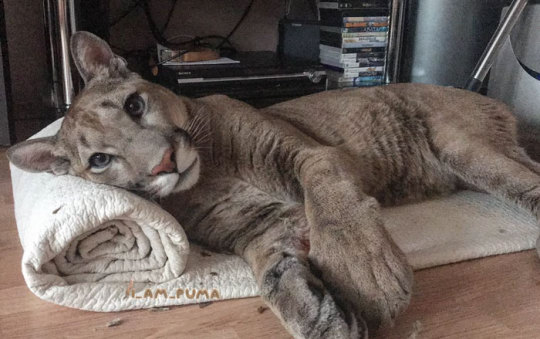
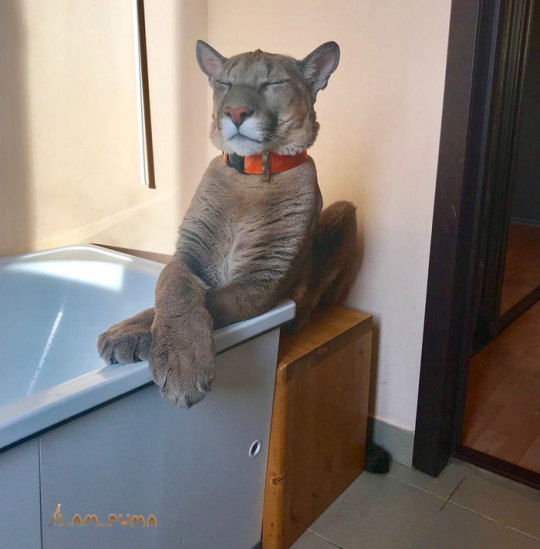
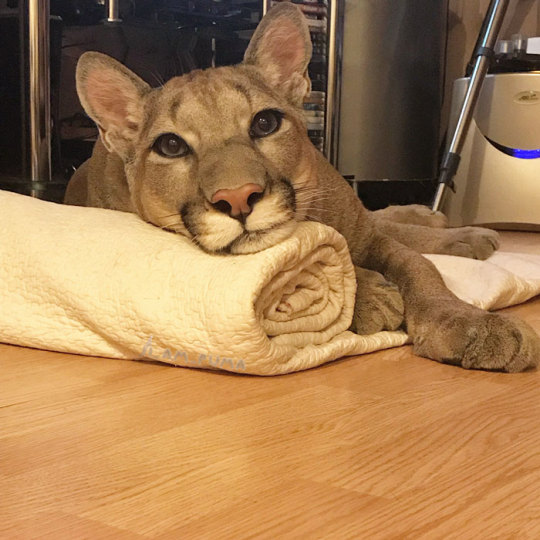
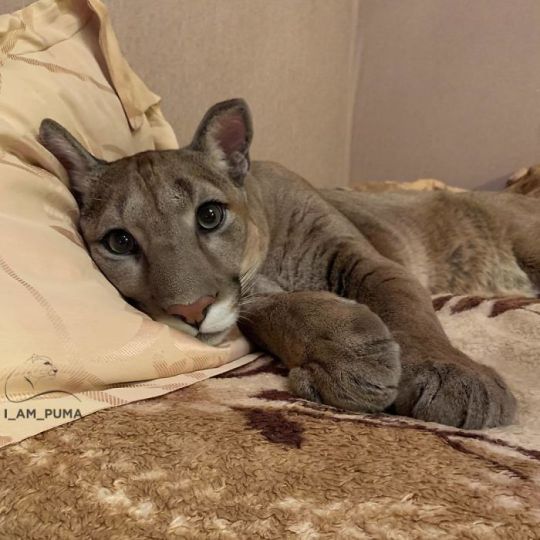
I’m just gonna burst the bubble on this: Messi is not a rescue. Messi is an exotic pet – and one being managed in a very dangerous, irresponsible way. Period, full stop.
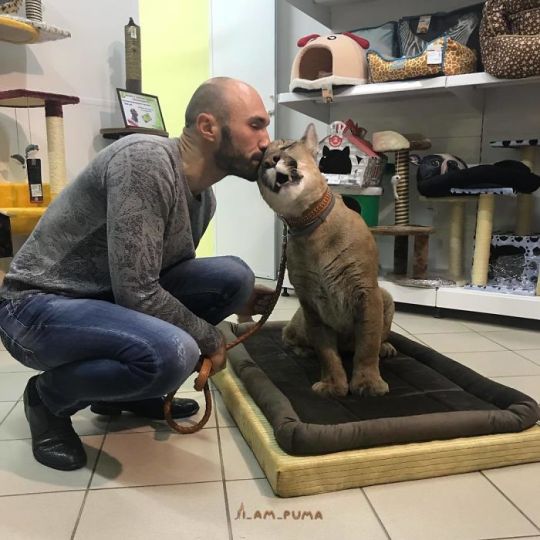
Messi was one of three cougar cubs born at the Saransk city zoo in Russia, and involved in some sort of soccer fandom event. When it was over, all three cubs were given to the local “contact” zoo, wherever they were in Russia (I still haven’t been able to track down that facility’s name). The owners went to the zoo, saw the cub, and in their own words “decided they had to have him.” After thinking about it for a few days, they went back to the zoo and convinced them to let them purchase the cub. For whatever reason – whether Messi was sickly and they didn’t want to deal with it, as they say, or simply because it was profitable – the zoo sold them this cougar. Exotic pets are common in Russia, and they have to come from somewhere, so I’m really not surprised that a zoo would be willing to sell one of their animals if someone was really willing to pay. That is not rescue. No matter how they or the media try to frame it, these people literally went “I want one” because cougar cubs are cute, and then followed through on it by buying him.
There’s a whole bunch more in the IG thread they’ve posted about his history, but I’m not going to bother embedding the screenshots. Basically, it says: he was super sick and needed a lot of medical attention, they made their house nice for him, and then they started taking him to group dog training classes, and he can’t be released because of his health issues. Let’s break that down.
Yes, it’s imaginable he was really sick when they got him. The images I’ve seen of the cubs when they were first brought in for the promotion show very, very young animals that are no longer with their mother. According to the posts by the owner, Messi has had issues with underdeveloped cartilage, bone density, and other indicatiors of malnutrition; you can see in photos how messed up Messi’s conformation is even now. I genuinely don’t know if the zoo would have kept him alive with those health issues or if they intended to euthanize him, but it’s really important here to note that the zoo was not looking to rehome Messi to someone who would care for him – he was simply lucky that this couple decided they wanted a pet and offered to buy him.
The way he’s being managed is utterly irresponsible and is setting them up for a tragedy. Yes, they built a lovely indoor setup for him that most domestic housecats would love – but Messi is still a wild animal with wild instincts, and allowing him to free-roam in a house with people and interact (even on a leash!) with small animals is dangerous. Remember that spreadsheet of all the maulings and deaths caused by pet big cats in the US I’ve got? Cougars are the second-mostcommon species for involvement in incidents. He may be small for a cougar, but he still has claws and teeth and predatory instincts that no amount of “love” can erase. At some point they will kick in, and either a person or another animal will get hurt.
Yeah, that screenshot looks like a totally positive interaction between Messi and the housecat. Notice there’s small dog that’s running around unrestrained at the bottom right during the interaction.
My biggest issue with this whole thing is the way they take him out in public. If they want to endanger themselves and their pets, that’s one thing. But what they choose to do with this cat in public is dangerous and irresponsible. It angers me no end that it’s being lauded as super-cute by so many American media outlets when – if you did anything similar with any big cat in the United States – it would either be illegal or you’d be facing some serious problems with regards to public endangerment. I guess it’s cute when it’s in another country that we don’t feel the need to hold responsible for their animal management practices, right?
One, they take this cat out in public all the time. They don’t secure it when driving (good luck not getting mauled if you’re in an accident and the cat is in pain / escapes), they walk it into pet stores like it’s a domestic animal (and just have to hope it doesn’t go after any of the other pets?), and they take him to fucking group dog training classes. In the extended history that I didn’t bother to screenshot all of, they tell basically this story: they couldn’t find anyone who had ever worked with cougar, so they went to this one guy who had worked with a bobcat once, and then they started taking him to group dog training classes after a while. I’m sorry, but are they actively trying to get other people’s pets killed?? Predatory drift is real, and being in a small enclosed space with a lot of other small animals whose behavior is unpredictable is a great way to set that cat up for failure. Everything they’re doing with that cat is just so stupid and irresponsible I can’t even with it.
Lastly, the claim he can’t go “back to the wild” because of his size is bullshit. That cat can’t be released into the wild because a) cougar are not native to Russia and b) he’s been hand-raised, used for promotional material, tamed, and kept as a housecat. It’s not probable that he even knows how to hunt, and if he was somehow released into the US, he’d turn into a nuisance animal – one that seeks out humans for resources and/or companionship – almost immediately.
The way Messi is being kept goes against every scientifically-backed standard for responsible big cat management. (I can tell you with pretty decent surety that even the people I know who have circus or private non-professional big cat ownership backgrounds would think it’s inappropriate and dangerous. I know it goes against the standards and best practices of even those professional institutions that do allow things like free contact work with big cats). Just because it looks cute does not mean it is safe or an appropriate way to interact with an exotic animal. I’m not kidding that, if you tried even a fraction of what they do with Messi in the US – even just admitting that you have a pet cougar you’re free contact with in a state where that’s legal – the harassment, protesting, and potential lawsuits wouldn’t end until that cat was removed. However, slap a “rescue” label on the situation, put a bunch of cute photos online, and suddenly the internet decides that all welfare and safety concerns somehow no longer apply. So much so that his story is being shared by sites like OneGreenPlanet, which are rabidly against animals being cared for professionally in zoos but apparently fine with people having exotic pets. After all, Messi is now famous on IG and Youtube, and I’m sure his owners are cashing in on his popularity: until someone gets injured or killed because of his owner’s management practices, the groups writing feature articles about Messi don’t have to think critically about what they’re promoting because the word “rescue” is involved. I just feel really bad for the people who will, inevitably, try to emulate Messi’s owners and set themselves up for a tragedy.
You can’t, friend. I’m sorry to have to tell you that.
It’s really hard to fix behavioral issues with animals in shelters because being in a shelter is stressful and fundamentally changes how an animal reacts to things. That’s why there’s a thing called a “two week shutdown” that a lot of trainers recommend where you let the animal acclimate for two weeks, so they can adjust to their situation and come out of their shell. If the cat is being aggressive because it’s on edge or stressed by being in the shelter, you can’t fix that as a volunteer. It might change if that cat was put into a foster home, but it might not – and if he’s affectionate the rest of the time, no shelter is going to take the risk of adopting out an animal that might seriously injure someone.
The other concern is that the aggression might be something medical in nature. Not only can you not do anything about that, you can’t even try to figure out what is going on. If he’s being that aggressive, the vets will be aware and have checked him out. If it’s caused by pain – say, an area that really hurts him when you touch it – that might be treatable, but if it’s neurological or something, there’s nothing to be done.
Either way, anything that can be done to help him – and the assessment that will decide his fate – that’s all the responsibility of the trained, paid professionals. Your input probably wouldn’t help, and you trying to help might honestly make things worse for him.
This is the hard truth about working with animals. You can’t save every animal, no matter what messaging the internet / rescue rhetoric has perpetuated. Shelters already tend to put a huge amount of money into saving or rehabilitating animals that it might be kinder to euthanize, for the sake of their own welfare – when shelters choose to euthanize for behavioral issues, it’s because either an animal won’t have an acceptable quality of life if adopted out with that problem, or because the animal is too likely to injure someone badly for them to be willing to set the situation up to fail.
I’m sorry. It’s awful. Thank you for caring about that cat, even after he’s hurt you.
It’s actually a pretty big issue, although that’s not always readily apparent. Not necessarily with big animals like tigers or wolves, but absolutely with regards to the smaller animals that are common in the pet trade.
While most people might not mean it when they say it, a culture where it’s normal to say “I want one” as shorthand for all the genuinely awesome sentiments people are expressing in the notes of the other ask actually ends up normalizing the idea of these animals being ok to want as pets.
You might never intend to get a monkey or a sloth, but if someone who doesn’t know as much about animal husbandry ends up at an auction or sees one for sale on Craigslist, that “I want one” impulse can genuinely turn into buying a pet. When we don’t focus on what our words convey because we think of tyat phrase as internet shorthand, we really can have an impact. That’s why I think it’s really important to gently push back on people about “hey, it’s a great dream but you know that’s a bad idea right?”
This is actually one of the reasons a lot of conservation orgs are really concerned about the viral exotic pet media online. What people see or hear really does influence their actions: think of all the owls people bought when Harry Potter movies were coming out, or the husky mixes people wanted because of Game of Thrones. There’s also evidence that the really popular “cute” videos of pet lorises and otters in homes are absolutely contributing to the demand for them as pets, which results in more poaching of animals to sell into the pet trade.
It’s one of those things where it might not matter a lot if you do it, but it has an impact when everyone does. “I want one” goes beyond just admiration, and unintentionally implies a need to for possession or consume that animal because of the value of its qualities. That sentiment is how we ended up with so many incredibly species being super endangered, so I try to avoid it, even just as metaphor. I really encourage people to say what they actually mean: how amazing those animals are, how beautiful they look or how stunning you find their abilities. It’s more passionate and more honest, and doesn’t accidentally contribute to a fairly major international problem in the process.
Here’s an example of an instance in which the popularity of exotic pets on social media is actively contributing to illegal capture and sale of wild otters as pets. This is driven by the cute videos, and the fact that when everyone normalizes “wanting one” in action or speech, there really are people who will follow through and acquire an animal.
There’s an article from the New York Times that was published on the 10th of November that claims that reptiles and amphibians are unethical to keep. However, this article relies on a lot of unsupported data to make its claims, which is a problem because it’s trying to take a moral standpoint based on available evidence… and the evidence used here is bad.
I’ll do a tl;dr now because this gets long. -When you base your ethical opinions on what you think is scientific evidence, you need to look at what the actual evidence is. Not all “scientific studies” are actually worthwhile, valid, or grounded in reality. -Disregard anything Clifford Warwick is involved with because a.) he’s in bed with PETA and therefore has a MAJOR conflict of interest in these studies despite pretending not to and b.) he doesn’t actually have a clue how to do science -You should also not listen to a person who thinks that macaws are good pets (and keeps parrots, including at least one macaw, as a private owner) but it’s unethical to keep reptiles because we can’t provide for their needs. This person is either deluded or has been misrepresented.
The article presents itself as a debate over the ethics of keeping reptiles as pets, framed around this review of some of the issues surrounding the practice. http://veterinaryrecord.bmj.com/content/181/17/450
The review is ultimately hopeful and talks about how many issues are resolving. It acknowledges that there are bad actors and bad elements in the trade (particularly when it comes to illegal importation), but overall things are kind of improving. But the article in the NYT doesn’t really acknowledge the scientific basis behind why reptiles can make good pets and frankly it kind of seems like the author didn’t really read the review fully; instead, it relies heavily on opposing opinions that aren’t grounded in the same level of peer-reviewed science that the first review is.
The article uses a lot of dodgy sources. HSUS is one of them (not to be confused with your local humane society, HSUS is a different animal altogether). Clifford Warwick is another and hoo boy are there issues with using his work, primarily that it’s not based in objective reality. Rather, he’s notorious for making up numbers. One of the big objections to keeping reptiles as pets, which a lot of people have heard, is that 75% of pet reptiles die within their first year of captivity. That’s a pretty shocking number- and blatantly false. This claim was first published in a 2012 study by Warwick- the whole article spends a lot of time leaning on Warwick, which is bad because his scientific methods are simplistic, reductionist, and fear-mongering. Warwick’s 75% fatality claim comes from a really poorly-conducted study which can be found in this article: http://chelydra.unm.edu/consbio_2014/Literature_Discussion/PetHate.pdf
The methods were simplistic: see how many reptiles were imported into the UK over a time span and then see how many people in the UK have pet reptiles. The 75% claim is enumerated as such:
“We calculated that in the six years from 2006 to 2011, over 4.2 million reptiles probably entered the UK trade system. At least 3.2 million of these are likely to have survived to reach households, and just 800,000 will currently be surviving in homes.”
This is going to fall apart very quickly.
Warwick’s legal import data is bad. He pulled it from TRACE, which is an intranational data collection that pulls from all over the EU to track live animal imports and exports. Hypothetically, this could be good! Except… reptile movements aren’t required to be logged in TRACE. You can’t use the data there for good stats on reptiles. It’s misrepresentative reporting.
Imported animals: ~400,000 per year (including an estimated 25% illegal trade, which he pulls from an article not about reptiles, but about the spread of avian influenza)- this is said to be an average+an estimation (so in other words… not an actual number) Animals bred in the UK: ~300,000 Total animals: ~700k, and then take that over 6 years, that’s 4.2 million
There’s some major problems here. First, it’s statistics done by using a handful of estimates and pretending they’re real hard data. Estimates have their place and can be very useful, but this is neither the time nor place to use them. Secondly, there’s no indication as to what those animals were imported for– labs still use reptiles on a regular basis, zoos still import animals, and his 300,000 number is made up. In 2012, when this article came out, the Federation of British Herpetologists (FBH)- the UK’s USARK, basically- reported 250,000 as their number- he added in the 50k just because, I guess. Over a six year period, that’s an additional 300,000 animals that didn’t exist.
So what about that 800,000 number? Well, first, it’s wrong, but also? That’s not the data that the PFMA reported. For 2012, the PFMA didn’t say there were 800,000 pet reptiles. They said there were 700,000 pet reptiles total (300K lizards, 200K torts/turts, and 200K snakes- that adds up to 700K, not 800K)- and these estimates are done by surveying 2,000 randomly selected adults across the UK. An organization that’s significantly better placed to know how many reptiles there are is the Reptile and Amphibian Pet Trade Association (REPTA). This is a professional association that looks specifically at pet trade numbers- not household ownership. Their estimation is more like 8 million- which is a HUGE disparity. But of the two, REPTA has much better data collection methods and a much more carefully targeted survey technique. I rather like this summary/presentation: http://www.repta.org/Overview-of-the-reptile-trade-(PDF)-2014.pdf. It goes into a lot of detail on the state of the reptile trade in the UK, where the discrepancies come from between the PFMA and the REPTA numbers. BUT. This isn’t a piece on the reptile trade in the UK, it’s about why bad science leads to bad opinions.
So. Let’s hop back to that 75% mortality claim.
Simply put, it’s wrong. It’s based on comparing two averages and drawing a conclusion. In the world of Better Science, actual studies have been done on reptile mortality. A PLOS1 article looking at reptile mortality within the first year after purchase came out in 2015- this is the most recent of such studies.
These researchers actually talked to reptile keepers and importers instead of relying on estimates. They went to reptile shows and collected real data and used data collection techniques that hold up to peer review. Their conclusion?
“Overall, 3.6% of snakes, chelonians and lizards died
within one year of acquisition. Boas and pythons had the lowest reported mortality rates of
1.9% and chameleons had the highest at 28.2%.”
This is crucial to understanding why the NYT piece and all of the anti-pet-reptile rhetoric that uses that 75% number are flawed. There’s actual reasons to dislike the pet reptile trade (conservation, unethical breeding, animal welfare standards, to name a few), but not the ones that are represented here.
The NYT article also leans heavily on another opinion piece written by Warwick, which is also full of really bad science. I didn’t mean to turn this into a Cliff Warwick character assassination, but he’s really representative of something here. He’s not animal rights or animal liberation himself (and apparently got litiginous about that once before), but he does consult for AR groups and works with them regularly. He’s also SUPER onboard with fear-mongering tactics. Particularly bad is the use of zoonoses associated with reptiles- what Warwick and his coauthors don’t seem to understand is that this is not unique to reptiles. They refer to dogs as being good pets- and they are! But dogs are also associated with zoonoses. Warwick also makes the claim that “In addition, there are at least 30 behavioural signs of stress regularly observed in captive reptiles, such as hyperactivity, interaction with transparent boundaries, hypoactivity, co-occupant and aggression.”
Well, yes. Those are signs of behavioral stress. Animals do that. They have body language. It’s kind of a thing, you know? I can think of at least thirty behavioral signs of stress regularly observed in dogs. The fact that an animal has body language means absolutely nothing- and the fact that we know what that body language indicates means that captive management, whether in a pet home or a professional setting like a zoo or aquarium, is improved.
I also want to point out another figure interviewed for the article: Lorelei Tibbetts. I’m not gonna tear into her like I did Warwick because she is not pretending to be a scientist, she’s just a vet tech who said something ridiculous and I don’t wanna get too creepy. Here’s her bit from the article:
“Reptiles and amphibians don’t make good pets “and should not be part of the pet trade,” said Lorelei Tibbetts, a vet technician and manager at The Center for Avian and Exotic Medicine in New York. Most of the time, animal patients come to her with metabolic or reproductive issues related to improper nutrition, husbandry and life in captivity.“It’s really not possible for us to care for these animals in order for them to thrive and live a decent life,” she said.”
And yet she sees nothing wrong with keeping macaws- to the point that she has one (listed on her staff page at the link in the article- seriously, I’m not being creepy here, I’m only talking publicly available, published material) and talks about what lovely pets they make. While she cautions against it for most people, ultimately what’s represented is a person who thinks that macaws are appropriate pets while leopard geckos are not.
Or at least that’s what’s published- I don’t know what questions were asked of her, or if there’s more things she said that clarify her position. But as it’s published, it really doesn’t make sense.
Ultimately, everyone has a right to an opinion. You may not like the reptile pet trade, and that’s your right! But when you try to say that science agrees with you, make sure that you know what you’re talking about. Not all data is good data. I know that reading papers is hard work, and I know that it’s super time-consuming, but understanding how to tell good science from bad science is important. We live in a time that can be defined by Fake News- why contribute to that? Why form an opinion based on categorical falsehoods and manipulated data- and why would you want to? That’s I think my ultimate problem with this article. It doesn’t present the sides fairly at all because it gives credence and representation to junk science. The article ends with this: “The contributors to the review (referring to the first article presented) hope that by heeding scientific arguments, rules about reptile ownership will be conceived of fairly.” Science isn’t a monolith and it’s not an actor on its own- it’s a process. It’s a crucible in which evidence is tested and refined and tested again, over and over, until you have something useful- a scientific argument. What are those arguments actually saying? That’s what people actually need to find out.
The funny thing is
Warwick and Co. commented on the paper by Robinson et al trying to discredit their overall 1st year mortality figure of 3.6% and defend their own crap ‘science’.
You can read the academic bar fight between them here…
Bringing this back because I may want my “why is Cliff Warwick not trustworthy” reference on hand. God I wish he wasn’t lead author on that spatial consideration paper.
The original article Kaiju is talking about is from 2017, but this post is still super valuable. It’s a great example of how to work through debunking bad science and/or bad sourcing in news media publications.
It’s hard to know if a free-roaming cat is owned or not, especially given that the owners may not be on your social media.
When I was a kid, we had a similar situation with a neighborhood tomcat. So here’s what my family did, since he was friendly and let us handle him: we got him a collar and a custom ID tag that said “if this cat eats or sleeps at your house, please call [number].” That’s how we found out he a) was an unclaimed stray and b) was mooching full meals off of like four houses on my block alone. He lived with us for over a decade after that, and that ID tag is still attached to my keychain to this day.
The thing with taking her to the vet is that if she has a family, they might worry while she’s missing and/or be kind of pissed if you call them about a cat they’re fine with letting roam (based on the number on the microchip). If she’s legit living full time at your house, then it’s probably more reasonable to take her to check – but if she just shows up intermittently and appears in good health it’s more likely she has a home. You could maybe try putting up fliers a bit farther away from home than you were asking around. If you try the collar tag thing, make sure it’s a quick release collar because unfortunately collars on outdoor cats are potentially an entanglement / asphyxiation risk.
At some point, you’ll just have to make a judgement call. Do your due diligence and act with good intentions, and be aware that if you do find does have a home there’s no guarantee her owners will be receptive to your concern for her wellbeing as a free-roaming animal.
It depends very much on the specific cat, and how much you know about it’s preferences.
A cat you don’t know much about or have an established relationship, ignore.
A cat you’re building a relationship with, maybe lightly try touching nearish the tummy on an area that’s known to be ok, and proceed according to their reaction: if they seem to find it pleasant, move closer to the stomach in small amounts for short durations of contact; if they seem annoyed or start to show signs of getting amped up (emotional arousal), abort.
If you know the cat well, proceed based on that knowledge – but don’t do too much at any one time, or pet vigorously. Overstimulation even from a positive stimulus can cause a cat to bite or swat.
Most importantly, remember that what just because one person can do belly touching with a specific cat doesn’t necessarily mean that cat will tolerate the same interaction from all people. It’s a very relationship-based interaction because it’s a vulnerable area for cats. They have to both trust you and not find the stimulus overwhelming or unpleasant for it to be a positive interaction, and that type of relationship takes time to create.
Go slow, be gentle, and figure out how they like to be pet.
The thing is, as humans, we have some preconceived notions about what actions fall into the category of “petting a cat”: stuff like long strokes down the back, chin scritches, head pats, full body snuggles, etc.
A cat that’s really overstimulated easily might not want to engage in those ways, or especially not multiple ones at once or in short succession. So play around and find out what works for that cat. Maybe they can only tolerate long strokes if they’re not touching you in any other way, or they can only do two or three chin strokes in a row before they need to get up and take a break. Maybe they’d really just prefer you pet their flanks and nowhere else. All of that is 100% okay boundaries on the cat’s part.
Even if you never get to where you can pet them like a “normal” cat, or in the way you really want to be able to touch them, that’s okay! You’re letting the cat teach you it’s preferences and creating positive interactions that you both enjoy.






 ifesbob