I find the “discourse” about the health and ethics of various breeds of domestic pets to be very interesting! It’s certainly very subjective and a good discussion to have. I’m specifically going to discuss my opinion on chickens but feel free to chime in with other examples where it gets tricky.
Obviously, there are bad mutations. Anything that causes the animal pain should be a no-brainer. Mass egg production and rapid growth will inevitably cause suffering in a chicken. But what about things that inhibit them, but they can still live full, happy, healthy lives?
My favorite example are silkies:
Here’s two of mine, a hen I recently rescued (she was supposed to be a rooster) and my boy Raven. If you follow me you know I have LOVED silkie boys ever since my production/silkie cross, Wonton. They’re very goofy birds and so soft!
I only rescue the roosters though, because in my opinion show silkie hens are disasters. I can’t keep them safely in my flock and I don’t have room to have a separate pen. Silkies have feathered feet, crests, and can come in a bearded variety. This means not only are they blind without a haircut, but they have NO way to thermoregulate since the comb, wattles, and feet are used to cool them off! They’re not even cold hardy because their fuzzy feathers provide minimal insulation.
On top of that silkies often have vaulted skulls which makes them prone to death, basically. It’s what gives them that goofy crest, but can also result in a hole in their head just chilling, leaving their brain wide open for injury and sometimes causing seizures.
The reason I’m okay with the roosters is because usually their combs are bigger and they just seem more functional. Not always though, I had one named Golden Boy who could’ve easily placed first at a show with his little comb and enormous crest, but he died as a result of his breeding (exaggerated skull made it so his sinuses couldn’t drain).
You can keep silkies healthy and happy with accommodations, however. They make great house pets since they won’t be in the weather and will be at a stable room temperature most of the time. So I have very mixed feelings about them. I don’t support them being kept as typical chickens at all, they shouldn’t be kept in a mix flock, but they can still live full lives and do normal chicken things when given a correct environment.
So where do we draw the line? Does the fact that they need accommodations make them bad?
There are plenty of other tricky things too!
Feathered feet are so very cute, but they can certainly have complications.
I have to frequently bring in my cochin cock Sweeney to treat his bumblefoot. His feet are a mess! The feathers frequently are ingrown on his feet making them sore and opening them up to infection. Even my chickens with “healthy” feathered feet frequently break them growing in and bleed all over.
Careful breeding can prevent the ingrown feather bit, as I have several with very nice feathery feet, but I’ve had more than Sweeney with shitty feet. And every bird with heavy feathering is going to get debris stuck to their feathers no matter how clean you keep them.
So again, it’s one of those things if you’re willing to maintain them and keep an eye on them, they’re fine. The feathers do slightly hinder their ability to perch but not greatly. The feathers don’t benefit them in any way (no, they do not keep them warm and during winter, in fact they’ll often get ice stuck to them).
Some other things that can be tricky:
• temperament, some game birds can be ridiculously aggressive and can’t even be kept with other chickens
• extreme sizes and shapes, birds like brahmas, seramas, various game fowl, can live happily but extremes within their breed groups can have issues
• heavy feathering, results in limited mobility and ability to preen, more prone to dirtiness and lice
• beards, they can get food stuck in them and impair vision
• big combs, if they flop or grow too much it can impair their vision, also easier to injure
• short legs, including the creeper gene which I am personally against however birds that have it can live happily with accommodations (but ½ of creeper chicks die before they hatch I believe)
• ear tufts which are lethal and I don’t support and rumpless, also lethal and I don’t think any argument could change my mind. They can’t communicate! Buuut some people love them 🙄
• naked neck, can’t communicate and also I believe it causes other complications
So what do you think? Where should we draw the line? If the birds can live without actively suffering and without an inevitably shortened lifespan due to genetics is that good enough? What are some controversial breeds and mutations that you can think of? What ones would you make a case for? I’m curious! 😁
Something ARAs and militant vegans don’t seem to understand or at least fully process is that animals have different needs.
It’d be abuse to keep humans in similar conditions as some animals. That’s because humans have needs that are different than livestock needs. It’s not really that they need less, it’s just that they need different.
Like, keeping my cat in my leopard gecko’s tank would be horrific animal abuse. If I let a gecko wander around the house, it would die. Keeping the guinea pig in the gecko tank would be abuse. Put the gecko in the guinea pig’s setup would be abuse. Different fish need different environments.
Hell, even with livestock, care varies across species.
It’s.. anthropomorphism to try to equate human needs and human experience to animals. And that has nothing to do with the complexity (or lack thereof) of their emotions. It’s just a matter of needs.
Basically different species and honestly even different individuals have different needs and it’s not really intellectually honest to insinuate otherwise.
I’m really confused here?? I don’t think I’ve ever heard of any animal rights activist say either, that non human animal and humans have the same care needs or that all species share the same needs, Obviously difference species will have different needs, difference fish species need different food and water type, temperature and a snake is gonna need a much different habitat to a hamster. What animal rights activists are saying is that all these species deserve the same quality of care. We aren’t talking about anthropomorphism but basic animal rights being applied regardless of species. Animal rights being the rights of animals to live free from human exploitation and abuse, which include for food, clothing, entertainment etc. Pigs don’t need to be put into chambers of gas to burn from the inside out before having a knife slit across their throat. Calves don’t need to be stolen from their mothers so humans can take that milk for their own use. Chickens don’t need to be intensively bred to grow into bodies that crush their bones and produce so many more eggs than natural. Or debeaked because they are crammed into such filthy crowded sheds they could harm each other, Farmed animals don’t need to suffer painful mutilations ((commonly practiced without anesthetic) such as tail docking and branding. They don’t need to be routinely fed drugs and antibiotics in order to make them grow much faster than nature intended. Animals, of any species, don’t need to be exploited and/or slaughtered at a fraction of their life span for any reason and therefore any of the practices that result such as those mentioned about are not only not needed but completly unethical.
Animals rights activists are not advocating the exact same treatment, animals obviously have a variety of different care needs so require different treatment (food, habitate etc.) but the same rights.
Humans, however, DO need (overall as a species) the meat these animals provide. I’d be the last person to pretend there aren’t MASSIVE issues with agriculture. But the ethics of slaughter and breeding farm animals to produce more is beside my point. Though it is definitely a good point. It’s not fair to the animals to treat them that way, and I’d definitely support an overall move, from both producers and consumers, to more ethical and environmentally friendly agriculture. But that’s not my point.
My point is, you can’t apply the way a human would feel to the way an animal feels. And the reason I put other animals was to show that I’m not putting humans above animals.
The point was that, sometimes I see people complaining about stuff that is perfectly appropriate for the animal. People directly applying human emotions and experience to the way an animal feels about something. There are times when it’s appropriate, sure, but I’m more referring to saying stuff like farm animals (or any animals, outside of a small group) “long for freedom” or stuff like talking about cows crying. I forget what exactly prompted me to make this post, otherwise I’d tell you what exactly it was.
And that’s not even getting into issues with “animal rights” in the first place. Animals should be given fair treatment, definitely.. but they’re not an oppressed group in the sense humans can be.
Your ramble did make sense, and I definitely don’t think I disagree, but ultimately I think it had little to do with my original point, which is sometimes I see people (actually anyone, not just animal rights/militant vegans) looking at animals in ways that just aren’t within the knowledge we have of that animal.
“Humans, however, DO need (overall as a species) the meat these animals provide”
Humans absolutely do not need to consume animal flesh or secretions. Decades of scientific research has shown that as a species we have no biological need to consume animal flesh or secretions and all the major health organizations (such as the American Dietetic Association and the NHS) agree that “vegan diets are healthful, nutritionally adequate, and may provide health benefits in the prevention and treatment of certain diseases”and “These diets are appropriate for all stages of the life cycle, including pregnancy, lactation, infancy, childhood, adolescence, older adulthood, and for athletes” When it comes to animal flesh/secretions, the science is also clear that they are incredibly harmful to health, causing and contributing to some of our biggest killers. Some links to some information (here) and (here) and (here) and (here) and (here) and (here) and (here) and (here). So not only are they not needed but they are actively incredibly harmful to health.
“But the ethics of slaughter and breeding farm animals to produce more is beside my point. Though it is definitely a good point. It’s not fair to the animals to treat them that way, and I’d definitely support an overall move, from both producers and consumers, to more ethical and environmentally friendly agriculture.”
When it comes to “ethical” animal agriculture and exploitation the simple facts remain that bringing an animal into existence for the sole purpose of needlessly exploiting and brutally slaughtering them in their young is not ethical under any circumstance. When it comes to animal agriculture, in all farms, regardless of the size of the farm, location, or the labels used or “welfare” regulations (”free range” “organic” “grass fed” etc) animals live their too short lives trapped in genetically engineered bodies that are ravaged by their size and forced overproduction of babies and milk till they are “spent” and are brutally and needlessly slaughtered for profit. No new regulation or square inch more cage space can change this and I would ask you to consider if you can “ethically” exploit and slaughter an animal that doesn’t want to die for an unnecessary reason? and if you think it is possible, would you still say its possible to “ethically” inflict the same violence and practices if dogs or cats were the victims? I will link to a fab video that goes into much better detail than I can in a paragraph!
“ you can’t apply the way a human would feel to the way an animal feels.”
While of course, different species have different experiences of life, what we share is sentience, and it is that sentence that is the most important factor in regards to rights and moral consideration. With sentience being defined as “it is capable of being aware of its surroundings, its relationships with other animals and humans, and of sensations in its own body, including pain, hunger, heat or cold.” And while animals cannot verbally report their feelings as humans do, all other methods of studying human emotions can also be applied to animals and these measures have shown that many animals (including the species we commonly exploit) have “rich and deeply emotional lives”.
“And that’s not even getting into issues with “animal rights” in the first place. Animals should be given fair treatment, definitely.. but they’re not an oppressed group in the sense humans can be.”
So rights are simply legal, social, or ethical principles of freedom or entitlement. Animal rights activism is simply based on the recognition that animals are sentient and that speciesism is wrong (speciesism being an arbitrary distinction based on the incorrect belief that only some species are deserving of moral consideration) since the reason that people have rights is to prevent unjust suffering, the reason non human animals should also have rights is to prevent them from suffering unjustly as they are sentience and therefore equally capable of suffering. When it comes to oppresion, oppresion is the “
prolonged cruel or unjust treatment or exercise of authority.” according to this definition, the animals globaly and systimaticly exploited and slaughered in mass in both animal agriculture and from other forms of exploitation are absoloutly oppressed. A great article here.
“
I see people (actually anyone, not just animal rights/militant vegans) looking at animals in ways that just aren’t within the knowl we have of that animal.”
I’m curious as to what you mean when you say “militant vegan” and would you use the same term when it comes to those advocating in regards to other social justice issues? And I really have to say that in my own life and experience I have not seen anything like the picture your painitng when it comes to the treatment of animals from animal rights activists. There is a massive difference between treating a non human animal in a way thats detrimental to thier wellbeing (as is the case in all animal agriculture and forms of exploitation as well as by some humans to their companion animals etc.) and treating non human animals with the moral consideration they deserve as sentient beings. Some links here and here andhere.
I don’t have the energy to respond to everything you said (sorry, but I’m sure there are plenty of other willing participants, like the people who actually in some sense dedicate their blogs to this stuff), but I’d like to rephrase my original point.
We, as a species, regardless of whether we eat and/or think eating animal products of any sort is appropriate or ethical (basically regardless of if we’re vegan or not) need to consider individual species when talking about an animal’s behavior and what is best for an animal.
Something ARAs and militant vegans don’t seem to understand or at least fully process is that animals have different needs.
It’d be abuse to keep humans in similar conditions as some animals. That’s because humans have needs that are different than livestock needs. It’s not really that they need less, it’s just that they need different.
Like, keeping my cat in my leopard gecko’s tank would be horrific animal abuse. If I let a gecko wander around the house, it would die. Keeping the guinea pig in the gecko tank would be abuse. Put the gecko in the guinea pig’s setup would be abuse. Different fish need different environments.
Hell, even with livestock, care varies across species.
It’s.. anthropomorphism to try to equate human needs and human experience to animals. And that has nothing to do with the complexity (or lack thereof) of their emotions. It’s just a matter of needs.
Basically different species and honestly even different individuals have different needs and it’s not really intellectually honest to insinuate otherwise.
I’m really confused here?? I don’t think I’ve ever heard of any animal rights activist say either, that non human animal and humans have the same care needs or that all species share the same needs, Obviously difference species will have different needs, difference fish species need different food and water type, temperature and a snake is gonna need a much different habitat to a hamster. What animal rights activists are saying is that all these species deserve the same quality of care. We aren’t talking about anthropomorphism but basic animal rights being applied regardless of species. Animal rights being the rights of animals to live free from human exploitation and abuse, which include for food, clothing, entertainment etc. Pigs don’t need to be put into chambers of gas to burn from the inside out before having a knife slit across their throat. Calves don’t need to be stolen from their mothers so humans can take that milk for their own use. Chickens don’t need to be intensively bred to grow into bodies that crush their bones and produce so many more eggs than natural. Or debeaked because they are crammed into such filthy crowded sheds they could harm each other, Farmed animals don’t need to suffer painful mutilations ((commonly practiced without anesthetic) such as tail docking and branding. They don’t need to be routinely fed drugs and antibiotics in order to make them grow much faster than nature intended. Animals, of any species, don’t need to be exploited and/or slaughtered at a fraction of their life span for any reason and therefore any of the practices that result such as those mentioned about are not only not needed but completly unethical.
Animals rights activists are not advocating the exact same treatment, animals obviously have a variety of different care needs so require different treatment (food, habitate etc.) but the same rights.
Humans, however, DO need (overall as a species) the meat these animals provide. I’d be the last person to pretend there aren’t MASSIVE issues with agriculture. But the ethics of slaughter and breeding farm animals to produce more is beside my point. Though it is definitely a good point. It’s not fair to the animals to treat them that way, and I’d definitely support an overall move, from both producers and consumers, to more ethical and environmentally friendly agriculture. But that’s not my point.
My point is, you can’t apply the way a human would feel to the way an animal feels. And the reason I put other animals was to show that I’m not putting humans above animals.
The point was that, sometimes I see people complaining about stuff that is perfectly appropriate for the animal. People directly applying human emotions and experience to the way an animal feels about something. There are times when it’s appropriate, sure, but I’m more referring to saying stuff like farm animals (or any animals, outside of a small group) “long for freedom” or stuff like talking about cows crying. I forget what exactly prompted me to make this post, otherwise I’d tell you what exactly it was.
And that’s not even getting into issues with “animal rights” in the first place. Animals should be given fair treatment, definitely.. but they’re not an oppressed group in the sense humans can be.
Your ramble did make sense, and I definitely don’t think I disagree, but ultimately I think it had little to do with my original point, which is sometimes I see people (actually anyone, not just animal rights/militant vegans) looking at animals in ways that just aren’t within the knowledge we have of that animal.
Pretend, for a moment, that you’re an 18-year-old teenager from a family living below the poverty line.
One day, you make a silly mistake and get a ticket for it. Nothing major – maybe you rode the subway without a ticket or smoked too close to the entrance of a building. Maybe you were loitering. Either way, one thing is for sure: you definitely don’t have the money to pay the ticket.
So you don’t.
Eventually, you miss the deadline to pay your ticket, and you get a letter in the mail that says you have to go to court. But your life is chaotic, and a court date for a missed ticket is the least of your concerns. Your family moves constantly, which disrupts your life and puts you behind in school. You have one disabled parent and one parent who is always working, leaving you to raise your younger siblings by yourself. You have no means of transportation. There is rarely any food in the cupboards. The utilities are constantly getting shut off. The week that you were supposed to go to court, your family gets another eviction notice, your cousin ends up in the hospital, and your parent finds out that their disability payments are being reduced.
So you miss your court date.
Since you missed the court date, you automatically lose your case – now you have no hope of arguing your way out of the ticket, which you still can’t afford to pay. You can do community service hours instead of paying, but you don’t have time to do that, now that you have to work part-time and odd jobs on top of everything else to keep your parents off the streets and your siblings out of foster care. You know that you probably won’t finish high school on time, let alone fulfill your hours. You might be able to explain your circumstances to the judge, but you have no idea how to go about doing that now that you’ve missed your court date, your literacy skills are years behind thanks to your constant game of school roulette, and even though legal help is available to you, you don’t know how to access it or if you can afford to do so. But that’s still the least of your concerns – since you missed your court date, the judge has also charged you with failure to appear.
Which means you now have an active warrant out for your arrest.
And just like that, you’re now a part of the criminal justice system. A silly mistake that a middle-class teenager could have solved with Mommy and Daddy’s chequebook in a single afternoon has caused you weeks or months of stress and headaches over a process you don’t fully understand, and has ended in criminal charges. Instead of having a funny story to tell over dinner when you come home from college next Thanksgiving, you are now facing additional fines (that you still can’t pay), the possibility of a couple of nights in jail, the possible suspension of your driver’s license, and the possibility of being taken into custody any time you interact with the police. The next time your parent comes home drunk and violent, or someone breaks into the house, you think twice about calling the cops – you now have to decide if every emergency is “worth” the possibility of being hauled off to jail. And in the meantime, the circumstances that caused that first mistake haven’t gone away – you still don’t have the money to pay for the subway, you are still more likely to live in a house filled with smokers, you still can’t afford quit-smoking aids, you still live in a chaotic household that deeply affects your mental health, and you still don’t understand the legal system or who you’re supposed to talk to for information and resources.
So while those other teenagers get to go through life believing that they were “good kids who sometimes made silly mistakes”, you now get to go through life thinking of yourself as a criminal. And that might be the most damaging thing of all.
When I worked with homeless teenagers and young adults, I saw this process play out again and again and again and again. The kids often considered themselves “criminals” or “bad kids” because they had arrest warrants and criminal records, but few of them had ever actually committed a serious or violent crime – the vast majority were simply unlucky kids who did something stupid and didn’t have the skills or resources (or wealthy parents) required to get them off the hook. I had classmates in my upper-middle-class high school who did far worse things with far fewer consequences, because Mommy was a lawyer or Daddy was an RCMP officer, and some of those kids grew up to be lawyers or police officers themselves. The kids I worked with never got that opportunity. Second chances cost money, and the difference between a “crime” and a “mistake” has less to do with the offense, and more to do with the circumstances you were born into.
So when we’re talking about crime, punishment and who is “worthy” of being helped, maybe keep that in mind.
Curing with borax and salt. Been getting lots of curing questions.. there are posts under my DIY projects link with dry preservation and wet preservation but i figured why not do a more simplistic rambling post on home mummification. You can cure pretty much anything you want with borax and salt… from animal hides to small rodent feet….from full bird capes and skins to entire heads. Depending on what you are curing, your climate and your curing environment the process can take as little as a couple weeks to as long as a year. Right now ive got a bunch of natural remains in various stages of curing and completion, Since our move to the rainforest environment of the washington woodlands, usual curing time for me has almost doubled thanks to the perpetual rainfall and humidity ( which i LOVE!) One thing that has been such a perpetual inquiry is how long certain things will take to cure, always remember it depends on size, how much flesh and fat it has, your environment and curing set up. Hot dry places will have a faster curing time opposed to more warm wet environments… moisture tends to provoke the decomposition process so when you are curing in a wet humid environment its best to go a bit overboard with the borax/salt and exchange it out every couple weeks so the moisture doesnt stay contained within the curing solution and flesh… dry environments dont necessarily need to exchange out the curing solutions as frequently, mostly when replacing the borax/salt solutions in drier climates its for odor prevention rather than moisture prevention. Another thing to keep in mind is the size and amount of flesh…. little mice feet,bird wings, small bird feet,smaller tails and the like, take only a couple of weeks to fully cure, this is because they dont have much flesh for the curing solution to soak and extract through.
* when curing, always make sure your curing container is able to breath… last thing you want in any climate is a closed container with fleshy bits trying to cure in something that will sweat condensation… Ive done that a few times with mason jars and mice… leading to a bunch of condensation so when i opened the jar there was a nice pop,hiss and a smell you wouldnt believe.
For larger feet like cats,dogs,deer,raccoon etc will take quite a bit longer since there is a much thicker amount of flesh for the solution to work through… for anything larger than a raccoon paw… it helps to rub the borax or salt solution under as much of the skin as you can or make a small slit down the center to fill and rub down with the solution…. you can even skin what you are curing and rub the skin and flesh down before sewing and putting it back together… every bit helps when mummifying.
How can you tell your piece is done curing? Well personally i wait until ALLLLLLL moisture is gone from the flesh and limbs are no longer flexible.. I find that leaving even a hint of moisture within flesh even if its been cured , can leave a strange odor….. so to keep safe and make sure there is no odor or possibility of future decomp, i cure until everything is dried, stiff as hell and flesh is hard to the touch
Another common question is odor…. odor can come hand in hand with mummification… alot of it depends on how fresh your remains are when you start the process, moisture and general upkeep. The best thing for me when trying to keep odor down is to always mix in cedar sprigs, burn cedar, layer the curing container with cedar or even pine or use cedar and pine as a stuffer for creatures that have been gutted…. cedar is a great bug and pest repellant,it is a wonderful aid for mummification ( especially when burned or ground and mixed into the solution or rubbed on the flesh) as well as carrying great magical properties that are beneficial for working with remains. After the curing process you can take your remains and hot box them with cedar smoke to further mummify and allow it to absorb the very sweet woodland aroma of burning cedar… same for pine, rosemary and various other plants. If that doesnt take away your odor you can repeat the smoke process a few times, air dry, sun dry or give a dry soak in some loose leaf teas/herbs…. Lavender/clove/cinnamon/dried citrus peels/ dried rosemary/rose/mint and pretty much any other aromatic herb would be great for a dry herb bath!
Home preservation and mummification is a cheap affordable way to collect mementos of fallen souls and keep their memory alive.
You can get as technical or intricate as you like or keep it basic and simple. Rubbing skins with honey and resin, burning herbs to dry and cure, using the sun to naturally mummify, using salt, using borax, using alcohol, formalin, cornmeal, teas, barks so on and so forth. There are endless possibilities for curing at home.
Please keep in mind that i am NOT a professional when it comes to these things, i am self taught so my ways of preservation may be much different than the professional taxidermist and curator
Below A curing container with full racoon head. The container is nothing more than 2 plastic potting containers lined with sprigs of cedar and pine, then filled with borax and salt
The racoon head after a few weeks in the solution, notice the eyes, nostrils and even the mouth have all been filled and packed with borax and salt.
Next curing container is a plant drain tray, again filled with curing solution and sprigs of cedar. This little tray has about 30 small pieces curing, from mouse heads, to tails and feet, from raccoon paws to squirrel bits.
photo below shows 2 small rat heads, a back raccoon paw, to back rat feet, 1 forward paw and tail. looking in the container you can see the partial squirrel head, more rat heads, tails, paws and small cedar pieces.
The rat feet and tails are about done, the raccoon paw will need another couple weeks and the heads will probably need another week if not 2.
Photo below A plate filled with rodent skins, skins have all been rubbed down with salt and borax and then placed on a plate with a layer of old coffee grounds, layer of borax, layer of salt and of course some cedar. The coffee grounds are experimental for odor control and pest repellant.
Hello! For anyone in the tag from Strange Æons Video on Vulture Culture, I’d like to just make a quick post about our community for anyone new here:
People who are in the “Vulture Culture” community are interested in collecting bones and other osteological specimens for various reasons. Some people collect things because they’re fascinated with anatomy, osteology and how the body works, and other people collect things for spiritual reasons.
Although a lot of people in the community only collect animals that died in nature or pick up roadkill, but there are also Vultures who hunt and trap animals to feed their families, control the population of certain animals (like deer), etc or even if they themselves don’t hunt, they might buy things from hunters or trappers.
The majority of people (from what I’ve seen) only collect animal remains, not humans. Also, in the majority of states it’s completely legal to own human remains.
If you’re going to start collecting things, you need to look up your local laws before picking up or processing anything. For example, in the USA, all native species of birds are protected under the Migratory Bird Treaty Act and it’s completely to own any part of them including bones, feathers, eggshells or nests.
Some people in the community (like me) own parts of domesticated animals (cats, dogs, etc) but they either buy them from a reputable source, process their deceased pets after their death, find them in the wilderness, or process roadkill. It’s pretty much an unspoken community rule that if you’re processing roadkill, you NEED to look for an owner and hold the animal for a month or more in case an owner comes forward. If someone was ever found out to be grave robbing or killing pets, whoever was doing that would most likely immediately get reported to the police.
People in this community care about the animals that collect. For us, processing, cleaning and collecting bones, pelts, etc is a way to honor and show respect to the animal, and learn from them.
Also, multiple therapists that I’ve talked to are 100% supportive of my hobby and have no concerns or issues with it, so don’t even start with the “YoU’rE tHe NeXt JeFfReY dAhMeR!1!!1″ bullshit. If working with animal remains made someone a serial killer then museums, zoos, farmers, etc wouldn’t exist because they would all be in jail. I’ve been in this community for years and not once have I ever seen someone talk about wanting to murder another human being or torture animals.
Other members of the community who see this, feel free to add more, and for anyone reading, welcome to the community! And if you don’t want to join, thanks for stopping by anyways to say hello!
I take extreme issue with the idea that “factory farming” is bad. If an animal isn’t happy and healthy, it will not produce for you, period. I don’t know how it is in Australia, but here in America, farmers are extremely underpaid for their product and they can’t afford to have animals that don’t produce. You don’t just “start farming.” You have to have a lot of capital to invest and be willing to put in long, hard hours, in terrible conditions, sometimes 24/7. And you don’t do that if you hate the animals you’re raising and don’t want to take the best care of them possible. A good portion of the time, a farmer doesn’t break even. The state of the dairy industry in the US recently is miserable as well – farmers are getting paid less for their milk than it costs to produce it. And, 98% of the farms in America, including those legally classified as factory farms, are family-owned, not corporate.
The stocking density of “factory farms” does make animal health a potential issue, but that’s why the vast majority of large farms have one or more on-site veterinarians or contract with vets for animal health monitoring, multiple times a week. We had a practice owner come to talk to us who had a 6-vet large animal practice where the majority of their time and profits came from contracting with only 15 feedlots. That’s a LOT of vet care, time, and money invested in keeping these animals healthy.
What is free range meat? All cattle spend their lives on pasture. All cattle is grass fed. Grain fed beef is merely fed grain for 3 months before slaughter. So saying that beef is “grass fed” or “free range meat” is just silly, because regardless they spend the majority of their lives on grass. What is “kind milk”? Dairy cattle are not tortured. If any livestock is tortured, dairy cows would surely be the least tortured. They come in to be milked of their own volition and get to spend their days either on grass or in comfy, deeply bedded, climate controlled barns. And, I don’t know what free range chicken or eggs mean in Australia, but here it just means that the chickens have access to the outdoors for at least 10 minutes a day. They rarely choose to use that time outside of the barns, so you’re basically choosing to pay extra for something that doesn’t really change the welfare of the birds.
And there’s no such thing as low welfare or high welfare products. By all means, buy local and support your local farmers. Just don’t try to tell me that by purchasing from Tyson or Smithfield that I’m supporting animal abuse (because I’ve been to both facilities and there is no abuse there).
Okay, here we go. Before we start, I’m not a vegetarian or vegan, I’m not in the farming industry and have little to gain here either way. I do study animal welfare, though, and am heavily critical of animal agriculture as it currently stands. I’m writing this primarily for anyone reading this comment chain and interested in learning more, because I dislike the idea of somebody reading the previous comment and believing it completely.
I take extreme issue with the idea that “factory farming” is bad. If an animal isn’t happy and healthy, it will not produce for you, period.
You are going to need to give me evidence for that.
You can still kill an eat an unhealthy pig. A pregnant cow is going to produce milk whether it’s feeling good about its situation or not. I tried to find evidence for or against that but I mostly just got the pages for dairy producers assuring me that unhappy cows won’t produce milk, which I’ll take with a barrel of salt. I’ll agree that an unhappy/unhealthy cow might make less milk based on what I’ve read, but none at all? And what about animals that exist purely to be eaten? There’s nothing to produce there except for more body.
As for ‘happy’, that’s getting into a whole other thing. We barely even understand how to measure animal welfare, much less assess its impact on output. If cows have a concept of happiness then that’s a whole other thing we need to enter into, and that’s a whole other post.
I don’t see how your points about farmers are relevant so I won’t address them specifically. The existence of vets does not mean animals are healthy any more than the existence of a doctor means a village is healthy.
All cattle spend their lives on pasture. All cattle is grass fed.
As for them being on pasture, zero-grazing systems are very much a thing. You can look them up easily. A feedlot might be outdoors, but it’s hardly the wide, open pasture you’re suggesting. And, once again, being on pasture at some point in their life or for a certain part of the year =/= free range. We can be talking six, seven months at a time confined indoors. That’s a really poor attempt at matching the animal’s natural ecology so it’s hardly surprising that ARB is so common (source) (source).
Dairy cattle are not tortured. If any livestock is tortured, dairy cows would surely be the least tortured.
I dunno, being repeatedly forcibly impregnated, separated from offspring, forced to express much more milk than normal to the point of causing health issues (source, source, source (more from an evolutionary/ long-term perspective but still interesting), and then being killed when no longer of use doesn’t sound that chill a life to me, but I don’t know what you’re into. Tie-stalls don’t seem to be quite the comfy paradise you’re describing (and are found in 62% of USA farms), but cool.
And, I don’t know what free range chicken or eggs mean in Australia, but here it just means that the chickens have access to the outdoors for at least 10 minutes a day.
They rarely choose to use that time outside of the barns
[citation needed]
I mean, I have seen studies that do say many chickens don’t use their outdoor access, but that study suggested it’s because the space given was inadequate. You give them more/better space, they go outside. That doesn’t seem to back up your idea that going outside is inherently unappealing to them.
There are also other, confounding variables to consider. For example, one study reports that birds rarely use the perches they’re offered, but points out this is likely due to the leg issues that many have. Again, all this suggests is that the way we currently keep these birds is flawed.
I mean perceiving an animal product as something you actively choose to use, or even a luxury, instead of a default.
Right now most people would see meat, milk and eggs and part of their staple diet. They’re part of the food pyramids we call get taught, and there’s usually at least one of them in every meal. Because they’re seen as default, there’s a strong pressure to get them as cheap as possible, to make staples affordable for everyone, and this is why and how practices like factory farming came about. People have to eat, and it’s hard to care a whole lot about various welfare implications of different food production systems when you’re overworked and desperately trying to feed yourself and your dependents.
It is tempting to see high welfare foods – free range meat, permaculture products, kind milk etc- as somewhat elitist, upper class, etc products. And from a certain point of view, they are. At least, right now. Factory farm systems have been slow to improve animal welfare in part because doing so reduces their profitability. The more space you afford an individual animal, the less animals you can fit on your property and the less money you make.
But, if consumers are willing to pay more for a product, take free range eggs for example, then producing that product starts to look more profitable. When you have a demand, supply will attempt to meet it.
You can’t realistically just go and close all the factory farms or other poorer welfare production systems out there overnight. The animals have to go somewhere, and they still supply a huge amount of food and people need to eat. But as there’s more demand for higher welfare production, the supply will change to reflect that.
For some, that means forking out the extra money for free range meat, kind milk, free range eggs, etc. For some it will mean going and buying directly from producers, so they know what sort of production system they’re paying for, or even producing their own food so they can control it directly. For some that will mean not using certain animal products, or animal products at all, because they don’t feel that any production system would have good enough welfare. And all of those choices are fine.
Society as a whole spending less on low welfare products and being willing to spend more on high welfare products will absolutely change those production systems over time. But not everyone is in a position to make that change immediately and shouldn’t feel guilty about only doing what they can do.
so you’re basically choosing to pay extra for something that doesn’t really change the welfare of the birds.
You haven’t given any evidence for this claim whatsoever. On the other hand, here’s some evidence for enrichment (including free range) having a positive impact on bird welfare:
Now, it would be unethical for me to claim that all the studies I encountered supported my argument. There do seem to be some health problems (particularly foot issues) more common in birds with outdoor access, and I encourage you, person reading this, to do your own research into this. There will also be cultural variation, and whilst I tried to tailor most of my stuff to the USA, I wouldn’t be surprised if I missed something.
But I’m afraid that drawing the conclusion that farming style does not affect animal welfare and that buying factory-farmed meat is not contributing to animal cruelty is simply incorrect. I’m glad you’ve visited the facilities and found them to be decent, I guess, but anecdotal evidence isn’t data, and the data points towards the way we keep animals being inadequate.
(that’s without even getting into the disastrous environmental consequences)
Okay so:
1. “Happy” is largely in the dairy cattle industry. A stressed cow will not let down nearly as much milk as one that is not stressed. Again, given the state of the dairy industry, farmers cannot afford to have their cows give any less milk than is possible. In addition to making their cows as comfortable as possible, there are many farmers that are starting to add environmental enrichment such as calming music to their parlors to make their cows happier. If the majority of dairy farms are telling you that they care about animal welfare because only happy cows produce good milk, you should believe them. https://www.dairynz.co.nz/media/214384/Milk-let-down.pdf https://modernfarmer.com/2014/02/milking-music/
2. Health is certainly mandatory for dairy cattle, since you can’t sell the milk from a sick cow or one that is on antibiotics. It’s also mandatory for the rest of the industry. Sure, you can kill and eat an unhealthy animal. However, it will not weigh as much, certain parts of it which are valuable (such as the liver) will be discarded, and you will not get nearly as much money for the animal. If a zoonotic disease such as Listeria, E. coli, Campylobacter, Salmonella, etc is found in your products, you will lose money in a forced recall and forced sanctions on selling your products. If your end goal is breeding, a sick cow/sow/ewe will not cycle efficiently or maintain pregnancies, and a sick bull/boar/ram will not produce healthy semen. Again, a healthy animal is to the advantage of the farmer. I don’t really think sources are needed on this one, but if you would like them I’m happy to provide you my notes from vet school.
3. The parts about farmers are relevant because these are living breathing people who depend on their animals. They need the animals to produce well for them or else they will go under.
4. Feedlots are obviously not grazing systems. However, there is a considerable amount of time between weaning and going to a feedlot for a calf. It’s called a “stocker.” They spend 12-16 months on pasture and then 4-6 months on the feedlot. And yeah, being on grass for 12-16 months very well does mean that they’re free range, since they spend a majority of their life on grass pasture. They just get to be free range *longer* if they’re grass-finished. Your studies are from dairy cattle that were tethered, which doesn’t happen in beef production, so this is not relevant to this discussion. Also, I don’t know where you are, but there are only 5 recorded cases of BSE in the US, and while that did come from being fed grain with animal byproducts, it’s not as if that was a major problem here and that’s illegal now. https://www.cdc.gov/prions/bse/case-us.html https://www.precisionnutrition.com/cattle-feedlot-visit (this link also has great information about animal welfare in feedlot systems) https://www.kla.org/CMDocs/KansasLA/AdvocateResourceCenter/FactSheet_ModernBeefProduction.pdf
5. As far as tie stalls, there seems to be some discrepancy as to what percent of farms use them. Regardless, done properly it doesn’t seem to affect the welfare of the cows. Your other two arguments are appeals to emotion. Cows and calves that haven’t had the opportunity to bond are not really bothered about being separated from each other. And “forcibly inseminated”? Please. These cows would be pregnant the same amout of time if they were in the wild. That’s how this works. And what else would you have farmers do after the cow doesn’t produce enough milk or any milk at all? It’s not economically feasible, especially in the current state of the dairy industry right now, to keep cows until the end of their natural lives. Your animal welfare studies must not have gone into much detail about avoiding anthropomorphism. https://hoards.com/article-15026-cow-comfort-matters-in-tie-stalls-too.html https://afs.ca.uky.edu/dairy/tie-stall-facilities-design-dimensions-and-cow-comfort
6. Your analogy about doctors and villages is irrelevant. The villagers are not checked over for signs of illness on a routine basis by profesionals and treated upon first sign of illness, and cattle are, so. Yeah. Intensive vet care does correlate with health of the animals.
8. Okay so I looked it up, and you’re right. There’s no set limit of time that they have to be allowed outdoors. But my point still stands: they don’t tend to use their time outdoors, and prefer the climate controlled barns. There are also more fatalties with free range and cage free layers than there are in traditional laying situations. I don’t really like the idea of cage laying operations either, but my point stands that you’re paying extra for the cage free or free range label when it doesn’t significantly improve welfare for the bird. https://www.agdaily.com/livestock/poultry/farm-babe-look-at-hen-houses-and-the-egg-production-system/
9. The environmental impact of farming is greatly exaggerated by anti-animal-agriculture media. 85
percent of U.S. grazing lands are unsuitable for producing crops, and grazing animals on this land
more than doubles the area that can be used to produce food. Beef and pork production are both very efficient compared to other countries and is rapidly becoming more efficient.
Leading scientists throughout the U.S., as well as the U.S. Environmental Protection Agency have quantified the impacts of livestock production in the U.S., which accounts for 4.2 percent of all GHG emissions, very far from the 18-51 percent range that advocates often cite.
I think the data I’ve provided is plenty to let you know that current standards are farming are not inhumane. Certainly they could be even better, and Dr. Ferox has another post with suggestions for this. I see your animal welfare degree and raise you an animal science degree where I actually learned how to raise and handle these animals, plus half of a veterinary degree where I’m learning to maintain and improve the health of these animals for the rest of my life 🙂
Currently on vacation but these are all good points by @gettingvetted . Also meat / animal products are not a choice/luxury for a lot of people with food related disabilities such as celiac, Crohn’s, or allergies. Please stop leaving disabilities out of these discussions.
I may be able to respond when I return from holiday but this has been discussed extensively on my blog in the past. Please stop spreading misinformation.
can I also point out that only one of the sources that twentyonelizards used was based around American farming? The rest were EU or United Kingdom/ Great Britain studies and sources, which, along with Australia are in fact not part of how the United States of America grows its food.
Big shocker I know.
also:
As a result of pushes against things that lead to antibiotic resistant bacteria, lately more pressure has been on American farmers for healthy happy animals,
lets use the fur industry as an example shall we?
animals from fur farms are kept as clean and stress free as possible, they are on EXTREMELY high nutritional content diets, and get routine veterinary care. Why?
because a sick or stressed animal will not produce as good of a pelt as one that is well fed, happy, and has access to health care and a good diet.
Much like diary farmers (and farmers in general…) a fur farm will quickly loose money if they cut corners or try to do things cheaper without thoroughly studying the long term consequences.
Also: have any of y’all actually been around a cow before? diary cow calves are allowed to take as much milk as they want. Plus, a cow who wants to wean her baby will often kick it in the head repeatedly until it stops suckling . That’s why calves have those nose rings that are designed to keep them from latching on to mom or are bottle fed imao. Plus like a stressed out mink or fox, a stressed cow will not produce as much (or of as high of quality) product, in this case milk.
As for chickens:
“
There are also more fatalties with free range and cage free layers than
there are in traditional laying situations. I don’t really like the idea
of cage laying operations either, but my point stands that you’re
paying extra for the cage free or free range label when it doesn’t
significantly improve welfare for the bird.
“
Those things aren’t innocent either, do you have any idea how easy it is for them to get taken by a racoon, or kill/eat each other? Chickens are mean af and will kill each other for the fun of it and depending on how they’re feeling that day not even eat the carcass/remains. At least when they’re in cages they can’t peck their neigbhors until they break through the skulls and leave exposed brain tissue open to infection.
I mean, if all the Vegan/animal rights/ (annoying) people decided to go support their local family farmers and purchase LOCALLY grown produce, meat, and animal products from the weekend farmers market instead of using their money to line the pockets of big companies like whole foods, palm oil production, and other ~Vegan~ ~cruelty free~ companies we wouldn’t even have this problem.
Nothing is cruelty free unless you go out on your own land and grow your own food. Plus, they’v recently discovered that plants know when they’re being eaten.
As for my sources:
y’all have google too don’t you?
Yas queen
Mmmm. I’m a chicken farmer (very small scale, granted) and while I can say nothing about cattle, I can tell you about chickens.
The eggs you buy in store come from chickens with improper nutrition. You can tell from the pale color of the yolks, which is a direct result of diet. Even birds kept indoors their entire life will still have darker yolks than store-bought eggs. Just because a bird keeps laying means it is healthy. They have been bred for this. (Though a dramatic drop in egg laying can be a sign of disease.)
The feet of laying hens in cage/battery systems get mutilated from the wire. The tips of their beaks are cut off to avoid injury due to overcrowding.
By two years of age, commercial laying hens are spent. Overcrowding causes their feathers to be picked off. (This can also be a result of improper diet)
We (and I am VERY guilty of this) have bred chickens to lay so many eggs that it is near impossible for them to reach their full 15 year life span. Most of mine start looking a bit ragged at 5.
While there is less risk for disease and predators in a commercial setting, the animals are in no way healthier or happier.
Now, let’s get started on meat chickens.
The commercial industry uses Cornish Cross meat chickens. I have tried raising them, and know other people who have.
These birds can’t be healthy. They’d have to be kept as a house pet and constantly monitored.
CX are prone to more health issues than any other variety of chicken. One of mine arrived with a neurological disorder. It didn’t live past a few hours after shipping.
They are prone for their hind tendons to slip.
They have been bred for size, and size only. They sit by the feeders and gorge themselves until their crops bulge and they nearly choke. I had to feed them in a meal system for fear of them growing too fast.
Which they still did.
They can’t perch like normal chickens, and instead squat on the floor to sleep. This can result in ammonia burns if the bedding isn’t cleaned out nearly every day. They spend all of their energy on growing, so their feathers don’t grow in quickly enough to cover them, exposing bare skin.
They are also prone to heart attacks.
I noticed when I was processing them that their lungs are somewhat small for their size. Their bodies can’t keep up.
So yeah. Please don’t sugar coat the fast food industry. While I agree with many points made, we need to make sure we aren’t defending the factory farms. I agree with Dr. Ferox. I’m working on eating less animal products outside of what I buy from local farms and what I raise myself.
3. The average chicken lifespan is 8, so the 2-3 year lifespan of a layer is indeed shorter. However, if they are, in fact, “ragged” or “spent” as you say, why would you want them to stay alive?
I really and truly do not see the point in saying that farmers should keep animals for their whole lives even after they’ve stopped producing. In that case we’d be keeping cows for 15 years, hogs for 8, sheep for 10, etc and nobody would ever have any animal products and the existing ones would be terrible quality. We breed them to be at peak age early for a reason, and IMO there’s nothing wrong with that because their purpose is to produce, not to be a long-lived pet (which is why I do take issue with pugs, for example, because you’re designing a pet for yourself that will have a long, miserable life, not to have increased production for you with a few good years and then slaughter before life gets miserable). http://ag.ansc.purdue.edu/poultry/publication/commegg/
4. As far as wire floors: No, not ideal, but the alternatives are just as bad in other ways – increased fractures, parasites, cannibalism, bacterial/viral infections, etc are all present in non-cage systems.
It would seem that selective breeding for improved bone strength and decreased feather pecking and cannibalism is the best way to improve any of the commercial options for birds.
So again, buy local if you want a bird that lived its entire life in a small flock outside, but also don’t feel bad for buying “cage eggs” (or superior if you buy free range or cage-free eggs). https://academic.oup.com/ps/article/90/1/278/1513952
5. Meat chickens – slipped tendons. This can be avoided by providing a balanced diet with appropriate minerals and mineral ratio. It’s more common in the meat chicken industry due to their fast growth, but is by no means limited to the commercial meat industry and is even present in normal backyard chickens. http://www.poultrydvm.com/condition/slipped-tendon
So yeah, please quit demonizing “factory” farms!!!!
Slayyy
Got this response from twentyonelizards! Yay for yet another person outside the veterinary/animal science field disagreeing with not just me (having credentials and practical experience in veterinary/animal science) but also multiple other people in the industry who agree with me, and then attacking my life’s dream just because they didn’t have anything productive to say back 🙂 Just lets me know I’m doing something right.











































































































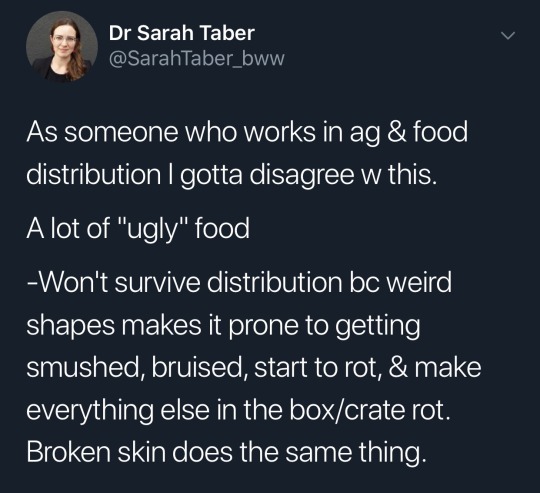
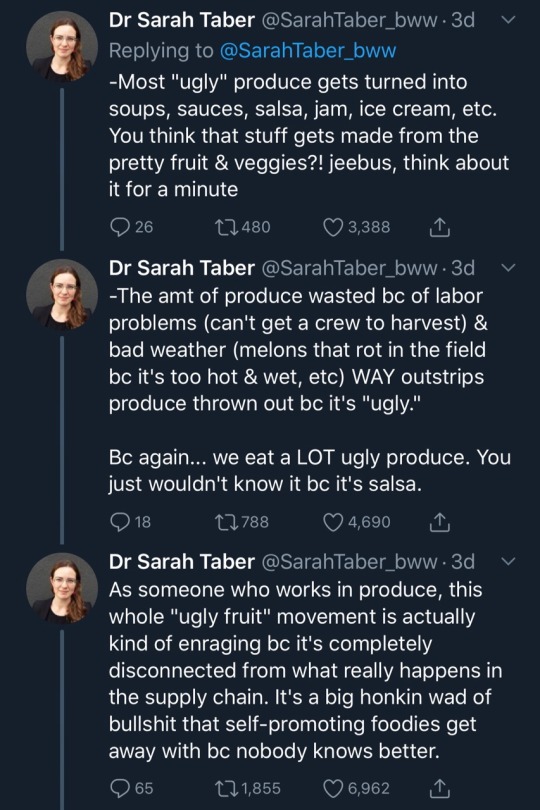
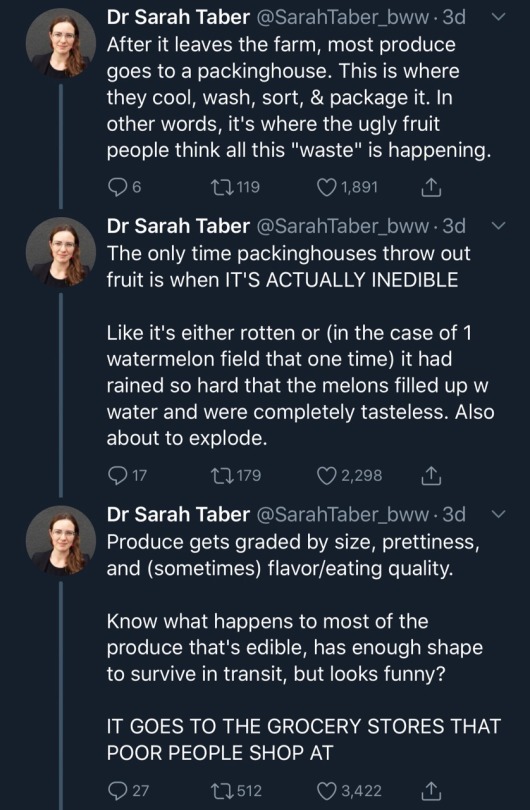


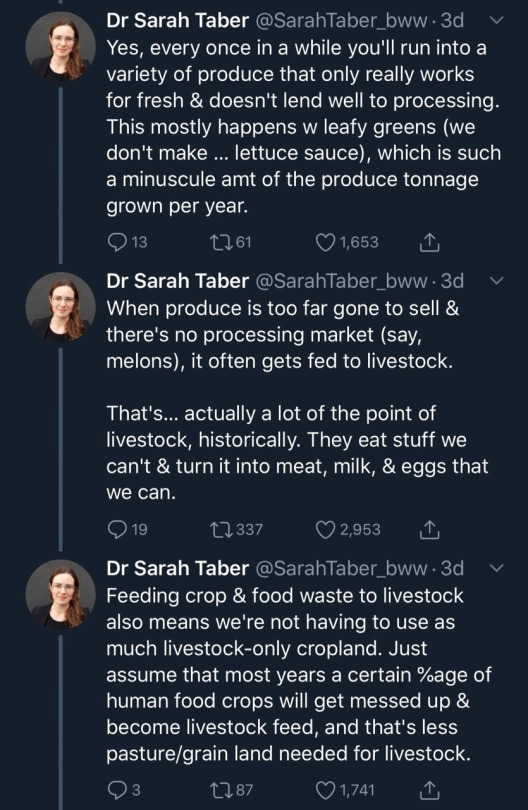


 ifesbob