Just one typo away from being hilarious.
[image transcription: “er hat eine größere Ente als ich” which translates to “he has a bigger duck than me”]
Tag: language
If there was one language you could speak fluently without having to study it, which would you choose?
just-one-more-bridge-to-cross:
French
Spanish
Igbo
Mandarin.
Spanish
Russian
Icelandic
Korean
German
RUSSIAN
Norwegian or german, probably
Russian
Russian
Old Norse or Latin
Japanese, no need for subtitles.
Considering I already do french, I would say Italian
definitely french
French is fun 😂
English
Norwegian so I can talk to the fam
Mandarin. They say if you can speak English, Spanish and Mandarin you can speak to 70% of the planet. I already have the first two.
Basque. I don’t wanna talk to nobody.
Sign language
Chinese (Mandarin specifically)
I’d say German but Germany is going to explode in the next 100 years
Spanish because it’s so damn boring to learn and then I’d be able to learn more interesting but similar languages easier
“chuffed doesnt mean what you think it means”
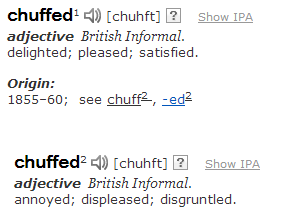
it means exactly what i think it means its just some stupid word that literally has two definitions that mean the opposite thing
what the hell
This makes me really chuffed
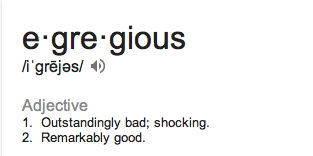
This post is quite egregious
Well I’m nonplussed by this whole post.
goddamnit.
all of you go to hell
And you wonder why i am boggled at times
These are called contronyms! A word that is its own opposite.
Why the fuck do these exist
One theory is that the sarcastic use of the word became exceedingly prevalent and because another dictionary definition.
Are you telling me that we were such sarcastic shits it literally changed our language.

i hate writing historical fic because every five sentences you’re googling random shit like “when did billiards become popular in america” & i’ll have you know it was the 1820s
fun fact my pals the word ‘okay’ or ‘O.K.’ (the abbreviation for the old timey spelling of ‘all correct’) was popularized in 1840 by Van Buren’s US presidential election slogan and seeing it in historical fiction before then feels like a little glitch in the matrix, but seeing it in an Old Timey Fantasy setting sends me down the rabbit hole of how a fantasy world language would be brutal to translate, and language in general is a trip, and nothing means anything, probably
I just want to add a correction: O.K. was not an abbreviation for an “old-timey” spelling of “all correct”; it is in fact an abbreviation for an INTENTIONAL MISSPELLING of “all correct.” There was a short-lived period in the 1800s where it became amusing and trendy to flagrantly misspell conversational phrases and then abbreviate them, and “O.K.” is the only one to survive to the present day.
O.K. is an ancient MEME.
So, guys, probably more reliable than Google Translate is in many cases there’s Linguee.
Linguee is a sort of dictionary filled with examples and sentences from all over the internet so you can look up individual phrases or words and see how they’re used and in what contexts.
So if you want to type in an actual phrase or something in English or Spanish (or a different language if you pick it) you can see your words used in sentences and see how actual sentences look… rather than relying on Google Translate to mess up the grammar or false cognates.
And more than that, you can also check the sources they take the example sentences from.
I highly recommend Linguee for people who are trying to figure out specific phrases rather than particular words (which I would use WordReference for).
Linguee is a god send!
Linguee is bomb!
My French teacher introduced me to Linguee and it really is spectacular!
I’ve used sometimes for work translations, it’s pretty great!
Oh cool! I should check this out!
So I found this cool website for learning ancient languages
go wild
holy fuck
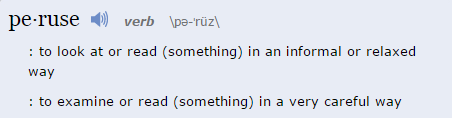
I just did a quick perusal of the Coptic resources on this site, and it has all the resources I’ve personally found worthwhile and then some. These are resources that took me months, if not years, to discover and compile. I am thoroughly impressed. The other languages featured on the site are:
- Akkadian
- Arabic
- Aramaic
- Church Slavonic
- Egyptian (hieroglyphics and Demotic)
- Elamite
- Ethiopic (Ge’ez)
- Etruscan
- Gaulish
- Georgian
- Gothic
- Greek
- Hebrew
- Hittite
- Latin
- Mayan (various related languages/dialects)
- Old Chinese
- Old English
- Old French
- Old Frisian
- Old High German
- Old Irish
- Old Norse
- Old Persian
- Old Turkic
- Sanskrit
- Sumerian
- Syriac
- Ugaritic
For the love of all the gods, if you ever wanted to learn any of these languages, use this site.
Likely helpful for various recon-oriented polytheists.
Tips to learn a new language
The 75 most common words make up 40% of occurrences
The 200 most common words make up 50% of occurrences
The 524 most common words make up 60% of occurrences
The 1257 most common words make up 70% of occurrences
The 2925 most common words make up 80% of occurrences
The 7444 most common words make up 90% of occurrences
The 13374 most common words make up 95% of occurrences
The 25508 most common words make up 99% of occurrences(Source: 5 Steps to Speak a New Language by Hung Quang Pham)
This article has an excellent summary on how to rapidly learn a new language within 90 days.
We can begin with studying the first 600 words. Of course chucking is an effective way to memorize words readily. Here’s a list to translate into the language you desire to learn that Derek Roger suggested! 🙂
EXPRESSIONS OF POLITENESS (about 50 expressions)
- ‘Yes’ and ‘no’: yes, no, absolutely, no way, exactly.
- Question words: when? where? how? how much? how many? why? what? who? which? whose?
- Apologizing: excuse me, sorry to interrupt, well now, I’m afraid so, I’m afraid not.
- Meeting and parting: good morning, good afternoon, good evening, hello, goodbye, cheers, see you later, pleased to meet you, nice to have met.
- Interjections: please, thank you, don’t mention it, sorry, it’ll be done, I agree, congratulations, thank heavens, nonsense.
NOUNS (about 120 words)
- Time: morning, afternoon, evening, night; Sunday, Monday,
Tuesday, Wednesday, Thursday, Friday, Saturday; spring, summer, autumn,
winter; time, occasion, minute, half-hour, hour, day, week, month,
year.
- People: family, relative, mother, father, son,
daughter, sister, brother, husband, wife; colleague, friend, boyfriend,
girlfriend; people, person, human being, man, woman, lady, gentleman,
boy, girl, child.
- Objects: address, bag, book, car, clothes, key,
letter (=to post), light (=lamp), money, name, newspaper, pen, pencil,
picture, suitcase, thing, ticket.
- Places: place, world, country, town, street, road,
school, shop, house, apartment, room, ground; Britain, name of the
foreign country, British town-names, foreign town-names.
- Abstract: accident, beginning, change, color,
damage, fun, half, help, joke, journey, language, English, name of the
foreign language, letter (of alphabet), life, love, mistake, news, page,
pain, part, question, reason, sort, surprise, way (=method), weather,
work.
- Other: hand, foot, head, eye, mouth, voice; the
left, the right; the top, the bottom, the side; air, water, sun, bread,
food, paper, noise.
PREPOSITIONS (about 40 words)
- General: of, to, at, for, from, in, on.
- Logical: about, according-to, except, like, against, with, without, by, despite, instead of.
- Space: into, out of, outside, towards, away from,
behind, in front of, beside, next to, between, above, on top of, below,
under, underneath, near to, a long way from, through.
- Time: after, ago, before, during, since, until.
DETERMINERS (about 80 words)
- Articles and numbers: a, the; nos. 0–20; nos. 30–100; nos. 200–1000; last, next, 1st–12th.
- Demonstrative: this, that.
- Possessive: my, your, his, her, its, our, their.
- Quantifiers: all, some, no, any, many, much, more, less, a few, several, whole, a little, a lot of.
- Comparators: both, neither, each, every, other, another, same, different, such.
ADJECTIVES (about 80 words)
- Color: black, blue, green, red, white, yellow.
- Evaluative: bad, good, terrible; important, urgent, necessary; possible, impossible; right, wrong, true.
- General: big, little, small, heavy; high, low; hot,
cold, warm; easy, difficult; cheap, expensive; clean, dirty; beautiful,
funny (=comical), funny (=odd), usual, common (=shared), nice, pretty,
wonderful; boring, interesting, dangerous, safe; short, tall, long; new,
old; calm, clear, dry; fast, slow; finished, free, full, light (=not
dark), open, quiet, ready, strong.
- Personal: afraid, alone, angry, certain, cheerful,
dead, famous, glad, happy, ill, kind, married, pleased, sorry, stupid,
surprised, tired, well, worried, young.
VERBS (about 100 words)
- arrive, ask, be, be able to, become, begin, believe, borrow,
bring, buy, can, change, check, collect, come, continue, cry, do, drop,
eat, fall, feel, find, finish, forget, give, going to, have, have to,
hear, help, hold, hope, hurt (oneself), hurt (someone else), keep, know,
laugh, learn, leave, lend, let (=allow), lie down, like, listen, live
(=be alive), live (=reside), look (at), look for, lose, love, make, may
(=permission), may (=possibility), mean, meet, must, need, obtain, open,
ought to, pay, play, put, read, remember, say, see, sell, send, should,
show, shut, sing, sleep, speak, stand, stay, stop, suggest, take, talk,
teach, think, travel, try, understand, use, used to, wait for, walk,
want, watch, will, work (=operate), work (=toil), worry, would, write.
PRONOUNS (about 40 words)
- Personal: I, you, he, she, it, we, they, one; myself, yourself, himself, herself, itself, ourselves, yourselves, themselves.
- Possessive: mine, yours, his, hers, its, ours, theirs.
- Demonstrative: this, that.
- Universal: everyone, everybody, everything, each, both, all, one, another.
- Indefinite: someone, somebody, something, some, a few, a little, more, less; anyone, anybody, anything, any, either, much, many.
- Negative: no-one, nobody, nothing, none, neither.
ADVERBS (about 60 words)
- Place: here, there, above, over, below, in front, behind,
nearby, a long way away, inside, outside, to the right, to the left,
somewhere, anywhere, everywhere, nowhere, home, upstairs, downstairs.
- Time: now, soon, immediately, quickly, finally,
again, once, for a long time, today, generally, sometimes, always,
often, before, after, early, late, never, not yet, still, already, then
(=at that time), then (=next), yesterday, tomorrow, tonight.
- Quantifiers: a little, about (=approximately), almost, at least, completely, very, enough, exactly, just, not, too much, more, less.
- Manner: also, especially, gradually, of course,
only, otherwise, perhaps, probably, quite, so, then (=therefore), too
(=also), unfortunately, very much, well.
CONJUNCTIONS (about 30 words)
- Coordinating: and, but, or; as, than, like.
- Time & Place: when, while, before, after, since (=time), until; where.
- Manner & Logic: how, why, because, since (=because), although, if; what, who, whom, whose, which, that.
 ifesbob