Everyone’s like “those Germans have a word for everything” but English has a word for tricking someone into watching the music video for Rick Astley’s Never Gonna Give You Up.
This is either going to be the most wonderfully educational post I’ve seen all night, or else this is five (5) links to the music video for Rick Astley’s Never Gonna Give You Up.
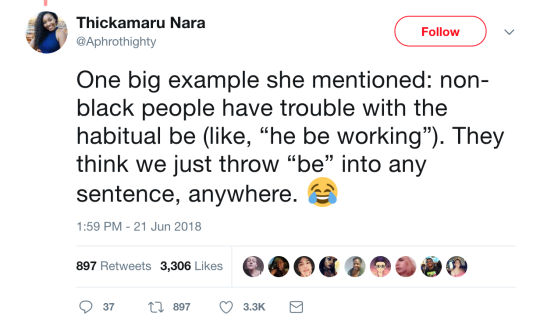
people understand that Spanish speakers speak different dialects of the Spanish language but don’t understand that black people speak a dialect of the English language
saw a variation of this conversation on twitter earlier
“they” (1 word) is shorter than “he or she” (3 words)
“they” is more inclusive than “he/she”
“themself” flows more naturally than “him or herself”
“they” is less clunky than “(s)he”
it’s time to replace the awkward “she or he”
“hey can you go ask they what does they want for dinner, and when is they coming over to watch movies with they?”
“Hey, can you go ask them what they want for dinner, and when they’re coming over to watch movies?”
Step one is learning how to talk like a human person.
Friendly reminder:
“I shouldn’t like to punish anyone, even if they’d done me wrong.” —George Eliot, The Mill on the Floss (1860)
“A person can’t help their birth.” —William Thackeray, Vanity Fair (1848)
“But to expose the former faults of any person, without knowing what their present feelings were, seemed unjustifiable.” —Jane Austen, Pride and Prejudice (1813)
“Every Fool can do as they’re bid.” —Jonathan Swift, Polite Conversation (1738)
“So likewise shall my heavenly Father do also unto you, if ye from your hearts forgive not every one his brother their trespasses.” —King James Bible, Matthew 18:35 (transl. 1611)
“God send every one their heart’s desire!” —William Shakespeare, Much Ado About Nothing (~1600)
“Now this king did keepe a great house, that euerie body might come and take their meat freely.” —Sir Philip Sidney, the Arcadia (1580)
“If … a psalme scape any person, or a lesson, or els yt they omyt one verse or twayne…” —William Bonde, The Pylgrimage of Perfection (1526)
“And whoso fyndeth hym out of swich blame, / They wol come up and offre a Goddés name” —Geoffrey Chaucer, The Pardoner’s Tale (~1380)
“þan hastely hiȝed eche wiȝt on hors & on fote, / huntyng wiȝt houndes alle heie wodes, / til þei neyȝþed so neiȝh to nymphe þe soþe [Then hastily hied each person on horse and on foot / hunting with hounds all the high woods / ‘til they came so near, to tell the truth]” —William and the Werwolf (transl. ~1350-1375)
“Bath ware made sun and mon, / Aiþer wit þer ouen light [Both were made sun and moon / Either with their own light]” —Cursor Mundi (~1325)
We’ve been using they/them/their pronouns to indicate a person with unspecified gender for a long ass fucking time. The only reason it’s become a big issue lately is because it can be used as a semi-respectful term for trans and non-binary folks and we can’t have that can we
These fucks are literally trying to change our language to hurt trans/nb folks, and claiming that’s just the way its always been
how did they learn to translate languages into other languages how did they know which words meant what HOW DID TH
English Person: *Points at an apple* Apple
French Person: Non c’est une fucking pomme
*800 years of war*
Fun fact: There are a lot of rivers in the UK named “avon” because the Romans arrived and asked the Celts what the rivers were called. The Celts answered “avon.”
“Avon” is just the Celtic word for river.
Fan Fact #2: When Spanish conquistadors landed in the Yucatán peninsula, they asked the natives what their land was called and they responded “Yucatán”. In 2015, it was discovered that in those mesoamerican languages, “Yucatán” meant “I don’t understand what you are saying”
W H E E Z E
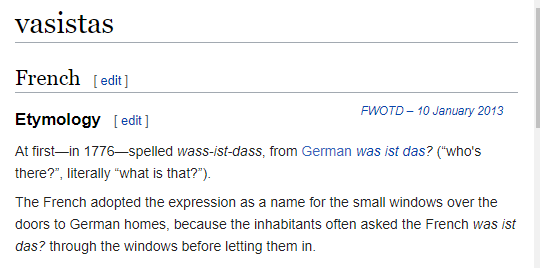
I love entomology so much because so many words kind of happened by accident or by a native speaker trying to say “WTF are you saying?“





 ifesbob