old people really need to learn how to text accurately to the mood they’re trying to represent like my boss texted me wondering when my semester is over so she can start scheduling me more hours and i was like my finals are done the 15th! And she texts back “Yay for you….” how the fuck am i supposed to interpret that besides passive aggressive
Someone needs to do a linguistic study on people over 50 and how they use the ellipsis. It’s FASCINATING. I never know the mood they’re trying to convey.
I actually thought for a long time that texting just made my mother cranky. But then I watched my sister send her a funny text, and my mother was laughing her ass off. But her actual texted response?
“Ha… right.”
Like, she had actual goddamn tears in her eyes, and that was what she considered an appropriate reply to the joke.I just marvelled for a minute like ‘what the actual hell?’ and eventually asked my mom a few questions. I didn’t want to make her feel defensive or self-conscious or anything, it just kind of blew my mind, and I wanted to know what she was thinking.
Turns out that she’s using the ellipsis the same way I would use a dash, and also to create ‘more space between words’ because it ‘just looks better to her’. Also, that I tend to perceive an ellipsis as an innate ‘downswing’, sort of like the opposite of the upswing you get when you ask a question, but she doesn’t. And that she never uses exclamation marks, because all her teachers basically drilled it into her that exclamation marks were horrible things that made you sound stupid and/or aggressive.
So whereas I might sent a response that looked something like:
“Yay! That sounds great – where are we meeting?”
My mother, whilst meaning the exact same thing, would go:
‘Yay. That sounds great… where are we meeting?”
And when I look at both of those texts, mine reads like ‘happy/approval’ to my eye, whereas my mother’s looks flat. Positive phrasing delivered in a completely flat tone of voice is almost always sarcastic when spoken aloud, so written down, it looks sarcastic or passive-aggressive.
On the reverse, my mother thinks my texts look, in her words, ‘ditzy’ and ‘loud’. She actually expressed confusion, because she knows I write and she thinks that I write well when I’m constructing prose, and she, apparently, could never understand why I ‘wrote like an airhead who never learned proper English’ in all my texts. It led to an interesting discussion on conversational text. Texting and text-based chatting are, relatively, still pretty new, and my mother’s generation by and large didn’t grow up writing things down in real-time conversations. The closest equivalent would be passing notes in class, and that almost never went on for as long as a text conversation might. But letters had been largely supplanted by telephones at that point, so ‘conversational writing’ was not a thing she had to master.
So whereas people around my age or younger tend to text like we’re scripting our own dialogue and need to convey the right intonations, my mom writes her texts like she’s expecting her Eighth grade English teacher to come and mark them in red pen. She has learned that proper punctuation and mistakes are more acceptable, but when she considers putting effort into how she’s writing, it’s always the lines of making it more formal or technically correct, and not along the lines of ‘how would this sound if you said it out loud?’
the linguistics of written languages in quick conversational format will never not be interesting to me like it’s fascinating how we’ve all just silently learned what an ellipsis or exclamation mark implies and it’s totally different in different communities or generations or whatever
how did they learn to translate languages into other languages how did they know which words meant what HOW DID TH
English Person: *Points at an apple* Apple
French Person: Non c’est une fucking pomme
*800 years of war*
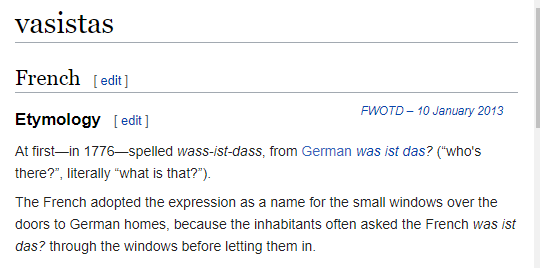
Fun fact: There are a lot of rivers in the UK named “avon” because the Romans arrived and asked the Celts what the rivers were called. The Celts answered “avon.”
“Avon” is just the Celtic word for river.
Fan Fact #2: When Spanish conquistadors landed in the Yucatán peninsula, they asked the natives what their land was called and they responded “Yucatán”. In 2015, it was discovered that in those mesoamerican languages, “Yucatán” meant “I don’t understand what you are saying”
W H E E Z E
I love entomology so much because so many words kind of happened by accident or by a native speaker trying to say “WTF are you saying?“
My favorite method of learning pronunciation in another language is singing.
I spent the hours I travel on the bus singing reggaeton and have almost no accent when speaking Spanish.
Bollywood soundtracks helped me master the ड़ sound.
One of my students struggled with the English w sound and I had him sing the song “I Want It That Way” and he can say it almost perfectly.
Sing. Even if you suck. Sing.
Seriously, my pronunciation for French and Danish improved so much just by listening to their versions of Disney songs. Singing is an invaluable language resource!
True story!! This works! I blast Finnish music all day and learn the songs and it helps SO MUCH!
When people remark that I speak Swedish with almost no accent, I tell them that it’s because I sing so much. I’ve learned so much about pronunciation by singing in different languages, so this is is 100% A+ good advice.
I can’t play Japanese pop music without looking like a weeb


 ifesbob