bears have absolutely no right to be as cute as they are. i want to hug them and pet them. big fluffy dogs, supersized
this thing is one of the most dangerous predators in north america, is bulletproof, and could kill me in milliseconds without breaking a sweat and just. look at his big ole paws and his big ole nose. his wittle ears. i wuv him
human brain: bear will kill you
monkey brain: hehe fluffie
*monkey brain: bear will kill you
Human brain: hehe fluffie
Did they stutter?
science: bear will kill you human & monkey brain in unison: hehe fluffyyy
no offense but after thousands of years of evolution… why can’t I breathe underwater, fly, or be motivated for more than 2 days at a time
Listen as a species we’re still working on knees that reliably last longer than peak reproductive age, you can only expect so much
On one hand our knees are pretty impressive for something that’s basically just a hacked elbow supporting a torso that was never supposed to be vertical in the first place
it’s facial reconstructions of prehistoric humans!!
like, look at this part-homo sapiens, part-neandertal man from well over 30,000 years ago:
doesn’t he just look like a dude you’d wanna hang out with? like he probably washes dishes in the kitchen with you, and has excellent weed
what a charming fellow. what stories he probably has to tell. i’d definitely go shoot the shit with him on Contemplation Rock after i’d finished my day’s work carving a bone flute for the autumn hunting ceremony, or whatever
people have been people ever since people first became people, i tell you what
they all had lives and histories and families and friends and dumb gossip and games they played and total bullshit in which they believed wholeheartedly
they all argued about the nature of the world, and of themselves
they all sang songs
they all drew pictures
they all buried their dead in graves, and they buried their dead in graves well before they did a lot of that other stuff. they buried their dead with flowers, with panther claws, with the bones of animals they’d killed, with the bones of family members who had died at the same time or earlier. they buried their dead with their arms folded across their chests
they fell in love
they took care of their old and their sick and their disabled, even when it cost them
they made new things, and worried about what the new things meant for people everywhere, as a whole
Oh I like him he looks like he would appreciate my jokes
This dude would have great stories at a get-together and would bring some really great homemade dip.
I feel like he really digs Lo-Fi Music
This guy was sculpted by Alfons and Adrie Kennis, and their Neanderthal reconstructions are all delightful.
I love the kid in the last picture a lot- they look like a kid, just a little kid who’s done some mischief and is trying not to laugh about it.
I also adore their Lucy- they’ve struck a wonderful balance between the falling angel and the rising ape.
And their Turkana boy- there’s something precious and wistful in those eyes.
But my favorite has got to be their reconstruction of H. floresiensis.
Just look at her. That’s a face of someone who’s lived and seen a lot, but also a face that’s known love and joy and laughter. That’s a face with a soul.
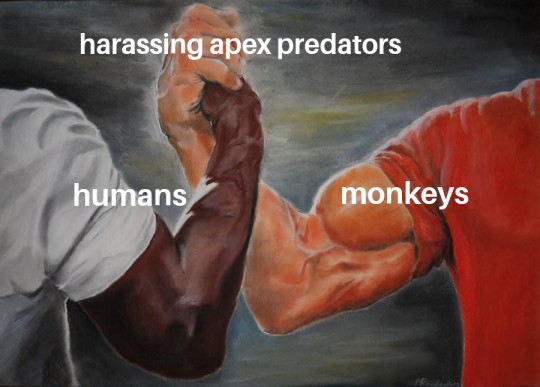
The domestication of dogs started with a small number of particularly trusting, optimistic humans and a small number of particularly trusting, optimistic wolves looking at an extremely dangerous competing apex predator and thinking ”maybe it’s friendly.”
Parrots are famously talkative, and a blue-fronted Amazon parrot named Moises—or at least its genome—is telling scientists volumes about the longevity and highly developed cognitive abilities that give parrots so much in common with humans. Perhaps someday, it will also provide clues about how parrots learn to vocalize so well.
Morgan Wirthlin, a BrainHub post-doctoral fellow in Carnegie Mellon University’s Computational Biology Department and first author of a report to appear in the Dec. 17 issue of the journal Current Biology, said she and her colleagues sequenced the genome of the blue-fronted Amazon and used it to perform the first comparative study of parrot genomes.
By comparing the blue-fronted Amazon with 30 other long- and short-lived birds—including four additional parrot species—she and colleagues at Oregon Health and Science University (OHSU), the Federal University of Rio de Janeiro and other entities identified a suite of genes previously not known to play a role in longevity that deserve further study. They also identified genes associated with longevity in fruit flies and worms.
“In many cases, this is the first time we’ve connected those genes to longevity in vertebrates,” she said.
Wirthlin, who began the study while a Ph.D. student in behavioral neuroscience at OHSU, said parrots are known to live up to 90 years in captivity—a lifespan that would be equivalent to hundreds of years for humans. The genes associated with longevity include telomerase, responsible for DNA repair of telomeres (the ends of chromosomes), which are known to shorten with age. Changes in these DNA repair genes can potentially turn cells malignant. The researchers have found evidence that changes in the DNA repair genes of long-lived birds appear to be balanced with changes in genes that control cell proliferation and cancer.
The researchers also discovered changes in gene-regulating regions of the genome—which seem to be parrot-specific—that were situated near genes associated with neural development. Those same genes are also linked with cognitive abilities in humans, suggesting that both humans and parrots evolved similar methods for developing higher cognitive abilities.
Unfortunately the majority of sources on this are biased horseshit 😛 but sure, let’s talk actual nutrition, and also about a little thing called BIOAVAILABILITY
PROTEIN: Herbivores need protein just like any other animal does. Since they eat plants, they need to get all their amino acids (protein building blocks) from plants. Most plants are not complete sources of protein, so herbivores need to eat an array of plants. Furthermore, in order to get protein from plants, the plant matter needs to be fermented and broken down by the rumen bugs (or hindgut bugs in horses/pigs), because it’s not easy to get protein from plants. Humans don’t necessarily have the tools herbivores do. Animal proteins contain all of the amino acids that the animal was able to convert from plants, but that definitely doesn’t mean people are able to do so.
CALCIUM: calcium goes into plants from the soil. herbivores get their calcium from plants. it’s also common for otherwise herbivorous species to eat bones and lick limestone/calcium deposits. There is a lot of calcium in grass, but if we ate grass, our bodies would have no idea what to do with it. In calcium-rich plants, there are commonly other nutrients that actually inhibit calcium absorption in humans – unlike in animal calcium sources.
IRON: it’s much easier for people to absorb heme (animal) iron vs non-heme (plant) iron. animals convert one into the other.
basically, humans lack the fancy equipment every herbivore has for converting all the nutrients from plants into nutrients the body can use. they have to digest things very thoroughly to get nutrients from plants: pretty much all herbivores are going to ferment their food in their gut (or rumen), and most have some sort of behavior where they digest their food twice (rumination and cecotrophy), humans do not. Eating them is an easy way to get all the nutrients they can get from plants that we can’t. Not every nutrient is bioavailable to us.
You’re right, humans are not herbivores. We were originally intended to be frugivores, as judged by what natural defenses and attack methods we evolved without the use of tools or weapons in Africa, as part of our ecosystem. With modern advancements, and technology, we’ve been able to adapt for dietary flexibility. Meaning like modifying food scientifically so that we can consume it. 2 thousand years ago if someone ate a box of kraft dinner, they’d probably die.
This again?
“Frugivore” is not a distinct category, for one; it’s an umbrella covering any herbivore or omnivore that will choose strawberries over Brussels sprouts. On top of that, you’re doing that vegan thing where you say that it’s a distinct category from “herbivore,” but actually define it as a sort of specialist herbivore whose supposed natural diet just so happens to match up to raw veganism. (No such animal, it should be noted, actually exists—no matter what some self-congratulatory lay-ideologue who grandiosely styles himself “Colin Ahimsa Go-Vegan Wright” and “the Legacy of Pythagoras” may claim.)
We’re apes. Any species of ape—hell, just about any species of primate—is going to at very least eat insects on a more-than-incidental basis. And once you look past the over-specialization for tool use (gracile skeleton, hands structured for precision grip, skull that’s mostly braincase), we have more in common anatomically with the more omnivorous species than the more herbivorous ones. Even if you choose to eat like an herbivore:
you remain a dirty, flea-bitten, opportunistic scavenger
We’ve adapted for dietary flexibility thanks to
thousands of years of hardening our digestive systems. However, If you
cannot hunt the animal with your bare hands and rip into it with your
finger nails and teeth, you aren’t meant to consume it naturally.
In a word: bullshit. First of all: the appeal to nature is a fallacy for a reason; claiming that we “aren’t meant to consume it naturally” if we require tools is patently ridiculous. By that logic, we also “aren’t meant to consume” grains (we can’t really eat them raw, after all), sea otters “aren’t meant to consume” hard-shelled bivalves, and crows “aren’t meant to consume” snails.
Secondly: we’ve been overspecialized tool-users since before we were entirely human. While our being over-specialized tool-users has led to us being a rather physically unimpressive species? Not only are there people who can catch fish, birds, etc; with their bare hands; and not only are there prey that anyone can catch with their bare hands; but observation of other omnivorous primates—such as chimps and baboons—suggests that our proto-human ancestors would have done just fine hunting with few, if any, tools. (To say nothing of scavenging.)
ETA: In certain African nations, baboons raid garbage cans. They find plenty of processed food there. It does not kill them.
Lmao how about you eat my entire dick, elitist bastard?
Who’s gonna tell this person that
1) Ethics is a divisive field where everything is subjective
2) ‘Murder’ only applies to people
3) Plants are living beings and they also die when you eat them
4) Meat can be necessary for any number of reasons. Physical health, mental health, availability, money, the environment, etc. The world isn’t homogenous.
I hope this is either a troll or a 15 year old kid who doesn’t know any better. The thought of an adult writing this and thinking ‘yeah, this is good, this is worth sending’ is unsettling.
Lmao how about you eat my entire dick, elitist bastard?
Who’s gonna tell this person that
1) Ethics is a divisive field where everything is subjective
2) ‘Murder’ only applies to people
3) Plants are living beings and they also die when you eat them
4) Meat can be necessary for any number of reasons. Physical health, mental health, availability, money, the environment, etc. The world isn’t homogenous.
I hope this is either a troll or a 15 year old kid who doesn’t know any better. The thought of an adult writing this and thinking ‘yeah, this is good, this is worth sending’ is unsettling.
“If humans aren’t ‘meant’ to drink milk then we’re also not ‘meant’ to walk upright on two legs, because both of those abilities came from the same process: evolution. Some people picked up a mutation that let them digest milk past weaning age and it was enough of an advantage that it stuck around. At the time that the mutation came about the nutrients found in milk and cheese were hard to come by from other sources but they were still vital to survival, so people that could drink milk and eat cheese lived longer and had more kids that didn’t die, so now lactose tolerance is a fairly widespread trait. Traits like that stick around for as long as they’re still an advantage or as long as they’re not a disadvantage. It has nothing to do with ‘meant to’ it just is.”



 ifesbob