I’m into the sixth episode of “Our Planet.” It’s enlightening, beautiful and educational. But it also generates guilt and a feeling of “oh shit, what have we done and what are we doing?” I encourage you to watch it.
Excerpt:
One of the hallmarks of a past generation’s nature documentaries was the animal-in-peril scene: the cub hunted by the jungle cat, the fledgling teetering at the edge of its nest.
It was like the terror of a thrill-park ride, one that usually came with the implicit knowledge of safeguards and constraints. In the end, the adorable creature would survive. This was the compact. The animal that you liked would be O.K. After all, this was TV.
There is one of those scenes in the second episode of “Our Planet,” the remarkable docu-series on Netflix. But now the compact is gone. A teeming colony of walruses is crammed at the edge of eighty-meter cliffs along the coast of Russia, where climate change has melted away the sea ice. Not evolved to navigating the precarious surfaces, one walrus falls, and another, and another, their massive bodies slamming onto the rocky beach.
They do not, most of them, get up and shake it off. Their broken bodies litter the shore. This is the resounding message of “Our Planet”: It will not, necessarily, be O.K. And humans — the unpictured but omnipresent part of “our” in “Our Planet” — are the reason.
Mute the narration, and you could be watching the same screensaver art pageantry of a dozen past nature series. But the form of the episodes introduces this program’s mission. Each installment is about the web of life in a place — how the food chain that sustains a Siberian tiger begins with pine cones on a forest floor, how life in a river depends on steam rising from trees hundreds of miles away. Disrupt one part — raise the temperature, plant crops in a rain forest — and you disrupt them all.
“One Planet” appeals to the sense of wonder as viscerally as any of its predecessors, but to a purpose. Here is this beautiful, rare thing, each episode says. It didn’t used to be rare! But it is now. And here is how we’re responsible. And here is a tangible thing we might do to fix it. The arc of each installment runs from beauty to loss to a concrete, hopeful example of a battered ecosystem that’s recovered.
Prairies are some of the most endangered ecosystems in the world, with the tallgrass prairie being the most endangered. Only 1-4% of tallgrass prairie still exists.
Prairies are critically important, not only for the unique biodiversity they possess, but for their effect on climate.
The ability to store carbon is a valuable ecological service in today’s changing climate. Carbon, which is emitted both naturally and by human activities such as burning coal to create electricity, is a greenhouse gas that is increasing in the Earth’s atmosphere. Reports from the International Panel on Climate Change, a group of more than 2,000 climate scientists from around the world, agree that increased greenhouse gases are causing climate change, which is leading to sea level rise, higher temperatures, and altered rain patterns. Most of the prairie’s carbon sequestration happens below ground, where prairie roots can dig into the soil to depths up to 15 feet and more. Prairies can store much more carbon below ground than a forest can store above ground. In fact, the prairie was once the largest carbon sink in the world-much bigger than the Amazon rainforest-and its destruction has had devastating effects.
I just have to add–that extensive root system? It’s not just how the plant eats, and how it keeps itself from getting pulled out of the ground during storms, or dying when its aboveground portion is eaten… it’s how it talks to its friends and family, how it shares food with its friends and family, and more than likely, how it thinks.That’s a whole plant brain we’ve domesticated away, leaving a helpless organism that has trouble figuring out when it’s under attack by pests, what to do about it, has very little in the way of chemical defense so it can do something about it, and can’t even warn its neighbors. Even apart from the ecological concerns, what we’ve done is honestly pretty cruel.
Whether or not you think this should qualify as a form of “intelligence” as we know it (which in itself as a pretty nebulous and poorly defined thing), plants exhibit complicated interactive behaviors that help them grow and thrive, and the way we harvest a lot of them for our produce just doesn’t even give them a chance to reach their maturity and begin trading nutrients the way they’re supposed to.
this is why I get so defensive about grass on Tumblr, and yes, I recognize how ridiculous that sentence is. The anti-lawn-culture movement – which is great in many ways! – is very anti-grass, because they think of grass as this plastic green stuff that American dads spray on everything, at the cost of Perfect Beautiful Nature. But grass is incredible. The reason that people commonly like to surround themselves with grass is because it is a fantastic plant. And yet it’s associated with the boring and mundane! People think of it as, like, background noise. They think of it as the floor. It’s like some kind of carpet to them, to be complained about occasionally because it isn’t a forest or vegetable garden. They don’t even care about it, and then they complain about it. But let me tell you: the Grass Fandom is extremely rewarding.
Obviously, it isn’t a good idea to terraform landscapes into lawns. Golf courses can fuck right off. Nobody needs to water lawns (if lawn grass turns yellow in the heat, it is almost always because it has simply gone dormant; it’ll turn green as soon as it gets some water. You don’t need to water it, it will resurrect itself.) But neither is it a universally good idea to rip up established lawns and yards and greens in order to replace them with vegetable gardens or whatever (unless you need to, or if the grass can only live there with extensive life support in place.) Grass is an excellent plant to have around the home or town; it allows pets, poultry and children to play and piss and shit and walk, and it kindly breaks all of it down; you can walk on it, and it forgives you; it prevents erosion, saving our vanishing topsoil with a ferocious stubbornness; it locks the moisture into the ground, produces a renewable harvest of grass clippings that can be composted for rich green manure, and respires nearly year-round in some areas.
I mean, grass resists being stomped on all day! It keeps high-traffic outdoor areas from becoming mudpits or dusty swathes! That’s seriously impressive in a plant. To replace that durability in public and private spaces, you’d often have to lay down gravel or chippings for people to walk on, which isn’t green and doesn’t grow and has to be acquired from somewhere. Isn’t grass impressive? Name another type of plant that will carry you like that.
Like, the OP mentions grasslands and climate change. You almost never hear about this, because the eco-public prefers the concept of trees as the Most Eco Plants Ever. Everyone loves trees sooooo much, that there is this constant background insistence that planting loads of trees will fix environmental damage forever, and that the world would be better if it all looked like some Eurocentric fantasy of a mossy fairy forest.
Now, trees are great! I am also in the tree fandom. But trees aren’t hugely efficient at fixing carbon – and across most geographical swathes of the planet, they only work part-time. They only grab carbon dioxide and produce oxygen during the stages of their life cycles when they are “awake” and actively growing – so not during winter, not in their old age, etc. And contrast with wild native grass, which apparently considers carbon capture and sequestration to be its favorite hobby. But you almost never hear people going on about “preserving grassland” or being “grass-huggers” – and that is incredibly important! Let’s talk more about grass!
And vast tracts of the world – magnificent biomes on every part of the planet – are not native forests, but native grassland. Steppes, tundras, prairies, savannahs and scrublands are places that trees don’t dominate, but they are bursting with important and diverse life – often centered around the rhythms of native grasses. Trees don’t live in Antarctica, but grasses do! Grasses are GREAT. They harbor life! They support life!
Grass forms the basis of the human food supply – we eat grains more than anything else. Grains are grasses, and we also use and eat the animals that eat grass. The great domesticated cereal grains of the world – maize, rice, millet, wheat – allowed for food storage, which allowed towns and civilizations to form. And the domesticated animals which have carried our societies on their backs for so long – cows, sheep, horses – all eat grass. Grass is so incredibly important to our daily lives. And it’s beautiful! And complicated! And clever! It’s so much more than a floor covering.
Resist the insistence that grass = lawn. (and in some climates and geographies, embrace that ‘lawns’ are a natural environment.) Encourage and celebrate the native grasses of your area! Whether they’re tallgrass or bamboo, they are very exciting and important. Perhaps you’d like to meet the nearest patch of grass – a lawn, a park, or a strip of green in a city. Is it delicate bentgrass? Tough and resilient ryegrass? Is it invasive? indigenous? Formerly invasive but now naturalized? What is it used for? Who loves it?
Just. Grass is so great! Join the Grass Fandom today!
We’ve long known that sea ice is an important platform for polar
bears to hunt and raise young, but it turns out that the ice itself also
carries a valuable energy source.
Does this sound like you? You’re a person who cares about the environment. Generally, you try to be pretty ethical, and you care about causes pretty deeply. You’re kind of removed from global biodiversity hotspots- maybe you live in urban/suburban USA, like most of this blog’s readers, and maybe you don’t really think of conservation as much of a human rights issue. Maybe you think we’re the “bad guys,” but you’re not really sure or you don’t think much about who “we” are. You don’t have a super deep connection to the land, and you’re not an expert- but you care about the environment, you recycle, you carry a reusable water bottle, you take public transit, carpool, or bike when you can. Wherever you live, these are probably options you have available to some extent. Maybe you listened to a lot of Raffi as a kid or watched Captain Planet, or really just kinda like this planet and all the creatures on it- but you maybe struggle with talking in depth about conservation. You get a lot of ideas and you read a lot of things, but most of the time everything seems like it’s Good or Bad.
Perfect. You’re great. Let’s talk. This post is for you. This is how you can empower yourself and others and help steer the conversation around conservation. This is how you can help foster a better understanding of some of the subtler issues surrounding global biodiversity, and this is how you can do it in a way that doesn’t put the burden on easy targets who are part of a much larger system.
When you talk about conservation issues, you can’t forget the humans who live there- wherever “there” is in this case. Consider why they might be in a situation where poaching isn’t just the best option, it might be the only option. What other resources and opportunities do they have in these communities? Is the available labor fair? How has the history of geopolitical/economic development affected the area? You just need the basics, really, for these considerations. You don’t need to be an expert. You shouldn’t feel guilty- you’re not responsible for the actions of the past- but you should feel a quiet sense of resolve. Feel your back get a little stiffer? That’s you realizing how much better these conversations will be if you look at the big picture. You can do better. You can make things better, and a great way to start is by looking at the language you’re using and the way you think about countries other than your own. This is especially true if your country has benefited from having colonies (or things that function as colonies- territories, holdings, dependencies, dominions, protectorates, that sort of thing all count).
The answer to global biodiversity loss and endangered species conservation is not what a lot of generally well-meaning people think it is, because there’s a crucial puzzle piece missing from many are willing to talk about- and that’s people. We’re animals, too, and we are not exempt from food webs. We are not exempt from water cycles. We might be able to mitigate some of the negative, but not all of us can- and none of us can forever. We’ve created a mess of things, certainly- but that doesn’t mean we can’t do things to fix it.
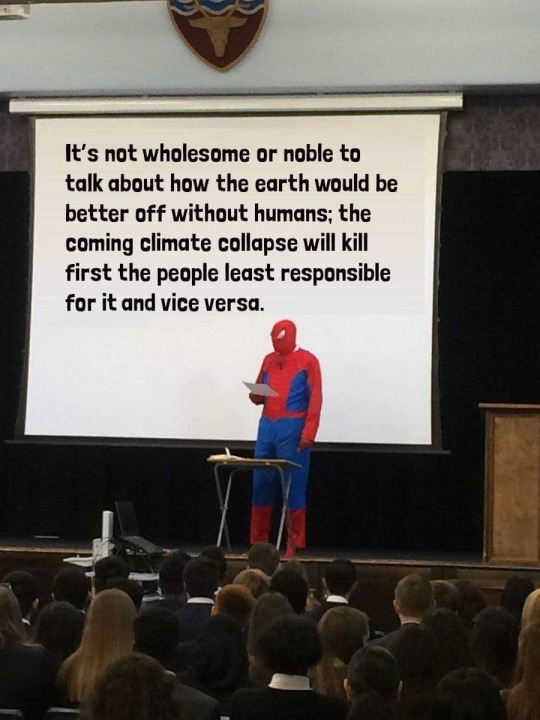
But the way we have to think about fixing things cannot involve calling for the elimination of human groups. First, advocating for the eradication of human communities is wrong. Do not advocate for mass murder. Someone far more eloquent than I am explained this beautifully. And it’s not just mass murder- the way we talk about how individual poachers should be punished isn’t useful for justice at all. By and large, advocating for murder usually doesn’t solve most problems, and frankly, the death of one poacher isn’t going to do anything for conservation. Second, it’s just plain not fair. Ecological degradation is a global problem, and in many, many cases, the root cause of the problems are not the people in the closest proximity. However, they are often the ones who bear the burden of habitat loss and diminished biodiversity. It’s fine for us here in the USA to say “killing an elephant is morally wrong,” but what do you do when you’re a subsistence farmer who’s looking at a lost growing season again because that elephant has destroyed your crops for the fifth time and you know a guy who can get you ten years’ worth of wages for the tusks, plus you, your family, and all your neighbors can eat off that animal for ages?
But conservation also doesn’t work when you don’t take local agency, power, and needs into account, and this is what I mean by decolonize your conservation conversations. The next time you see an article about a poacher who was killed by animals, quietly look up that area and see what life is like there. Look up that area specifically– the life of someone who lives in Nairobi is going to be very different than a subsistence farmer. It’s a little extra work, but without it, these conversations are meaningless.
Another trap to avoid is thinking that anybody else can just go in and fix the problem. That’s like putting a band-aid on a broken leg after the doctor told you that you need to pay them to put a cast on. In this metaphor, the broken leg is the environment, the doctor is the people who live there, the cast is sustainable, long-term conservation methods, the band-aid is foreign aid without local investment, and the ‘pay the doctor’ part is investing in the work that locals are doing. Conservation only works when it’s driven by and for the people who actually live around these places, and no two ecosystems are the same. If you don’t acknowledge the reality of the situation you’re looking at, you’re missing the point entirely. “Save the rainforest!” is a slogan. It means nothing. What rainforest? Why’s it in danger? Who’s threatening it? Why is it being threatened? It’s all well and good to go in and set up, like, a giraffe orphanage or something- but what happens when you run low on money and you have no long-term business plan and you never hired any locals because you can get tourists to come down and pay for the privilege of working with you? Is your plan sustainable? How are you helping the people who know these animals best, who live alongside them? How are you supporting the people who also have to survive? Is your giraffe orphanage respecting local knowledge and contributing to the community that makes it possible? Are you perpetuating a power imbalance that favors you, the visitor, over the people who live there? Power imbalances ruin everything, and that is something that’s easy to miss when you’re first thinking about conservation. Also: money is power. What are these country’s resources and where are they going?
What areas of the world have the most biodiversity loss? Land that’s rich in resources (or was) around the equator. These losses are largely linked to industry, but more than just industry, industry for export- and in most cases, non-reciprocal export. One of the effects of colonialism is that trade back to the colonial power wasn’t equitable. Resources were extracted, but recompense was not rendered in currency, other resources, or infrastructure investments outside of colonial capitals and administrative centers. These weren’t fair trade agreements– they created a lot of wealth for the colonial powers, and massive resource deficits for the colonies. That’s still happening, even if countries have self-governance. So thinking about Indonesia- Indonesia’s losing its forests to logging, and that wood ain’t staying in Indonesia. It’s going all over the world. Unfortunately, Indonesian logging is done in such a way that wildlife traffickers and poachers have an extremely easy job- they just come in and clean up. Some live animals get whitewashed into the pet trade (Indonesia makes up its animal export data); others, and many of the dead ones go to the mainland for the traditional medicine trade. Internal demand for wildlife products in most former European/USAmerican colonies is not the biggest threat to global biodiversity. It’s external demand.
So what to do? Stop global trade? That’s not going to happen- it’s not a real solution. Remove people, create total reserves where nobody can go near the land? Also not a real solution. Putting the entire burden on people whose lives have already been drastically changed by colonialism’s history? Not a solution, and you shouldn’t be asking for that.
Still with me? Good, because this is the fun part! Here’s a baby mountain gorilla as a bit of a palate cleanser.
The good news is that animals themselves are a valuable resource, and if an economy can shift to include that, conservation can become so much easier. My favorite example of this is Rwanda.
Rwanda has a tragic, complicated past with a long history of violence, and their historical conflicts have largely been driven by the fact that the country was treated as a resource extraction point by colonial powers and that these colonial powers used racism as a method to control workers. But as the country has rebuilt in the wake of the chaos of the early 1990s that preceded and followed the civil war and genocide, the ecotourism industry has created an incredible layer of protection around the highly endangered mountain gorilla AND around the Rwandan people. Ecotourism has created a significant number of jobs in the service industry and construction, spurred infrastructure (gotta build roads for the tourists!), made school more accessible to Rwandan children and teenagers, and has really changed the face of the country’s economy… so much so that tourism is the single most important industry in the country- that is where Rwanda’s money is coming from these days. This works because the conservation efforts don’t focus on just the animals. They focus on the people. Village co-ops make decisions about what happens in their area. Conservation is being done in such a way that people who once leaned heavily on bushmeat are now able to feed their families through more sustainable practices- and when they do want bushmeat, they’ve got better access to more common, sustainably hunted species. It’s increased access to domestic livestock through grants from various conservation programs and from visitors- 90% of the Rwandan population is subsistence farmers. This has directly led to a stable population increase, which is unheard of for great apes (other than us, of course). Most great ape populations are shrinking year by year, but in 2018, mountain gorillas passed the 1,000 individual milestone for the first time in decades. In Rwanda, that represents a 25% increase in the population between 2010 and 2018. This is working.
Also: they employ the poachers. Why? Simple, they know where the animals are. They become park rangers, guides, arborists- they are integral to this conservation effort. Something that’s often very hard to wrap the Western mind around is that while we see these animals as exotic, those are the local wildlife. If you’re a Rwandan living near the Volcanoes National Park, where the mountain gorillas live, you’ve heard about them. You know, or someone you know knows, where they hang out. Some of the fiercest protectors of wildlife are the people who once hunted it- not because they’ve had some incredible change of heart, but because they’ve had a change of situation. This works. Seriously. In one five-year development period, local income for five rural communities in the target area increased 846%, and almost 2,500 permanent jobs in natural resource management and tourism management were created. That’s in one area on one project alone. Funding locally-driven initiatives is something that really, really helps. By partnering and working with multinational non-profits, there’s a level of accountability re: corruption and best practices, but by centering local participation and leadership, conservation organizations can actually create long-term, effective change.
So, what can you do? Just keep talking. Jump into conversations about conservation with a more nuanced perspective!
Look for the root of the problem- why does poaching exist in the first place?
Recognize that the people who know the area best- the people who live there- are the ones who need to make decisions about how to use the land and its resources.
Acknowledge that colonialism’s effects haven’t faded and that history affects the present.
Emphasize the work of local leaders in conservation initiatives.
Don’t put the burden of defending local practices on people who didn’t benefit from colonialism the same way you might have- instead, loop back to looking for the root of the problem.
Remember the humans.
Keep the conservation conversation going – use talking points like Rwanda’s ecotourism industry as a positive example of how successful eco-geared development can be.
But seriously, when we got our property, it was all just…grass. A sterile grass moonscape, like a billion other yards. With two big old maple trees. Just grass and maples, that was it.
But then I got my grubby little paws on it, and I immediately stopped fertilizing, spraying, and bagging up grass clippings and leaves. I ripped up sod and put in flowers and vegetables. I put down nice thick blankets of mulch around the flowers and vegetables.
When I first was sweating my way through stripping sod, I saw a grand total of 1 worm and 0 ladybugs. The ground was compacted into something that would bend shovel blades.
Now, six years later, I can’t dig a planting hole without turning up fourteen earthworms, and there are so many ladybugs here. Not the invasive asian lady beetles; native ladybugs. They winter over in the mulch and in the brush pile. I see thousands of them.
The soil is soft and rich. There are birds that come to eat, and bees of many sorts.
Like this is something that you, yourself, can absolutely change. This is something that you, personally, can make a difference in.
Like, last year I watched no fewer than twenty-nine monarch caterpillars grow up on my milkweed and fly away as butterflies. I watched swallowtails and moths grow. There are hummingbirds fighting over flowers now.
This is actually pretty exciting. They’ve found a way to turn plastic into food.
Mushrooms are such amazing things. Most are decomposers, meaning they break stuff down into its original components. Some break down dead wood, or animals, others can break down toxic waste, and apparently this one can break down plastic. How cool is that?
But seriously, when we got our property, it was all just…grass. A sterile grass moonscape, like a billion other yards. With two big old maple trees. Just grass and maples, that was it.
But then I got my grubby little paws on it, and I immediately stopped fertilizing, spraying, and bagging up grass clippings and leaves. I ripped up sod and put in flowers and vegetables. I put down nice thick blankets of mulch around the flowers and vegetables.
When I first was sweating my way through stripping sod, I saw a grand total of 1 worm and 0 ladybugs. The ground was compacted into something that would bend shovel blades.
Now, six years later, I can’t dig a planting hole without turning up fourteen earthworms, and there are so many ladybugs here. Not the invasive asian lady beetles; native ladybugs. They winter over in the mulch and in the brush pile. I see thousands of them.
The soil is soft and rich. There are birds that come to eat, and bees of many sorts.
Like this is something that you, yourself, can absolutely change. This is something that you, personally, can make a difference in.
“To fully process what we are losing on Earth, I had to stop responding only as a scientist. My way forward comes instead from my experience of illness. My stem cell transplant wasn’t pointless just because I will, eventually, die of something. The years I’ve gained, however few or many they may be, are precious beyond measure. So too with the Earth. Each generation of humans living in relative abundance, each species saved from extinction for another 50 years, and each wild place left to function and inspire in its wildness, is precious beyond measure.”


 ifesbob