Unpopular opinion, maybe, but the narrative of “Here’s what you can do as an individual to fight climate change” isn’t useless.
It has its place, and that’s mainly in the mental health realm. I’m a super anxious person. I get depressed easily. Articles talking about little steps I can take to reduce my carbon footprint give me tangible ways I can contribute to the solution, and help give me a sense of control over the whole mess, however illusionary it may be.
The framing of the narrative is the problem, not the narrative itself; guilt-tripping people never works. Pointing out “if you’re feeling scared, here’s some steps you can take to be part of the process” is way, WAY better. And the more steps you include, the more myriad ways you can take some ownership of the process and go “I am NOT powerless you motherfuck,” the better. Not everyone can take all of the listed steps and that’s COMPLETELY understandable. You gotta take care of you, first. But the more we list, the more accessible ways we come up with to give climate change the finger in our everyday lives, and to refuse to let the fear win.
By all means, go after the corporations. They’re the big fuckers here and I am totally on board with that. But if you’re feeling helpless and hopeless? Maybe take a look at one of those “how can I help” articles and pick a few little things to implement.
It’s all about taking care of your mental health!
Also, if you’re creative, you can make a big impact.
Here are some things I’ve done:
I periodically drop by home depot and other box stores, and if I see a big sale on LED lights I buy a ton of them. I have installed LED’s at dozens of people’s homes, probably saving collectively thousands of dollars. I also approached my apartment complex and replaced incandescent bulbs both in their office and their laundry room with LED’s…the laundry room lights are on nearly 24/7 and it’s a big space, and this has probably saved them around $300 annually for something that cost me around $20. And now the apartment complex really appreciates this so they’ve been very accomodating when I ask for things like doing non-essential improvements or upgrades in my apartment.
There is a wild area behind my apartment complex and it’s part owned by the complex and part owned by the city. A large area of it was completely overgrown with invasive plants. I pulled a lot of them out and added a lot of seeds of locally native plants, and the plant growth now is MUCH more lush…there is much more biomass and also much more biodiversity. Some trees have sprung up that are now 9 feet tall and growing raipdly during the growing season. This stuff is all gonna sequester a lot of carbon. I also have planted previously barren areas of mulch flower beds densely with native flowers. These also sequester carbon and also contribute to biodiversity. The habitat created by all this work will also help insects and other species that are having their ranges altered by climate change, to adapt, by giving them more habitat.
I chose to live in a place where I don’t need to use my car very much. I went from driving my car around 10,000 miles a year to driving it under 5,000 miles a year. This has saved me a ton of money (not just gas, but also maintenance, tolls, parking, and much lower insurance) and also improved my quality of life.
I make periodic posts and videos about the things I’m doing, and I talk to friends. I also talk to businesses and mention energy-efficient things in reviews of businesses I write on Yelp. For example, if I notice a restaurant uses LED lighting I note that in the review and say I appreciate it, or the same for supermarkets like ALDI that make greater use of enclosed refridgerator cases.
I and my brother continually pressed my parents until they did an energy audit of their home. We got them to buy a new furnace, add some insulation, fix some areas where air was leaking out, and get heat-insulating shades on some rooms with drafty windows, and we also tweaked the baseboard system. The house is now much more pleasant and even in temperature, and we’ve saved them thousands of dollars in heating costs that were associated with unnecessary fossil fuel use.
You may have different things you can do, but the point is, you can do big, substantial things. It’s not just personal choices, you can offer to help other people. You can research things, get good at doing certain things, and then share that knowledge with others.
You can save people money, hundreds or thousands of dollars. And people will appreciate that, like my apartment complex really likes me as a tenant and I see it in how they treat me, they’ve let me do A LOT of things that I asked like having a garden and planting things in vacant flower beds and upgrading things in my unit. And my parents really appreciate the work my brother and I did in the house and the things we convinced them to do cause they’re saving a ton of money already and the house is more comfy.
You might think up completely different things from these that I haven’t even thought of!
I think what’s especially helpful to keep in mind, which the second comment sorta implies, is that it’s not just solely about fixing the big underlying causes of climate change. Climate change harms people and the environment, and you can probably do more to fix that harm than you can to stop it.
So even if planting more wildflowers doesn’t stop climate change, it means that the individual animals in your area have more places to eat and hide. You might be able to help people stay warm or stay cool as seasons change. That tangible change is so reassuring, so healing, and might help you feel empowered to do harder, scarier things. Even if you cannot stop climate change, it is a wondrous feeling to know that there are lizards in your garden where last year there were none. That’s an entire lizard living in the world that might not have been without you.
Anything you can do as an individual to mitigate the damage from climate change and environmental abuse good and worthwhile, and you should do it because you are making a tangible impact.
It’s a tiny tangible impact.
But “tiny” is still a quantifiable amount. It’s not zero.
No doubt you’ve heard the parable of the starfish:
A young child was walking along the seashore, when she noticed hundreds of starfish that had washed up along the beach with the incoming tide.
Knowing they would soon dry out in the hot sun and die, she quickly started picking them up and throwing them back into the sea. One by one, the starfish were returned to safety.
“What are you doing?” asked a nearby fisherman.
“I’m saving the starfish,” the girl replied proudly. “If they don’t make it back into the water, they will die.”
The fisherman, shaking his head, looked at the girl and said, “You can’t possibly save all these starfish … there are so many you can’t even count them! What difference can you possibly make?”
The girl looked down at the sand, picked up another starfish, and tossed it into the ocean. “It made a difference to that one!”
Go on. Make a difference to that one. Do what you can.
It’s both/and, not either/or. Yes, we absolutely do need to hold governments, corporations and other huge systems accountable for their environmental devastations. But we also can make differences as individuals, especially locally. I am working with a wildlife refuge to remove invasive plant species so we can make more room for native ones, which helps create an oasis of habitat in an increasingly human-dominated world. Those little patches of habitat, even gardens and yards that are planted with natives, can be the difference between a species surviving or going locally extinct. And the more individual populations there are, the more genetic diversity survives.
Of course, we also have to have to preserve wildlife corridors and migration routes on a larger scale, and we’re working on that, too. But the micro and macro are both needed. Everything is needed right now. It’s too crucial a time.
Yeah all of ag needs pretty serious reform. It’s not just crop or animal ag and the two are super closely intertwined anyway. I wouldn’t say any diet is inherently bad because it isn’t the consumer that’s at fault here, it’s just… the whole system is messed up.
frankly? ban all plastics. require all public buildings to be solar powered. public community gardens in every neighborhood. ban all pesticides. ban fossil fuels. put wind turbines on every sky scraper. gardens on every rooftop. tax cars and fund public transportation. build bike lanes across every city. train/railroad infrastructure across the country (tear down highways). every state mandated to have a certain percentage of land be a wildlife preserve. local/organic farms get huge tax breaks. raise the minimum wage. aquaponics farms in every city. every family has chickens in their backyard. community composting. jeff bezos’s body for fertilizer. i have a clear idea of what i want the world to look like and i want it now. hire me
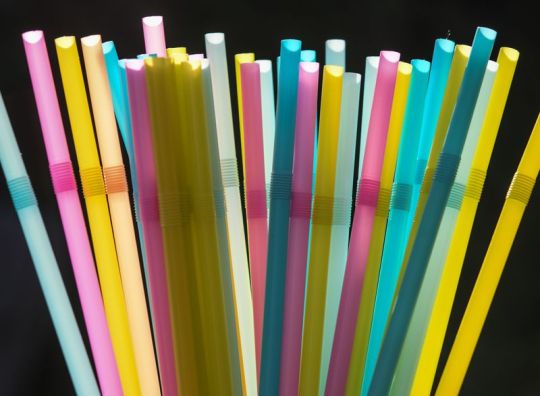
The anti-straw movement took off in 2015, after a video of a sea turtle with a straw stuck in its nose went viral. Campaigns soon followed, with activists often citing studies of the growing ocean plastics problem. Intense media interest in the so-called Great Pacific Garbage Patch – a floating, France-sized gyre of oceanic plastic – only heightened the concern.
However, plastic straws only account for about .03 percent of the 8 million metric tons of plastics estimated to enter the oceans in a given year.
A recent survey by scientists affiliated with Ocean Cleanup, a group developing technologies to reduce ocean plastic, offers one answer about where the bulk of ocean plastic is coming from. Using surface samples and aerial surveys, the group determined that at least 46 percent of the plastic in the garbage patch by weight comes from a single product: fishing nets. Other fishing gear makes up a good chunk of the rest.
The impact of this junk goes well beyond pollution. Ghost gear, as it’s sometimes called, goes on fishing long after it’s been abandoned, to the great detriment of marine habitats. In 2013, the Virginia Institute of Marine Science estimated that lost and abandoned crab pots take in 1.25 million blue crabs each year.
This is a complicated problem. But since the early 1990s, there’s been widespread agreement on at least one solution: a system to mark commercial fishing gear, so that the person or company that bought it can be held accountable when it’s abandoned. Combined with better onshore facilities to dispose of such gear – ideally by recycling – and penalties for dumping at sea, such a system could go a long way toward reducing marine waste. Countries belonging to the United Nation’s Food and Agriculture Organization have even agreed on guidelines for the process.
That’s where all that anti-straw energy could really help. In 1990, after years of consumer pressure, the world’s three largest tuna companies agreed to stop intentionally netting dolphins. Soon after, they introduced a “dolphin safe” certification label and tuna-related dolphin deaths declined precipitously. A similar campaign to pressure global seafood companies to adopt gear-marking practices – and to help developing regions pay for them – could have an even more profound impact. Energized consumers and activists in rich countries could play a crucial role in such a movement.
There are a lot of comments on this, and first of all, I’d like to say if you’re going to comment, please read the entire article first. Many of the comments are about points already made in the article.
Secondly, this wasn’t meant to shame people who think it’s important to personally cut down on their own plastic waste. As stated in the article, consumer movements are integral to pushing for industry changes, as happened with dolphins and tuna fishing. If consumers stop buying single-use plastic products, companies won’t keep making them.
And thirdly, for people who need to or would like to use straws but find single-use straws wasteful, there are alternatives. Paper, metal, and glass straws are available, but paper gets soggy, and metal and glass can damage your teeth and aren’t bendable. I personally use food-grade silicone straws (that can be purchased on amazon here, or in a variety of other places).
These come with brushes to clean them or they can go in the dishwasher or be sterilized in boiling water. They are soft and bendable but keep their shape well while you’re drinking, and can be trimmed if they’re too long for you. I’ve had mine for about a year and they’re still in perfect shape. Silicone straws received 5/5 stars in ease of use and durability for disabled people. There are also programs that recycle silicone when they’ve reached the end of their usefulness.
I think the natural world is intrinsically precious and obviously wildlife means an awful lot to me but I wish all the environmental propaganda I heard growing up had actually touched on all that actual human suffering.
I heard so much about all those poor cute little rainforest animals who need our help because they are so defenseless and innocent yet I was never taught about the indigenous human beings who live in the same fucking rainforest and are afforded no more rights than those same apes and birds getting plastered on posters around my elementary school.
Yes it’s sad that climate change threatens the polar bears but why have I heard so much more about the polar bears than the fact that over 20,000 people have had to flee the Marshall islands due to rising sea levels? Oh, hey, most of them fled to the United States, too, so who knows how many now risk deportation while their original homes are UNDER THE FUCKIN OCEAN.
Why did even environmental groups tell me more about what pesticides do to fish than what they do to human embryonic development? What about people starving to death because poaching and overfishing and banana crops and shit have destroyed their resources?
I hear a little more about these things NOW, I guess, but all I heard growing up was just “SAVE THE PRETTY BIRDS AND DOLPHINS” and it’s just no fucking wonder people as a whole stopped caring about the ecosystem. Captain Planet and Fern Gully and all those endless ad campaigns and grade-school programs somehow expected human beings to get on board with preserving nature while simultaneously treating human beings as exclusively monsters and outsiders to nature.
If the pollution of oceans and overfishing continue, they’ll have to update ”there’s plenty of fish in the sea” to ”there are still some fish left among the trash”, which is also far more accurate dating-wise.
Almost 31% of the world’s fish populations are overfished, and another 58% are fished at the maximum sustainable level. Wild fish simply can’t reproduce as fast as 7 billion people can eat them.
So what does it look like to give fish a break and let them recover? Protection can take many forms. In national waters, governments can set limits about how, when, where, and how much fishing occurs, with restrictions on certain boats and equipment. Harmful practices, such as bottom trawling, can be banned altogether, and we can establish marine reserves closed to all fishing to help ecosystems restore themselves. There’s also a role for consumer awareness and boycotts to reduce wasteful practices, like shark finning, and push fishing industries towards more sustainable practices. Past interventions have successfully helped depleted fish populations recover.
We need to end overfishing. Ecosystems, food security, jobs, economies, and coastal cultures all depend on it.
After humans, cats are the number 1 cause of species extinctions, worldwide. They are hunters and indiscriminately kill native species and damage their ability to reproduce. As the article states, cats are now the most common source of rabies transmission to humans–dogs used to be the most common source, but we no longer let dogs roam freely anymore.
I have six cats and I love them to pieces–every single one of them is 100% indoors only. Despite my commitment to keeping my cats indoors, I constantly have to deal with my neighbors cats wandering into my yard and killing the birds and cotton mice that enjoy the habitat I have worked my butt off to provide for them. Every single day for the past several weeks, I have had to run into my yard and chase off three separate cats, one of whom has possibly destroyed the Lincoln’s Sparrow nest I was overjoyed to have in my yard.
Last year, when I had to deal with cats stalking the birds, the only solution that worked was cutting all of the grass down to ground so they had no place to hide, but this also destroys nesting habitat for birds like the Lincoln’s Sparrows, and I already have a pair trying to nest in my yard this year. I shouldn’t have to remove nesting habitat so I can scare cats out of my yard more easily!
Cats are domesticated animals with no native habitat anywhere in the world–everywhere they exist, they were introduced by humans, and they disrupt the natural balance of the ecosystem. That doesn’t mean your cats need to be bored, though! I have lots of bird feeders up, many of which are stationed close to their favorite places to perch by the windows. They spend all day chasing birds, safely separated by glass (and sometimes the birds harass them on purpose!) And another one of my cats is so large I have to take him to the vet on a leash, which means after his vet visits, he gets rewarded with after-vet “sniffs through the garden,” because that’s really all he wants to do.
Above: Satin waits for birds at the feeder and Oliver sniffs around the front yard
Keeping your cats inside is better and safer for them, too! Cats have a much harder time getting fleas (and subsequently, tapeworms, which are carried by fleas) when they are indoor cats, and when they are indoors, they do not have to worry about getting hit by cars, attacked by other cats or wild animals (possibly with diseases), hunted by predators, caught in traps, ingesting poisoned mice (which can kill them!), getting caught in extreme weather, and all sorts of other hazards and dangers.
The actual difference in lifespan is hard to determine, but they are greatly different for indoor and outdoor cats. Here’s one example figure:
Cats who are kept indoors can reach the ripe old age of 17 or more years, whereas outdoor cats live an average of just two to five years.
Source: pets.webmd.com [link] (yeah I know, not the best but I’m tired and this is just an example)
Other figures I’ve seen are outdoor cats average around 5 years, and indoor cats average around 15 years (but these are very rough estimates). If you’ve had an outdoor cat, and it “ran away” one day, I’ll bet you your cat did not actually run away.
There is a way to keep native habitats, vulnerable species, and cats safe! And that’s by keeping cats indoors!



 ifesbob