You know what the most frustrating thing about the vegans throwing a fit over my “Humans aren’t Parasites” post is? I really wasn’t trying to make a point about animal agriculture. Honestly, the example about subsistence hunting isn’t the main point. That post was actually inspired by thoughts I’ve been having about the National Park system and environmentalist groups.
See, I LOVE the National Parks. I always have a pass. I got to multiple parks a year. I LOVE them, and always viewed them as this unambiguously GOOD thing. Like, the best thing America has done.
BUT, I just finished reading this book called “I am the Grand Canyon” all about the native Havasupai people and their fight to gain back their rights to the lands above the canyon rim. Historically, they spent the summer months farming in the canyon, and then the winter months hunter-gathering up above the rim. When their reservation was made though, they lost basically all rights to the rim land (They had limited grazing rights to some of it, but it was renewed year to year and always threatened, and it was a whole thing), leading to a century long fight to get it back.
And in that book there are a couple of really poignant anecdotes- one man talks about how park rangers would come harass them if they tried to collect pinon nuts too close to park land- worried that they would take too many pinon nuts that the squirrels wanted. Despite the fact that the Havasupai had harvested pinon nuts for thousands and thousands of years without ever…like…starving the squirrels.
There’s another anecdote of them seeing the park rangers hauling away the bodies of dozens of deer- killed in the park because of overpopulation- while the Havasupai had been banned from hunting. (Making them more and more reliant on government aid just to survive the winter months.)
They talk about how they would traditionally carve out these natural cisterns above the rim to catch rainwater, and how all the animals benefitted from this, but it was difficult to maintain those cisterns when their “ownership” of the land was so disputed.
So here you have examples of when people are forcibly separated from their ecosystem and how it hurts both those people and the ecosystem.
And then when the Havasupai finally got legislation before Congress to give them ownership of the rim land back- their biggest opponent was the Parks system and the Sierra Club. The Sierra Club (a big conservation group here in the US) ran a huge smear campaign against these people on the belief that any humans owning this land other than the park system (which aims at conservation, even while developing for recreation) was unacceptable.
And it all got me thinking about how, as much as I love the National Parks, there are times when its insistence that nature be left “untouched” (except, ya know, for recreation) can actually harm both the native people who have traditionally been part of those ecosystems AND potentially the ecosystems themselves. And I just think there’s a lot of nuance there about recognizing that there are ways for us to be in balance with nature, and that our environmentalism should respect that and push for sustainability over preserving “pristine” human-less landscapes. Removing ourselves from nature isn’t the answer.
But apparently the idea that subsistence hunting might actually not be a moral catastrophe really set the vegans off. Woopie.
see, the thing about urban environments is that if you aren’t a human or a pet, they absolutely fucking suck to live in.
the lack of tree cover and usage of heat-retaining materials like asphalt, concrete and even brick make cities into absolute hellscapes for most small creatures. you’ve experience the joy of an asphalt parking lot on a hot summer day? imagine being a small lizard and having to cross one of those to find your next meal.
yeowch!
not only do cities have huge temperature ranges you might normally expect to find in a fucking desert, they also have very little in the way of running water.
think about it. most of that good good aqua mater is inside of pipes, and not even raccoons have the wrist strength to crank one of those bad boys open. if you, again, are a very small lizard, this is what hell looks like.
so because of these environmental limitations, there are actually very very few animals that can hack it in a city, and most of them are nocturnal and don’t have to deal with summer temperatures and/or curious humans as much.
animals like mice, raccoons, squirrels, and opossums are extremely the exception and not the rule. some organisms ARE learning to tolerate the extreme conditions of city life, but for the most part when humans flatten an existing ecosystem to replace it with an eternal garden of human delight,
(though they might leave a tree or two, if they feel like it)
the vast majority of species in the old environment can’t adapt and have to either leave or die.
of course, this means that every urban lizard you see is actually a grizzled rogue eking out an honest existence in a hostile land:
What about birds though? Are peregrine faocons and pigeons also exceptions? ig peregrines prey on pigeon so maybe so
birds have an easier time in cities because they aren’t forced to stand directly in the heat zone and they can fly long distances in search of water!
but city birds are still extremely limited by what they can find to eat, which means in cities you’ll see a lot of generalist, seed-eater and carnivore species like these:
but hardly any insectivore or specialist species like these:
there just isn’t enough of their food in the city for them to get by!
so again, when the cities go up, most birds have to either move or die as their environment stops producing the food they need to survive.
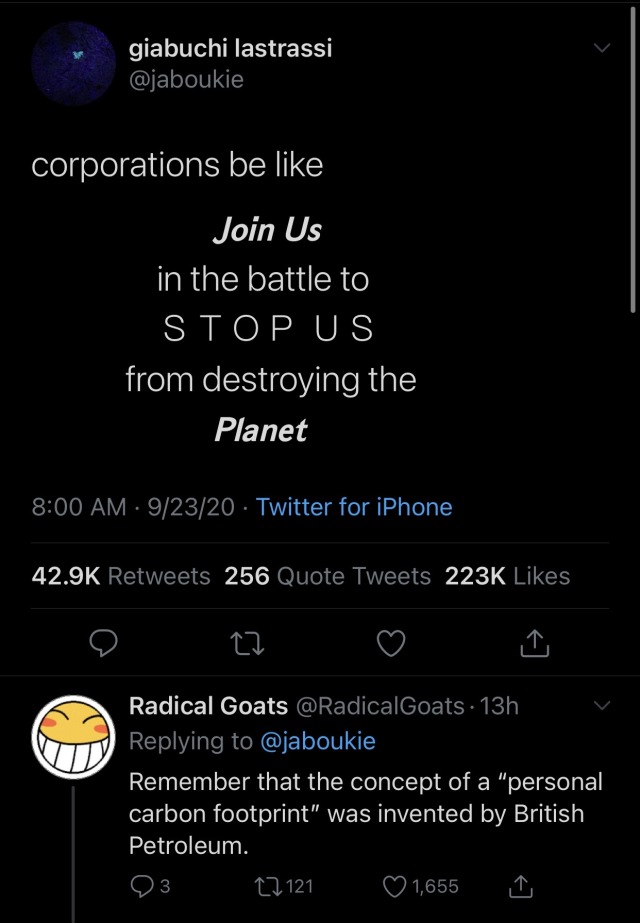
There is a very specific sort of trauma which comes from being a small child, being told about widespread ecological destruction. Trauma which does not come from that initial fact – but rather the adult response to that child’s inevitable question of “What can we do about it!”
Even in grade school I recognized the inherent absurdity of being told about the massive destruction of rainforests – particularly the amazon – but then being told that if we want to help we can “Recycle Cans” or whatever.
And I think that to a certain extent that trauma has a somewhat malevolent yet subtle intention. When you make small children think that the world is dying because they ate a chocolate bar in plastic wrap – you foster a sense of preexisting damnation which cannot be meaningfully fought.
Alternatively when you make children think that adults have no plan or interest whatsoever to tackle the problem, you foster a worldview in which the children have an actively antagonist relationship to older generations. Given the power dynamics between children and adults however, this is just as likely to produce crushing despair as it might prompt furious rebellion.
Both paths ultimately lead toward learned helplessness and general misanthropy, ensuring that resistance to ecological destruction is minimal. Stifling the emotional ecological connection of every person who was once a child filled with the wonder of a tall tree, a grassy meadow, or the first squirrel they ever saw.
Capitalism sustains itself through mass-trauma, and this is only one small piece to the larger situation. However it is a piece I find personally meaningful to discuss given my focus on environmentalism.
“there are sustainable ways to use animal products, leather is good resource, indigenous people hunting sustainably is not an environmental problem”
and “individuals should take some responsibility for the environment, veganism and plastic-free lifestyles should be heavily encouraged”
and “veganism/vegetarianism/plastic-free is not an accessible lifestyle for everyone”
and “large corporations and corruption are directly responsible for the climate crisis, and dismantling them and not having a fossil fuel based economy is the most important thing in saving the environment”
are all coexisting and complementary.
“it’s acceptable and sustainable to use animal products/indigenous people should have the ability to hunt sustainably without shame” and “veganism should be encouraged” are mutually exclusive statements, not complementary ones.
i get what you’re trying to get at, but equating veganism to environmentally friendly eating is not inherently accurate and if we’re going to recognize that there are ethical and sustainable ways to produce and consume animal products, we can’t ALSO say “be vegan tho”. most vegans do not support any use of animals or animal products, and if i’m going to recognize that leather and meat can be made sustainably… i’m not also going to encourage people to be vegan. i’m gonna encourage people to source sustainably and from ethical sources.
eating local should be encouraged. buying from local producers supports local economies, small farmers, and is better for the environment.
20 billion sanitary napkins, tampons and applicators are dumped into North American landfills every year. (x) The packaging isn’t necessarily recyclable either! The billions of dollars spent in this industry could be used on reusable products instead that are way better for the environment!!
The fact that the cheapest options are those that damage our health and the planet makes this a social and environmental issue: people with the least power have the greatest exposure to dangerous products.
Start using reusable menstrual products.
i’m big on reducing plastic waste and i’ve been using this reusable pack and it’s the cheapest option for me. you definitely get the most out of your money compared to other brands and plus it’s a trial pack so you can test out the different sizes.
super absorbent, comfortable, breathable, and easy to clean. and NO chemicals (compared to typical pads and tampons in grocery stores). please think about the planet you live on and this will be cheaper for you (and better for the environment) in the long run!
Wow thank you SO much for this. I’ve been trying to look for other sustainable alternatives that were in my budget. But I know this will help me save THOUSANDS of dollars in the long run
ive been using these for 6 months and theyre really comfortable and worth it. i have a heavy flow and their XL overnight pads are really useful. there’s a lot of other sizes too! check them out
found a 10% code: SAMMY10. it should work. save even more money!!
I’d love to know how this is “green” and “environmentally friendly”.
“The figure for trees felled for windfarm development on Scotland’s forests and land, as managed by FLS, over the past 20 years is 13.9 million. However, it should be noted that these trees – being a commercial crop – will have eventually have been felled and passed into the timber supply chain in any case.”
They added: “That figure for felled trees should also be contrasted with that for the number of trees planted in Scotland over the years 2000 – 2019, a total of 272,000,000, and renewable energy developments fit well with this.
“To date, the amount of woodland removed across Scotland’s national forests and land, managed by FLS, for windfarm development is not even one per cent of the total woodland area.”
basic reading comprehension really comes in handy i think
real tired of hearing the vegan vs. omnivore arguments when the real superior diet in terms of both cruelty and ecosystem is locally sourced
beef and pork from a farm 10 minutes away from you is more ethical and less detrimental to the environment than quinoa grown in ecuador. the future is food forests. the green revolution is food forests. if we manage to survive this apocalyptic hellscape all of your food, plant and animal, is going to come from within half an hour of where you live. plant a vegetable garden in the meantime
As a trained conservation biologist this is the most important step we can take. You do not understand how many issues we could solve if people bought most of their food from local sources.
Capitalism is because of humans. I think just because a lot of us realize the issue of consuming without any thought to the consequences is wrong and hugely harmful in the long term doesn’t mean that a lot of pollution and such isn’t because of humans.
Humans are responsible for all the environmental damage we have caused. Sure, it may be because of human greed, but a rose (or a.. something bad, in this case) by any other name is just as sweet (or harmful).
Capitalism may be separable from humanity, but that doesn’t make it less humanity causing the damage.


 ifesbob