There are a lot of times I feel like just…flipping the vegan script.
It’s not ‘polyester’ it’s plastic
It’s not ‘vegan leather’ it’s plastic
Its not ‘faux fur’ it’s plastic
Plastic is a pollutant and causes far more damage to the environment both now and in the future than leather or wool.
Please stop telling me that the Plastic Lyfe is the only life, it is not. My leather shoes will last a decade where pleather is lucky to last 12 months. Leather (and wool) decompose and are renewable. Plastic is neither of those.
THANK YOUUUUUUU~
A single wash cycle of plastic-based fiber (polyester, poly fleece, faux fur) may release 700,000 pieces of microplastic into our waters. Nasty stuff.
aw dangit
Wool is the most environmentally friendly fabric despite being an animal product.
Using wool isnt even harming sheep
Sheep need to be sheered or else it will cause serious problems. It’s a mutual relationship, we help sheep get rid of the pesky wool and it gives us a very useful material.
There are a lot of times I feel like just…flipping the vegan script.
It’s not ‘polyester’ it’s plastic
It’s not ‘vegan leather’ it’s plastic
Its not ‘faux fur’ it’s plastic
Plastic is a pollutant and causes far more damage to the environment both now and in the future than leather or wool.
Please stop telling me that the Plastic Lyfe is the only life, it is not. My leather shoes will last a decade where pleather is lucky to last 12 months. Leather (and wool) decompose and are renewable. Plastic is neither of those.
THANK YOUUUUUUU~
A single wash cycle of plastic-based fiber (polyester, poly fleece, faux fur) may release 700,000 pieces of microplastic into our waters. Nasty stuff.
aw dangit
Wool is the most environmentally friendly fabric despite being an animal product.
Using wool isnt even harming sheep
Sheep need to be sheered or else it will cause serious problems. It’s a mutual relationship, we help sheep get rid of the pesky wool and it gives us a very useful material.
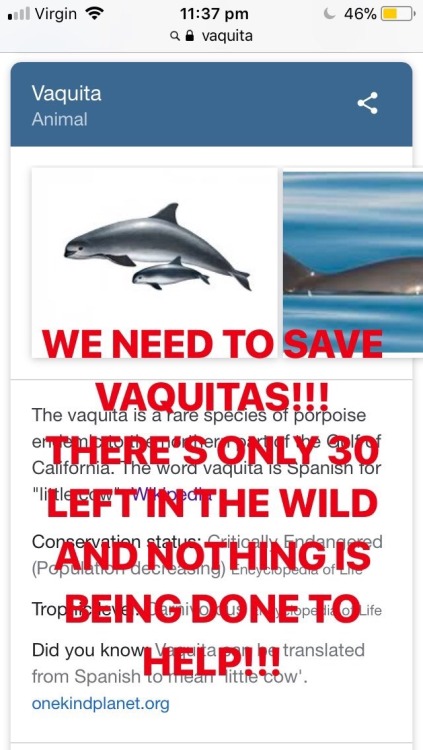
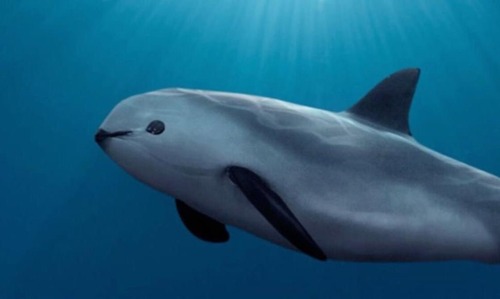
These beautiful animals are the vaquitas, the world’s smallest and most endangered porpoise. There are an estimated 12-30 remaining in the wild and their numbers have been rapidly declining due to being caught in illegal fishing nets.
APROXIMATELY 36 ARE KILLED EACH YEAR. THERE ARE ONLY 30 LEFT. THIS COULD BE THEIR LAST YEAR IF WE DON’T DO SOMETHING ABOUT IT!!!
Donate to conservation foundations like the WWF who work to protect vaquitas! We need to keep this beautiful animal on our planet!!!
Please share this post so we can spread awarness because hardly anyone knows about them!!!
If the world is 4.5 billion years old, let’s scale that to 45 years, humans have been on it for 4 hours and have destroyed 50% of the world’s trees in 1 minute. That’s crazy.
If the world is 4.5 billion years old, let’s scale that to 45 years, humans have been on it for 4 hours and have destroyed 50% of the world’s trees in 1 minute. That’s crazy.
I feel like an important message is trying to be communicated to me but I have no idea what it is
Our forests are being cut down 3x faster than they can grow! One acre of hemp produces as much cellulose fiber pulp as 4.1 acres of trees!!! This is super useful for so many things, especially paper production! In addition, hemp takes in carbon dioxide 4x as fast as trees do, which makes it especially valuable in the act of reducing CO2 emissions/greenhouse gases! 🌲🌲🌲 source
Important reminder that industrial hemp can’t be used as a recreational drug, so if anyone tries to pull that card you can just stop them then and there. There are no real arguments against using industrial hemp, even if you’re rigidly against the legalization of any recreational drugs.
I feel like an important message is trying to be communicated to me but I have no idea what it is
Our forests are being cut down 3x faster than they can grow! One acre of hemp produces as much cellulose fiber pulp as 4.1 acres of trees!!! This is super useful for so many things, especially paper production! In addition, hemp takes in carbon dioxide 4x as fast as trees do, which makes it especially valuable in the act of reducing CO2 emissions/greenhouse gases! 🌲🌲🌲 source
Important reminder that industrial hemp can’t be used as a recreational drug, so if anyone tries to pull that card you can just stop them then and there. There are no real arguments against using industrial hemp, even if you’re rigidly against the legalization of any recreational drugs.
“Snakes. Why’d it have to be snakes?” – Indiana Jones in Raiders of the Lost Ark
Humans often fear what they don’t understand and to most, snakes are a mystery. Snakes rely on crypsis so even when traversing through their world, we rarely see them. This void of direct knowledge is filled by myth and media, which portray snakes as cold-blooded killers and focus on how deadly and dangerous they are. It’s no surprise then that snakes provoke one of the most common phobias, even in the United States where we lack truly deadly serpents.
Though threatened by many of the same issues that affect other wildlife, including habitat loss, climate change, and disease, negative attitudes may be the biggest barrier to snake conservation because it often impedes efforts to address other threats.
For example, public outcry based on fear and misinformation recently halted a scientifically-sound conservation plan for timber rattlesnakes. A similar project at the same location was embraced by the community; but that project involved releasing eagles. Rattlesnakes are no less iconic or important to the ecosystem than eagles. In fact, they may help reduce the incidence of Lyme disease, which affects tens of thousands of people in the United States each year, by reducing the number of rodents that harbor this disease. But facts often play second fiddle to emotions where snakes are concerned.
Snakes are important components of biodiversity, serving as both predators and prey in nearly every ecosystem on earth. Some of the most feared and hated snakes (vipers, a group which includes rattlesnakes) may be the most effective predators on fluctuating prey populations. Unlike most predators, vipers are not territorial; they often share dens to escape freezing winter temperatures and select hunting sites where others have been successful. They live in greater densities than mammal and bird predators, as much as 100-1000 times denser than their mammalian competitors. Infrequent reproductive events (most give birth only once every two to three years) and their ability to fast make them resilient to prey population crashes. So they can have a greater impact on their prey, including those that can spread disease to humans, than their mammalian or avian counterparts.
But snakes are worth saving not because of what they can do for us, but because of who they are.
Adrian, a pregnant Arizona black rattlesnake guards one of her nestmates’ newborns. Photographed by Melissa Amarello.
Snakes, specifically rattlesnakes, share many behaviors with us, behaviors that we value. They have friends. They take care of their kids and their friends’ kids too. Within a community of Arizona black rattlesnakes, individuals do not associate randomly; they have friends (pairs of rattlesnakes observed together more often expected by chance) and individuals they appear to avoid. Mother rattlesnakes keep newborns from straying too far from the nest during the first few days of their lives, only gradually letting them explore farther as they approach time to leave the nest at 10-14 days old. They also defend their young from threats such as squirrels, who harass and may even kill newborns. But mothers aren’t the only ones caring for newborn rattlesnakes — still-pregnant females sharing the communal nest and even visiting males and juveniles assist with parental duties. Yet these gentle, caring parents are subjected to some of the most horrible treatment of any animal.
Each year, tens of thousands of rattlesnakes are taken from the wild to be displayed and slaughtered for entertainment and profit at rattlesnake roundups, which occur throughout Texas, Oklahoma, Georgia, and Alabama. Promoted as folksy, family-friendly fun, these events foster disrespect for native wildlife and the natural world, and are a gross example of wildlife management based on fear, rather than science. Professional hunters, not bound by ‘bag’ or ‘take’ limits, remove snakes from their native habitats and are awarded with cash prizes for bringing in the most and biggest snakes. Most snakes are caught by pouring gasoline into their winter dens, which pollutes surrounding land and water and may impact up to 350 other wildlife species. Rattlesnake roundups depend on the public’s misconception of snakes as dangerous pests that we cannot safely tolerate near our homes. No aspect of these events is sustainable, educational, or necessary.
If promoters and attendees of rattlesnake roundups knew what snakes are really like, would these events continue — who wants to kill a mom or someone’s friend?
World Snake Day is an opportunity to celebrate snakes and raise awareness about their conservation.






 ifesbob
