Does this sound like you? You’re a person who cares about the environment. Generally, you try to be pretty ethical, and you care about causes pretty deeply. You’re kind of removed from global biodiversity hotspots- maybe you live in urban/suburban USA, like most of this blog’s readers, and maybe you don’t really think of conservation as much of a human rights issue. Maybe you think we’re the “bad guys,” but you’re not really sure or you don’t think much about who “we” are. You don’t have a super deep connection to the land, and you’re not an expert- but you care about the environment, you recycle, you carry a reusable water bottle, you take public transit, carpool, or bike when you can. Wherever you live, these are probably options you have available to some extent. Maybe you listened to a lot of Raffi as a kid or watched Captain Planet, or really just kinda like this planet and all the creatures on it- but you maybe struggle with talking in depth about conservation. You get a lot of ideas and you read a lot of things, but most of the time everything seems like it’s Good or Bad.
Perfect. You’re great. Let’s talk. This post is for you. This is how you can empower yourself and others and help steer the conversation around conservation. This is how you can help foster a better understanding of some of the subtler issues surrounding global biodiversity, and this is how you can do it in a way that doesn’t put the burden on easy targets who are part of a much larger system.
When you talk about conservation issues, you can’t forget the humans who live there- wherever “there” is in this case. Consider why they might be in a situation where poaching isn’t just the best option, it might be the only option. What other resources and opportunities do they have in these communities? Is the available labor fair? How has the history of geopolitical/economic development affected the area? You just need the basics, really, for these considerations. You don’t need to be an expert. You shouldn’t feel guilty- you’re not responsible for the actions of the past- but you should feel a quiet sense of resolve. Feel your back get a little stiffer? That’s you realizing how much better these conversations will be if you look at the big picture. You can do better. You can make things better, and a great way to start is by looking at the language you’re using and the way you think about countries other than your own. This is especially true if your country has benefited from having colonies (or things that function as colonies- territories, holdings, dependencies, dominions, protectorates, that sort of thing all count).
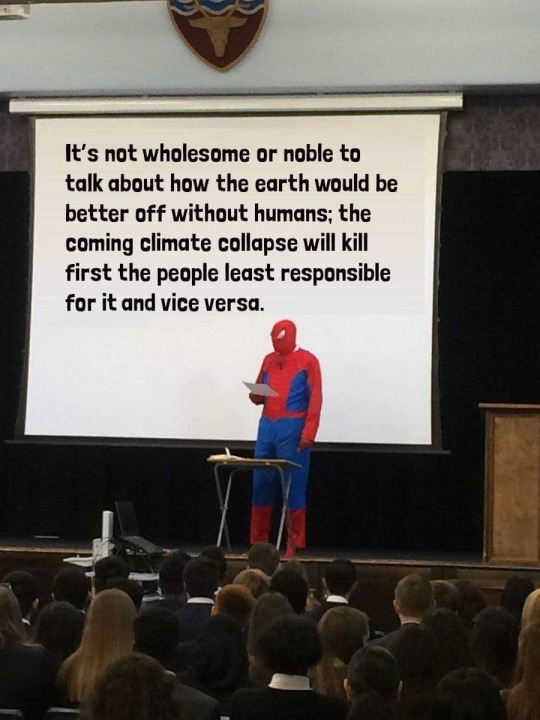
The answer to global biodiversity loss and endangered species conservation is not what a lot of generally well-meaning people think it is, because there’s a crucial puzzle piece missing from many are willing to talk about- and that’s people. We’re animals, too, and we are not exempt from food webs. We are not exempt from water cycles. We might be able to mitigate some of the negative, but not all of us can- and none of us can forever. We’ve created a mess of things, certainly- but that doesn’t mean we can’t do things to fix it.
But the way we have to think about fixing things cannot involve calling for the elimination of human groups. First, advocating for the eradication of human communities is wrong. Do not advocate for mass murder. Someone far more eloquent than I am explained this beautifully. And it’s not just mass murder- the way we talk about how individual poachers should be punished isn’t useful for justice at all. By and large, advocating for murder usually doesn’t solve most problems, and frankly, the death of one poacher isn’t going to do anything for conservation. Second, it’s just plain not fair. Ecological degradation is a global problem, and in many, many cases, the root cause of the problems are not the people in the closest proximity. However, they are often the ones who bear the burden of habitat loss and diminished biodiversity. It’s fine for us here in the USA to say “killing an elephant is morally wrong,” but what do you do when you’re a subsistence farmer who’s looking at a lost growing season again because that elephant has destroyed your crops for the fifth time and you know a guy who can get you ten years’ worth of wages for the tusks, plus you, your family, and all your neighbors can eat off that animal for ages?
But conservation also doesn’t work when you don’t take local agency, power, and needs into account, and this is what I mean by decolonize your conservation conversations. The next time you see an article about a poacher who was killed by animals, quietly look up that area and see what life is like there. Look up that area specifically– the life of someone who lives in Nairobi is going to be very different than a subsistence farmer. It’s a little extra work, but without it, these conversations are meaningless.
Another trap to avoid is thinking that anybody else can just go in and fix the problem. That’s like putting a band-aid on a broken leg after the doctor told you that you need to pay them to put a cast on. In this metaphor, the broken leg is the environment, the doctor is the people who live there, the cast is sustainable, long-term conservation methods, the band-aid is foreign aid without local investment, and the ‘pay the doctor’ part is investing in the work that locals are doing. Conservation only works when it’s driven by and for the people who actually live around these places, and no two ecosystems are the same. If you don’t acknowledge the reality of the situation you’re looking at, you’re missing the point entirely. “Save the rainforest!” is a slogan. It means nothing. What rainforest? Why’s it in danger? Who’s threatening it? Why is it being threatened? It’s all well and good to go in and set up, like, a giraffe orphanage or something- but what happens when you run low on money and you have no long-term business plan and you never hired any locals because you can get tourists to come down and pay for the privilege of working with you? Is your plan sustainable? How are you helping the people who know these animals best, who live alongside them? How are you supporting the people who also have to survive? Is your giraffe orphanage respecting local knowledge and contributing to the community that makes it possible? Are you perpetuating a power imbalance that favors you, the visitor, over the people who live there? Power imbalances ruin everything, and that is something that’s easy to miss when you’re first thinking about conservation. Also: money is power. What are these country’s resources and where are they going?
What areas of the world have the most biodiversity loss? Land that’s rich in resources (or was) around the equator. These losses are largely linked to industry, but more than just industry, industry for export- and in most cases, non-reciprocal export. One of the effects of colonialism is that trade back to the colonial power wasn’t equitable. Resources were extracted, but recompense was not rendered in currency, other resources, or infrastructure investments outside of colonial capitals and administrative centers. These weren’t fair trade agreements– they created a lot of wealth for the colonial powers, and massive resource deficits for the colonies. That’s still happening, even if countries have self-governance. So thinking about Indonesia- Indonesia’s losing its forests to logging, and that wood ain’t staying in Indonesia. It’s going all over the world. Unfortunately, Indonesian logging is done in such a way that wildlife traffickers and poachers have an extremely easy job- they just come in and clean up. Some live animals get whitewashed into the pet trade (Indonesia makes up its animal export data); others, and many of the dead ones go to the mainland for the traditional medicine trade. Internal demand for wildlife products in most former European/USAmerican colonies is not the biggest threat to global biodiversity. It’s external demand.
So what to do? Stop global trade? That’s not going to happen- it’s not a real solution. Remove people, create total reserves where nobody can go near the land? Also not a real solution. Putting the entire burden on people whose lives have already been drastically changed by colonialism’s history? Not a solution, and you shouldn’t be asking for that.
Still with me? Good, because this is the fun part! Here’s a baby mountain gorilla as a bit of a palate cleanser.
The good news is that animals themselves are a valuable resource, and if an economy can shift to include that, conservation can become so much easier. My favorite example of this is Rwanda.
Rwanda has a tragic, complicated past with a long history of violence, and their historical conflicts have largely been driven by the fact that the country was treated as a resource extraction point by colonial powers and that these colonial powers used racism as a method to control workers. But as the country has rebuilt in the wake of the chaos of the early 1990s that preceded and followed the civil war and genocide, the ecotourism industry has created an incredible layer of protection around the highly endangered mountain gorilla AND around the Rwandan people. Ecotourism has created a significant number of jobs in the service industry and construction, spurred infrastructure (gotta build roads for the tourists!), made school more accessible to Rwandan children and teenagers, and has really changed the face of the country’s economy… so much so that tourism is the single most important industry in the country- that is where Rwanda’s money is coming from these days. This works because the conservation efforts don’t focus on just the animals. They focus on the people. Village co-ops make decisions about what happens in their area. Conservation is being done in such a way that people who once leaned heavily on bushmeat are now able to feed their families through more sustainable practices- and when they do want bushmeat, they’ve got better access to more common, sustainably hunted species. It’s increased access to domestic livestock through grants from various conservation programs and from visitors- 90% of the Rwandan population is subsistence farmers. This has directly led to a stable population increase, which is unheard of for great apes (other than us, of course). Most great ape populations are shrinking year by year, but in 2018, mountain gorillas passed the 1,000 individual milestone for the first time in decades. In Rwanda, that represents a 25% increase in the population between 2010 and 2018. This is working.
Also: they employ the poachers. Why? Simple, they know where the animals are. They become park rangers, guides, arborists- they are integral to this conservation effort. Something that’s often very hard to wrap the Western mind around is that while we see these animals as exotic, those are the local wildlife. If you’re a Rwandan living near the Volcanoes National Park, where the mountain gorillas live, you’ve heard about them. You know, or someone you know knows, where they hang out. Some of the fiercest protectors of wildlife are the people who once hunted it- not because they’ve had some incredible change of heart, but because they’ve had a change of situation. This works. Seriously. In one five-year development period, local income for five rural communities in the target area increased 846%, and almost 2,500 permanent jobs in natural resource management and tourism management were created. That’s in one area on one project alone. Funding locally-driven initiatives is something that really, really helps. By partnering and working with multinational non-profits, there’s a level of accountability re: corruption and best practices, but by centering local participation and leadership, conservation organizations can actually create long-term, effective change.
So, what can you do? Just keep talking. Jump into conversations about conservation with a more nuanced perspective!
Look for the root of the problem- why does poaching exist in the first place?
Recognize that the people who know the area best- the people who live there- are the ones who need to make decisions about how to use the land and its resources.
Acknowledge that colonialism’s effects haven’t faded and that history affects the present.
Emphasize the work of local leaders in conservation initiatives.
Don’t put the burden of defending local practices on people who didn’t benefit from colonialism the same way you might have- instead, loop back to looking for the root of the problem.
Remember the humans.
Keep the conservation conversation going – use talking points like Rwanda’s ecotourism industry as a positive example of how successful eco-geared development can be.
Paddlefish have been referred to as “primitive fish” because they have evolved with few morphological changes since the earliest fossil records of the Late Cretaceous, seventy to seventy-five million years ago. There are two living species, the American paddlefish, which is native to the Mississippi River basin, and the Chinese paddlefish, which is critically endangered.
Paddlefish have electroreceptors on their rostrum (the paddle-shaped snout) which
can detect weak electrical fields; this signals the presence of prey items.
They have poorly developed eyes, and rely on their electroreceptors and other sensory pores covering their bodies for foraging.
Paddlefish can live up to 30 years or more; females don’t reach sexual maturity until they are 7 to 10 years old. Their slow reproduction rate has made wild repopulation in China difficult, but since 1988, China imports approximately 4.5 million fertilized eggs and larvae every year from hatcheries in Russia and the United States to combat over fishing.
“To fully process what we are losing on Earth, I had to stop responding only as a scientist. My way forward comes instead from my experience of illness. My stem cell transplant wasn’t pointless just because I will, eventually, die of something. The years I’ve gained, however few or many they may be, are precious beyond measure. So too with the Earth. Each generation of humans living in relative abundance, each species saved from extinction for another 50 years, and each wild place left to function and inspire in its wildness, is precious beyond measure.”
Many people continue to think avoiding meat as infrequently as once a week will make a significant difference to the climate. But according to one recent study, even if Americans eliminated all animal protein from their diets, they would reduce US greenhouse gas emissions by only 2.6%.
According to our research at the University of California, Davis, if the practice of Meatless Monday were to be adopted by all Americans, we’d see a reduction of only 0.5%.
Shit its almost like the real problem is corporate greed causing mass pollution on an unimaginable scale.
My professor in Environmental Health and Policy shared a story about feeding cows seaweed in their diet is not only nutritious but it reduces their emissions, I’ll have to find the actual study on it when I’m not cramming for a midterm
Yup! Some experiments have shown certain types of seaweed can result in like 99% decreases of methane put out by cows. Seaweed is also a high energy feed and can increase milk production (if only because that methane put out is less energy to put into milk/meat)
While I understand why people feel pushed to this point, these sorts of solutions always frustrate me.
Toying with this kind of thing is asking for something unpredictable and terrible to happen. We KNOW what we need to do to stop climate change, we just have to actually DO it. And offering an “easy” way out (which could turn apocalyptic if they’re wrong about how to do it correctly) is just gonna make governments more hesitant to do the hard work required to fix things.
Also, can you imagine the damage that DIMMING THE SUN would have on ecosystems already struggling due to human interference?! Plants fix carbon and cutting down on sunlight will also almost certainly cut down on photosynthesis and thus on carbon fixation. Is that something they’ve considered?
I know they’re just trying to help but I really feel like their energy would be better spent trying to advance renewable energy or carbon sequestration technologies.
Most discourse about self-driving cars and nuclear power:
“We need to be more careful about saving millions of lives! A few dozen people might die in the process!”
Honestly, I’m nonzero sympathetic to the viewpoint that technology can make things worse, and we should be cautious about it. You want to argue that social media and clickbait have made our lives worse? That’s a defensible position.
But that caution seems incredibly misplaced when the technology is specifically designed to fix one of the major causes of death in the status quo.
I feel like the main problem here is that people just entirely forget that, like, new tech should be compared to the status quo, not to perfection.
Imagine Toyota came out with a new car, which was half the price of existing cars, and also was twice as safe, and put out half as much pollution. It would be amazing!
Now imagine they didn’t call it a car, they called it a kuruma or something. Everyone would hate it! “Dozens of people are dying in kurumas!” “Kurumas are taking up lanes that could have been used by cars!” The media would report on “The Kuruma Menace”. Some poor people who couldn’t afford cars would buy kurumas, and everyone would complain about the increased traffic/pollution caused by them.
This is how I feel about people’s reactions to basically every transit innovation ever. Scooters, Uber, self-driving cars, Lime, etc. People always hate them even if they’re a strict improvement over cars. Because instead of comparing them to cars, they compare them to what if people stayed home and did nothing.
And, like, maybe that holds water if you’re the kind of person who think everyone should stay home and do nothing. But most of the critics are people who drive cars! I could talk about how not being stuck at home is a human need, that people are willing to pollute and risk their lives for, but I don’t need to, because these people already know that, that’s why they have cars!
Drilling down into specifics: A lot of the criticism of Uber comes because it’s taking people away from public transit as well as from cars. And yes, cars are in fact less safe, more polluting, cause worse traffic, etc, compared to public transit.
But, like, notice basically everyone I know who complains about Uber owns a car.
People who don’t own cars tend to like Uber. It gets them home when buses aren’t running; when they’re in a rush, it gets them in town in half an hour rather than three hours by bus; it lets them go places while being blind; or while in suburbs underserved by transit. It gets them to hospitals when they’re too sick to bike, for 1/50th of the cost of an ambulance. It lets children go places when their parents don’t feel like driving.
But the car owners? They’ll tell you all about how Uber is ruining their city, because it allows poor people and disabled people the convenience of a car every once in a while, and the convenience of a car just happens to come with tradeoffs.
i’d love to hear how your logic ties into nuclear energy
Like the others, nuclear energy is one of those things where it always gets compared to “not using energy”, rather than to coal.
And as long as a single coal plant exists, the question isn’t “is nuclear power better than nothing?” but “is nuclear power better than coal?” – i.e. “should we replace this coal plant with a nuclear plant?”
Because you don’t need to get bogged down in the tradeoffs of “are deaths and environmental effects worth having electric power?” when we as a society have already said ‘yes’ to the same question regarding coal. If you disagree with those tradeoffs, you should be lobbying for dismantling coal, or at least for replacing it with nuclear as we move towards
Estimates for coal deaths range in the millions of deaths per year. Nuclear is responsible for, like, on average, one death per year? Most meltdowns result in zero deaths. Literal meltdowns!
(Nuclear is even safer than solar and wind – if you’re wondering how, people sometimes die falling off roofs while installing solar panels. Nuclear power hysteria kills more people than nuclear power itself does – more people died in the Fukushima evacuation than would have died if they just ignored it!)
Sure, nuclear energy has byproducts which are not great. But the question isn’t “are the byproducts better than nothing” but “are the byproducts as bad as millions of deaths every year?”
Which, even if you didn’t know anything about them, it’s probably less bad than millions of deaths per year, considering there are relatively few things in the world quite that bad, and we’d probably hear about them if they were. [1]
Casual research (skimming the Wikipedia article) confirms this: nuclear waste is being dealt with. There’s room for improvement, but considering there hasn’t been a single death involved, it’s clearly significantly less bad as millions of deaths per year.
It’s not like nuclear waste is magic. We have a pretty good understanding of it: It emits radiation which lessens over long periods of time, and we know how to block radiation, how far away from it is safe, etc etc.
I know this has some good points, but please for the love of god do not try and convince people that nuclear energy is good. Nuclear waste is a huge issue actually and the u.s. technically still has no plan in place for it. Also meltdowns can have serious, long ranging and long term effects on people’s health.
Deaths caused from solar or wind are due to improper implementation, not something that the energy in of itself causes. Interactions with coal and muclear energy in of themself cause damage to the environment and to living things.
Do you notice that this is the exact thing I was talking about, though? I could talk about how you’re wrong about how big of a problem nuclear waste and meltdowns are, but I shouldn’t even need to, because they’re nothing compared to the widespread environmental destruction and death caused by coal power.
Deaths caused from solar or wind are due to improper implementation, not something that the energy in of itself causes.
Deaths aren’t less bad when they’re accidental… The deceased’s family isn’t going to feel any better if you tell them it was preventable.
The only way this matters if we’re talking about what we should do in the future, when these deaths can be entirely prevented. At that point, yeah, I agree, we should stop using nuclear power, and switch to, like, Dyson spheres or something. But that’s not relevant to what we should be doing now.
Also, if accidental deaths don’t count, Nuclear has zero deaths.
Not to mention that the half-life for fossil fuels’ impact on the carbon cycle is infinite. It’s just easier to ignore when you can dump your toxic waste into the atmosphere
Also coal power stations still release more radioactive waste than nuclear plants do, just because they burn through so much coal that the trace amounts of radioactive elements adds up. And with nuclear power plants you actually bother with trying to contain it.
I know we’ve all been bombarded with bad news about the Great Barrier Reef, but I wanted to draw to everyone’s attention the AMAZING steps that Belize has taken to protect the second-largest reef system in the world.
The Belize Barrier Reef is part of the MesoAmerican Reef System, the second-largest in the world behind the Great Barrier Reef in Australia.
In the past several years Belize has taken incredible steps towards protecting its reefs, largely due to amazing efforts by conservation activists and the Belizian public.
“..in 2012 [activists] gained enough signatures on a petition to force a national referendum on oil drilling. But when the government refused to issue the referendum, claiming thousands of the signatures were illegible, activists organized their own “people’s referendum.”
AFP reports that 96 percent of people in the informal vote chose to protect the reef instead of allowing offshore oil drilling. The following year, the Supreme Court of Belize ruled that the oil contracts were illegal because they did not follow the required environmental impact procedures.”
Since then Belize has completely banned offshore drilling in its waters and placed strict regulations on mangrove cutting. They have also implemented taxes to help fund reef support, increased fishing restrictions, and recently announced plans to ban all single-use plastics in the coming year.
It is incredibly inspiring to me to see a country willing to prioritize the preservation of its unique ecosystems even at the cost of lucrative offshore drilling contracts. Go Belize!
“A new type of electrical generator uses bacterial spores to harness the untapped power of evaporating water…Its developers foresee electrical generators driven by changes in humidity from sun-warmed ponds and harbors.”
Think about the way a fallen leaf curls up as it dries out in the fall. Although it’s very slight, the leaf is moving as it curls and that’s because there is a shift in energy going on as water evaporates from the leaf. That’s basically the idea behind this new technology; harnessing the energy stored by biological materials reacting to changes in humidity.
Specifically, researchers are using a bacterium that wrinkles and hardens into a spore in dry conditions but can quickly return to its original shape when it gets wet. Flexible materials coated in these bacteria also flex and straighten in response to changes in humidity and this movement can be used to generate electricity. It may even be possible to genetically engineer bacteria that can react even more strongly to humidity changes.
This technology is definitely still in the early stages of development, but it could potentially have applications as a whole new type of renewable energy.
(Blogger’s Note: Physics is not my strong suit so if I explained this incorrectly please let me know.)
“To fully process what we are losing on Earth, I had to stop responding only as a scientist. My way forward comes instead from my experience of illness. My stem cell transplant wasn’t pointless just because I will, eventually, die of something. The years I’ve gained, however few or many they may be, are precious beyond measure. So too with the Earth. Each generation of humans living in relative abundance, each species saved from extinction for another 50 years, and each wild place left to function and inspire in its wildness, is precious beyond measure.”


 ifesbob