I might’ve said this before but I think humans given the amount of power we have have an obligation to protect the planet. There have been dominant species before.. but (in my opinion) there’s never been one that’s unbalanced the world as much. We have the intelligence to know our impact and even if species going extinct is part of the natural order (which it is), it shouldn’t happen on the scale that it’s happening. And frankly I think this is different than any other because we actually have the power to protect species and I think if we can we should do so. There’s no reason we should let ourselves be the cause of a mass extinction.
I might’ve said this before but I think humans given the amount of power we have have an obligation to protect the planet. There have been dominant species before.. but (in my opinion) there’s never been one that’s unbalanced the world as much. We have the intelligence to know our impact and even if species going extinct is part of the natural order (which it is), it shouldn’t happen on the scale that it’s happening. And frankly I think this is different than any other because we actually have the power to protect species and I think if we can we should do so. There’s no reason we should let ourselves be the cause of a mass extinction.
I might’ve said this before but I think humans given the amount of power we have have an obligation to protect the planet. There have been dominant species before.. but (in my opinion) there’s never been one that’s unbalanced the world as much. We have the intelligence to know our impact and even if species going extinct is part of the natural order (which it is), it shouldn’t happen on the scale that it’s happening. And frankly I think this is different than any other because we actually have the power to protect species and I think if we can we should do so. There’s no reason we should let ourselves be the cause of a mass extinction.
I might’ve said this before but I think humans given the amount of power we have have an obligation to protect the planet. There have been dominant species before.. but (in my opinion) there’s never been one that’s unbalanced the world as much. We have the intelligence to know our impact and even if species going extinct is part of the natural order (which it is), it shouldn’t happen on the scale that it’s happening. And frankly I think this is different than any other because we actually have the power to protect species and I think if we can we should do so. There’s no reason we should let ourselves be the cause of a mass extinction.
My name is Kelsey Juliana and I’m suing the United States government
for causing and accelerating the climate change crisis. I’m 22 years old
and I’ve been a climate activist for more than half of my life.
I know that young people like me, and others who have yet to be born,
have a right to a safe climate system. The constitution guarantees all
Americans the right to life, liberty, and property. But how is anyone
supposed to live a life of freedom amid a climate crisis? My own
government is violating my constitutional rights by its ongoing and
deliberate actions that cause climate change and it’s not right.
I, along with 20 other young people from around the country, filed a lawsuit against the federal government in 2015, called Juliana v. United States.
We’re not asking for money. Instead, we’re asking the court to order
the government to develop and implement a National Climate Recovery Plan
based on the best available science.
This plan should end the reign of fossil fuels and quickly
decarbonize our atmosphere so that we can stabilize our climate system
before it’s too late.
The longer we go without climate recovery, the more we risk allowing our climate to spiral completely out of control.
And the climate is spiraling out of control, no matter how many
politicians claim we’re experiencing normal fluctuations or, worse, a
“hoax.” All of the expert witnesses in our lawsuit say that we are
currently—already—in the “danger zone” and an “emergency situation” with
only 1°C of planetary heating. Allowing the planet to heat up any more
is not safe for our species, as well as so many others. And according to
the Trump administration’s most recent environmental impact statement,
the planet could heat as much as 7°F before the end of this century. We
cannot allow this to happen because we simply will not survive.
We originally filed our lawsuit against the Obama administration.
That administration tried to have the case dismissed, but the judge
ruled in our favor and found that we should be allowed to go to trial.
In 2017, the Trump administration inherited the lawsuit and it has
done everything in its power, employing every conceivable tactic, to
deny my fellow plaintiffs and me our right to present our case in court.
This administration is so fiercely attempting to silence our voices.
At this point, every level of the federal judiciary—the U.S. District
Court, the Ninth Circuit Court of Appeals, and the Supreme Court—has
denied the Trump administration’s efforts to have the case thrown out.
Yet it will not halt its efforts to avoid standard legal procedures and
confront us, the nation’s youth, in court.
Our trial is officially scheduled to begin on October 29, 2018 in Eugene, Oregon.
What we’re asking for could change everything.
My fellow plaintiffs and I want you with us as we head into the
courtroom to confront the United States government for knowingly
violating our constitutional rights. Supporters will hold rallies in
every state around the country, so if you can’t be with us in Eugene, find your local rally here.
Get regular updates by following @youthvgov on social media.
Hi Anon, I’m guessing you came across the advertisement for 4Ocean on Facebook or Instagram (because that thing is everywhere!). Unfortunately I don’t know enough about this organisation to evaluate whether or not it is fake. Although a lot of people claim it to be (take a look at this reddit thread). I’m sure there might be some of my followers who know more. You guys are welcome to leave a review.
As for other ocean clean up organisations and organisations encouraging cleaning up the oceans, here’s what I know about:
For decades, people have flocked to the United State’s Pacific Northwest and Canada’s British Columbia for a chance to see a very special group of orcas. The whales in question are the Southern Resident Killer Whales (SRKW), a population of animals that have called the Salish Sea and it’s surrounding waters home since before scientists even knew of their existence. Their power is unquestionable; both spiritually and physically these animals hold great significance to anyone who knows about them, but time is running out for these magnificent creatures. The Southern Residents are endangered, critically endangered, and without immediate action from lawmakers the world will lose one of the most important populations of killer whales it has ever seen.
So who are the Southern Resident Killer Whales exactly? Well, as aforementioned, they are a group of critically endangered orcas that live off the coast of British Columbia and America’s Pacific Northwest region. Three pods of whales, J, K, and L, make up this population of 75. These whales can get huge. Females can typically be as long as 16-23 feet (5-7 meters) and weigh between 3,000–6,000 pounds (1,300-2,700 kilograms), whilst males can grow around 20-26 feet (6-8 meters) and weigh around 8,000-12,000 pounds (3,600-5,400 kilograms). To maintain their weight and to stay healthy, one SRKW needs to eat 18-25 healthy adult salmon each day. But just like people, these orcas are very picky eaters, and 80% of their diet fully consists of Chinook Salmon. Primarily, Chinook Salmon from the Columbia Basin, where half of the fish are produced in the Snake River system.
Ok, so now we know a little bit about these orcas, their size, and their diet. So why are they endangered? The Southern Residents face a great many amount of threats today, from boat traffic, to pollution, to habitat loss, but none hit the orcas worse than prey depletion. As stated before, the SRKWs eat more Chinook Salmon than any other species of fish. But just like the whales themselves, Chinook Salmon are endangered too. In 2010 it was reported by the EPA that just 485,000 of the fish were in the Salish Sea, which is a 60% reduction in abundances since the Pacific Salmon Commission began tracking Chinook Salmon in 1984. That is a HUGE decrease considering how much the Southern Residents need to eat to survive. This is not just a whale problem, it’s a fish problem too.
The loss of Chinook Salmon to the Pacific Northwest has made a striking impact on the Southern Resident Killer Whales. To put it bluntly, because the fish numbers are plummeting, these orcas are starving to death. Since 2016, none of the new calves that have been born to this population have survived, and in that time frame 10 whales have died. It is important to note that toxins (DDTs, PCBs, and PBDEs) stay in the blubber layer, and if calories are burned through daily activity and not replenished, more toxins are released into the whales’ system, potentially causing reproductive problems and issues with the immune system, which can lead to death. Chinook Salmon loss is killing these killer whales, in more ways than one.
Chinook Salmon are endangered. But why? Over 200 years ago it was estimated that 10 to 16 million entered the Columbia River annually, with 4 million destined to enter the Snake River drainage. In the 1860s the Chinook Salmon population went down as people fished without regulations. Though damaging, a steep drop in population numbers would not be seen until the 1930s-1970s, when dams were built on the lower Columbia and lower Snake Rivers, creating a huge obstacle for young salmon trying to get to and from the sea. The salmon that did make it back from the ocean and into the system now had to face the entirely new challenge of actually migrating to the spawning grounds, as the dams had transformed the Columbia and Snake Rivers into a series of lakes that confused the salmon’s migration instincts and made them a more easy target for predators. While other issues such as climate change are affecting the Chinook salmon, it is apparent that these dams are too.
So what can be done to help both the endangered Chinook salmon and endangered killer whales? Simple, we must breach the dams. Breaching would put Chinook onto the road of recovery, giving the fish thousands of miles of habitat to re-establish themselves. This will also help Chinook Salmon battle climate change, another problem that will soon become even more threatening than it already is. And by helping the Chinook Salmon, we are also helping the orcas by providing them with their desperately needed food supply. The dams are also not very useful to the people living in the area; they do not offer flood control and produce low-value surpluses of electricity. Also, breaching the dams will cost the State of Washington nothing; the first two can be breached at the cost of another Environmental Impact Statement, which is estimated to be just around 80 million dollars and would just take 5 years to complete.
Time is running out for these whales. Just a few days ago on July 26th, 2018, a member of the Southern Residents – J35 Tahlequah – was seen pushing around her deceased calf, refusing to let it go. A five days later, J35 is still desperately pushing her child along the currents. This heartbreaking scene is one of many to come if something is not done for these animals.
The answer is clear: to save Chinook salmon, killer whales, and the
130+ animals that rely on Chinook for food, we must breach the dams this
year. If you want to help, please consider doing the following:
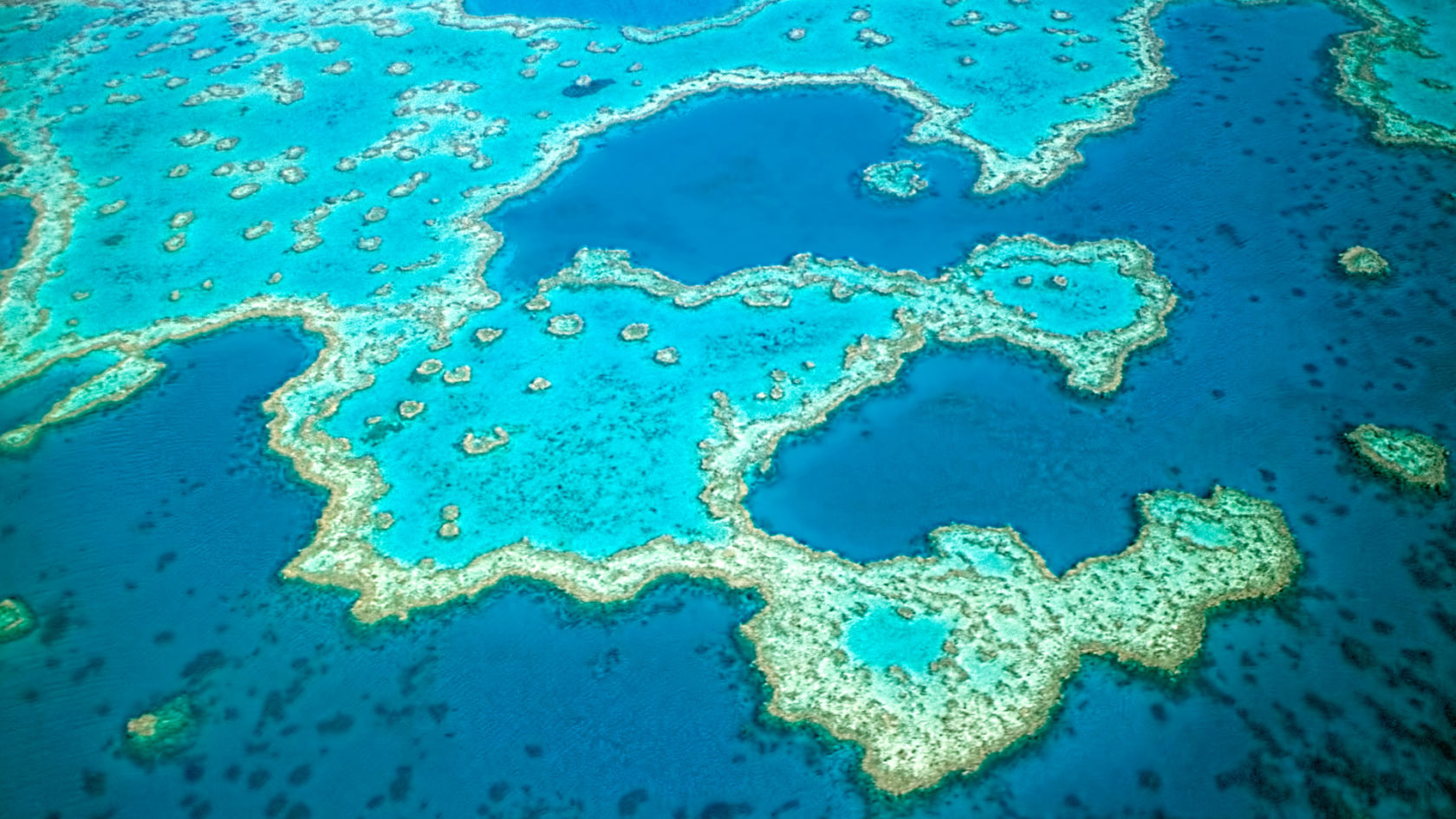
THE CORAL RESISTANCE: The Great Barrier Reef has survived five near- extinctions
The Great Barrier Reef, the world’s largest coral reef system, found on the north-east coast of Australia, has survive five high-mortality episodes during the last 30,000 years, thanks to vertical migration. Reefs migrated seaward as sea level fell to its lowest level during the most recent glaciation, 20.000 years ago approx, according to a study recently published in the journal Nature Geoscience.
The study has shown that the Great Barrier Reef is more resistant than expected to relevant environmental changes, such as sea-level fluctuations and water temperature, but it is extremely susceptible to increased sediment input and poor water quality. Researchers highlight how this ecosystem has overcome the last glaciation and deglaciation, but they wonder if the capacity of the Great Barrier Reef will be enough to withstand the current decline of the reefs worldwide.
Researchers, using geological data, believe the Great Barrier Reef was able to adapt to the new conditions thanks to the continuity of reef habitats and its ability to move laterally between approximately 20 cm and 150 cm per year. Despite its resilience, researchers thinks the reef will not be able to survive actual threats, as future sea-temperature, decline in coral coverage, bleaching events, decreases in water quality and an increase in sediment fluctuation.



 ifesbob