There’s a theory that early Europeans started saying “brown one” or “honey-eater” instead of “bear” to avoid summoning them, and similarly my friend has started calling Alexa “the faceless woman” because saying her true name awakens her from her slumber
English has an avoidance register used in the presence of certain respected animals, which sounds fancy until you realize it’s spelling out w-a-l-k and t-r-e-a-t in front of the dog.
Icelandic folklore requires you avoid saying the names of evil whales, otherwise you’ll draw their attention.
Yall have evil whales?
Iceland does! They are the illhveli, literally “evil whales”, and they live to kill you. They love nothing more than killing and eating humans and sinking their ships. Their greatest enemy is the steypireydur (that’s blue whale to you), which is the greatest of the good whales and the protector of sailors.
All evil whales are, well, evil. So evil that if you speak their name at sea, they will hear it and home in on you. So instead you use all sorts of euphemisms for their names. Also if you try to cook their meat it literally disappears from the pot. That’s right, they’re so evil, you can’t even eat them.
They include such types as the hrosshvalur (horsewhale), with big eyes and a red mane and tail. This is probably the best known and most feared of the lot.
The raudkembingur (redcomb) is especially cruel and bloodthirsty even by illhveli standards. If you manage to escape it, it will die of frustration.
Good luck escaping the mushveli (mousewhale) though, it has legs! And will clamber onto the beach in pursuit!
Or what about death from above? The stökkull (jumper) leaps high into the air and pile-drives boats to pieces.
Meanwhile the skeljungur (shellwhale) sits in the path of boats and lets them get wrecked on its shelly hide…
… while the sverdhvalur (swordwhale) slices through boats with its dorsal fin.
The katthveli (catwhale) is relatively harmless though. It meows.
The same can’t be said of the lyngbakur (heatherback), a classic island fish that lets sailors get on its back and then dives, taking them to a watery grave.
The nauthveli (oxwhale) on the other hand specially targets cattle, attracting them into the sea with its bellow before tearing them apart.
How can you avoid all these murderous whales, like the taumafiskur (bridlefish) here? Any of a number of ways, including getting a steypireydur to help. There are substances, ranging from angelica to sheep dung and chopped fox testicles, that they find abhorrent. And you can distract them with loud noises and barrels.
For more, I assure you this link will answer all your questions.
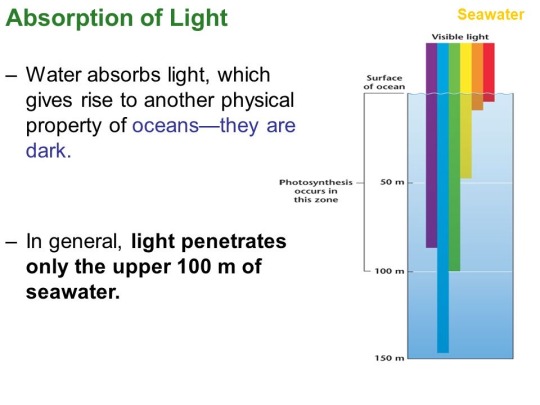
sometimes I think about how red is the first color in the visible light spectrum to be absorbed in ocean water
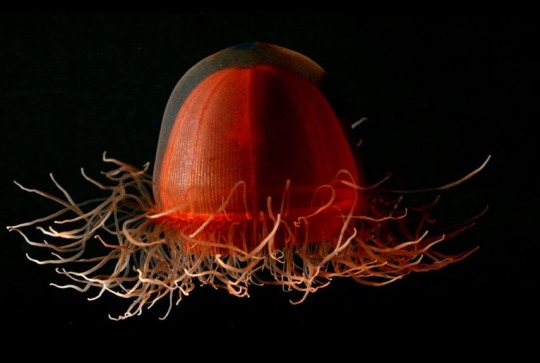
and how many deep-sea creatures evolved to be red as a stealth adaptation, making them near invisible when there’s little to no light present
and it makes me think. If there’s never any visible light present in these animals’ lifetimes, if no ROV shines a little flashlight in depths that would otherwise not have light, would these animals ever get the opportunity to actually be red? that might be a stupid question.
imagine being a little deep sea creature and having no idea you’re red until something comes along and shines a light on you except you still wouldn’t be able to tell because you’re probably colorblind. anyway. I don’t know where I was going with this post
Is color relative? Or inherent? Or both???
Like is color physiological and determined by the shape of whatever pigment cells that will always absorb certain wavelengths and reflect others?
or is color meaningless if there’s no light to absorb and reflect?
Is it completely relative because the way we percieve color is subjective, how even within our own species there are so many different kinds of ways people can observe color?
makes you think
Red light doesn’t make it to the deep ocean from the sun, but that doesn’t mean red light doesn’t exist at that depth!
The stomiidae, which include the viperfish, dragonfish, and loosejaws, are one example of a deep sea animal that evolved to perceive and produce red light because it isn’t naturally present in their environment and most other organisms never hit on that adaptation. In most of this group, tiny red lights can be switched on and off throughout their skin to communicate with their own kind in secret.
More threateningly, some of them have high-powered “floodlights” of pure red just beneath their eyes; almost no other deep sea fish emit actual BEAMS of light to illuminate what they’re looking at because that’d make them a shining beacon to every larger predator in the area, but since it’s red, the only risk ends up coming from their fellow red-light hunters and those remain just uncommon enough to be worth the chance.
In many members of this group, most of all the loosejaws (hence the name), almost the entire skull can naturally detach from the rest of the body on specialized stalks at lightning speed so that their long, hooked jaws can grab prey in an instant, almost the same exact motion as the arm of a preying mantis:
If you were a little fish in this scenario you would see absolutely nothing but darkness around you and possibly feel pretty safe, because maybe you’ve evolved to blend in perfectly with the surrounding void and you can’t see any blue or yellow or green lights coming to get you. You have no idea that there’s been a spotlight right on you all along until its owner’s face flies off to impale you and shove you whole into its giant throat all in less than half of a second 🙂
In fifth grade a boy tried to impress me by swallowing a whole tadpole live and I punched him so hard that he puked and the tadpole was fine.
I kept it in a terrarium and it became a normal 🐸 despite everything. About a year afterward (I thought) it died, so I sadly put it in a shoebox in the shed until the ground thawed enough for a proper funeral but when that day came I opened the box and the frog was fine.
Earth is still enjoying an interglacial period of an ice age
…so we’re gonna get HOTTER?
No wait. We’re gonna get colder?
No, we’re almost certainly going to get hotter, we’re only technically interglacial now because we still have large ice caps… but rather than another glacial period, we’re heading towards a greenhouse period.
…has there ever been a greenhouse period on earth….like you got me going down a google spiral of historical temperature graphs….
Oh, yes! The most recent one ended about 33 million years ago. The “Eocene Thermal Maximum” was the hottest portion of that period, and during that time, horses were fucking tiny:
Clearly we need to breed larger horses to prevent earth from warming further.
you’ve done it, you’vs solved the climate crisis
actually Equus gigantus was a species of enormous horse that lived in North America towards the end of the Pleistocene, alongside woolly mammoths and camels and smilodon
it went extinct at the end of the last glacial period along with most of North America’s other megafauna, but it was fucking huge
both horse and camels originally evolved in North America… all native species went extinct and are now known only from relatives that spread to other continents
Don’t we still have horses that big?
You just skipped over the most important bit, the most terrifying bit.
…..“Mega fauna”
Just means animals over about 90-100lbs—roughly the size of a human or bigger. Towards the end of the last glacial period, a large portion of Earth’s megafauna died out. In North America, that included mastodons, woolly mammoths, smilodons, horses, camels, giant sloths, giant beavers, short-faced bears, stag-moose, dire wolves, cave lions, and cheetahs.
Obviously not all mammalian megafauna died off in that window of time—in NA, we still (technically) have bison, bears, wolves, deer, elk, puma, and others.
Camels are from North America??? Never would have expected that.
Yep! The ancestors of both modern camels and South American llamas/alpacas/vicuñas/guanacos evolved here. Some lived as far north as the Yukon and Ellesmere Island and Beringa:
Can we talk about Australia’s apparent invasive camel population???
Camels were brought to Australia in the 1800’s because they were well-suited to the hot climate of the outback, but largely abandoned in favor of cars. They flourished in the wild with no large predators and there are now hundreds of thousands of feral camels roaming wild throughout Australia. They cause so many problems that they are culled by the thousands.
The USA also had some feral camels in the late 1800’s. They were imported by the Army in the 1850’s or so, and after the Civil War there were some small feral populations roaming around—there’s even a wild legend about the Red Ghost, which claims that a feral red-furred camel wandered the desert of Arizona in the 1880’s attacking and killing people, with the dessicated corpse of its rider still strapped to its back.









 ifesbob
