A lot of reducing your stress and your kid’s stress when parenting just involves asking yourself why you want them to do a thing. Neurotypical or not, but especially neurodivergent kids. Is there actually a point to it or do you just want it done because ‘that’s the way it is’ or you’re worried other parents will look at you weird?
Socks drive her crazy when they’re not inside out? Why do they need to be right side out? Why is that worth making a kid uncomfortable all day and starting a recurring argument over?
Your kid needs to eat at the table standing because otherwise he’ll fall out of the chair constantly wiggling and hanging out of it? Ok. Move the chair and let him stand and don’t let your mom give him a hard time about it. He’s eating food and at the table. You’re already winning .
Kid has sensory meltdown in public? Yelling and rushing them because you’re embarrassed will only make things so much worse and add you as part of the problem. Leave the store, sit down in the pasta aisle and hug them, pull up cooking videos on your phone, just do what you need to do like taking care of another panicking distressed human is more important than a few old ladies giving you stink eye.
The more we loosen unnecessary rules our parents gave us the less stress we put on ourselves and our kids. The more room we make for people to be open about their emotions. The more we set a better example to people around us and show them that allowances don’t have to be hard and kids and adults alike deserve some breathing room.
“Talking to your kids about their disability is much better than letting them find out about it from googling what they overhear.”
One reason why some parents think it is “helpful” to hide information about a child’s disability from them is because they don’t want to “label” the child. They think “labeling” the child with a disability diagnosis is automatically harmful.
BUT. If you don’t share with the child accurate information about their diagnostic label and what it actually means? And if no one around them knows about their disability diagnosis? THEY WILL STILL BE LABELED. Except, instead of being described with a clear, honest, non-stigmatizing, accurate explanation of the diagnosis and what it really means or doesn’t mean, others will slap them with labels like these:
lazy
crazy
not trying hard enough
r*tarded
doesn’t want to do the work
weird
freak
And eventually the child may learn to believe these labels.
Because, whether they know about their diagnosis or not, the child still has a disability. The disability still creates certain specific challenges in things that seem easy for everyone else. Without accurate information about what’s really going on with them, they will come up with other explanations for these difficulties. And often the other explanations they come up with will be a lot worse than just learning the truth in a calm, factual way.
Acknowledge their real challenges. And acknowledge that they may have many strengths not affected by the disability. Also acknowledge that many people with the same disability find creative ways to compensate for it, adapt to it, work around it, etc. They may learn many helpful strategies from peers who share the same disability as them (both people the same age, and also older adult role models). And they might also come up with ideas of their own. Some of these strategies might already be routine for them. Other strategies can be added as time goes on and will quickly become routine also.
And acknowledge that they may have many strengths *because* of the disability
And acknowledge that they may have many strengths *because* of the disability
its really weird to see all these articles about how people who have ADHD have sleeping problems but the issue I have is that if you look at it as a matter of your circadian rythym being out of sync? of COURSE you’re not going to be able to sleep. we don’t say people who can’t fall asleep at 4 pm and sleep 8 hours have insomnia, because that’s not a normally agreed upon time to sleep and its not your bodies time to sleep. if you tell someone to go to bed at 10 and they can’t sleep till 3 am sometimes in just not insomnia. people with ADHD are often wired to sleep from 4 am to 12 pm ish because of the delayed onset of melatonin but if you let us go to bed at the time we need? most of us actually sleep pretty well and consistently.
wAIT THIS IS AN ACTUAL THING THAT EXISTS
“For most adults the onset of melatonin is around 9.30 pm; in ADHD children compared to controls this occurs at least 45 minutes later, and in adults with ADHD even 90 minutes (van der Heijden ea, 2005; van Veen ea 2010). After melatonin onset, it normally takes 2 hours to fall asleep, but in adults with ADHD it takes at least 3 hours (Bijlenga et al, 2013).”
Look at me awake at 1:47 am and reblogging this post.
So I’m actually trained in therapy for addressing insomnia and one of the things we learned is that a good chunk of sleep problems are societal disorders – as in they WOULDN’T EXIST as problems if society didn’t assume everyone was on the same circadian rhythm and that being up and working 9-5 was mandatory/normal. Blew my mind and made so much sense. You are not the problem, society is literally the problem.
So my therapist has been helping me get to grips with my ADHD, and also the concept that I’m not shit at being an adult, I just can’t do things the way everyone has always told me to do them. Like every single “organize your life” books have always left me wanting to cry with frustration, and after I got hold of a copy of Organizing Solutions for People with ADHD
by Susan Pinsky I realized that was because they primarily focus on “aesthetic” over “function”. And the function of most standard “organize your life books” is to “make things look Show Home Perfect”.
So the standard “hide all your unsightly things by doing xyz” may look nice for the first week or so, but by the end of the week it’ll look like a tornado made of pure inhuman frustration ripped through the house as I try to find the fucking advil.
To give you an example of the kind of hell I’ve been fumbling my way through the last 20 odd years: dishes will be washed and left in the drying wrack but never put away. Which means I can’t wash more dishes, which means dishes pile up, which means I can’t make food, which means I don’t eat, which means my CFS gets worse, which means I don’t have the energy to put the dishes away, and so on so forth until I have a meltdown, cry to ETD (who also likely has ADHD but has never had it confirmed) about how I can’t cope with life, and then we fix it for a while, but inevitably end up back at square one within about a week.
Pinsky’s solution to this was “remove an obstacle between you and your goal, if that means taking all the doors off your kitchen cabinets to make things easier, so be it.”
And lemme tell you, fucking revolutionary.
Laundry never ends up in the hamper??? why???? is it a closed hamper??? Remove the lid. Throw it out the window. Clothes are now miraculously finding their way into the hamper??? Rejoice????
Mail ends up spread out over every available flat surface? Put a sorting station right where your mail arrives. Put a shredder or “junk” basket under it. Shred or dump the junk immediately. Realize you only actually have two real letters that need attention, feel less overwhelmed, pay your bills on time.
Like I’m not saying this book is miraculous, but it did help me realize that I was effectively torturing myself by trying to conform to certain ideals of “perfect house keeping”, and presenting a certain image rather than just allowing myself to live in my space as effectively as possible. And why? Why was I doing that? Cause people with different lives and capabilities are perceived as the norm? Fuck that. If this was a physical problem I wouldn’t be forcing myself to conform to an ableist standard, so why am I doing it with this?
My lived space will never look a certain way, and that’s okay. It will never look show home perfect, and that’s okay. It will likely always be cluttered and eclectic where nothing matches, and that’s okay. Sometimes I will have odd socks on because sorting them out required too much mental energy, and that’s okay. Actually fuck sorting socks, just buy all your socks in the same color. Problem solved. Boring sure, but also one less thing to do, which means more time to hyper fixate on fun things. Which really, what else is my life for if not to write screeds and screeds of vampire shit posts, I ask you.
How do you balance this with your partners compulsive need for everything to be exactly so?
No matter how much either of us does we’re both still so frustrated…
I also have compulsive tendencies, so I can somewhat relate to this. And the answer probably lies in getting them to address their unhealthy perfectionism and why they feel the need to be in control and have everything be “exactly so” all the time.
Unhealthy perfectionism, while not exclusive to this, can also go hand in hand with ADHD because we’re always having to struggle so much more to get things Right to appease others, so it can become an unhealthy coping mechanism to shield us from criticism which can feel especially bad if you are a person with ADHD who also has rejection dysphoria disorder. Which I do. And a neat freak of a mother who used to scream if you didn’t do something “exactly so”. Perfectionism was my only way to protect myself for a long, long time, and it has destroyed a lot of my self worth and my ability to just live my life and get shit done. And it made me hugely angry at others for not doing things “exactly so” cause I couldn’t understand why they just didn’t care enough to do something “right”. Now I know.
Therapy has helped a lot. And a good book for me has been “Better Than Perfect” by Dr Elizabeth Lombardo. The test near the front of the book really hammered home just how incapacitated I was by my need to have things be “perfect” as a coping mechanism for other stressors.
Also cause people were asking, here’s the ADHD organization book:
When I first got officially diagnosed last month…month before…I went out and read a million and one self help books, and this by far was the most helpful for actually getting me to unfuck my living habitat and thus get into a better mental head space. Most of them just talked a big game about uncluttering your life and going minimalist, and while Pinsky also talks about culling your possessions to get them down to a manageable level, she is by no means promoting an aesthetic lifestyle. One of her opening chapters is, to paraphrase it “sure this looks ugly, but if it helps you to shower without obstacles, who cares”.
lowkey pissed that so many parents are against getting their kid an ADHD diagnosis cuz they’re scared of ADHD meds, and by lowkey I mean highkey because
1) you don’t have to take meds if you get diagnosed with ADHD
2) meds work for a lot of people with ADHD and make them feel internally calmer/more in control of themselves
3) you want your child to be as healthy as they can be, so why would you ignore your child’s mental heath just because you’re scared of it?
Also, the “I don’t want him to be labelled!” crowd.
He will be labelled. He’ll be labelled as stupid, lazy, crazy, childish, immature, sensitive, and weird. By his peers, his teachers, his bosses, and by himself.
Or, you could give him a framework for better understanding himself. A neutral label.
Don’t dismiss it just because you’re scared! Ignoring their mental health will do nothing good
At least if they’re labeled with the name of a disability, they’ll know why they struggle, which could allow them to figure out a solution. If they’re labeled as stupid, lazy, or weird, they won’t know why, so they won’t be able to fix it.
One of my kids is in the process of being diagnosed with ADHD. I don’t know if we’ll use meds, I don’t know if they’ll make him happier. But I do know it fucking SUCKS that at the age of 10, he’s worrying that it would be wrong for him to medicate.
I’m working on convincing him that the decision behind whether or not to medicate should be based entirely on whether or not it helps him (and that just because he tries meds doesn’t mean he’s signed a contract to take them forever) but I am so fucking angry that my tiny child worries about that.
This is a very wonderful question and a very important one – in fact, it is one of my favorite questions and one that I have considered for graduate level research if I ever get healthy enough to make it that far in school.
From the searches I have done so far, I cannot find any studies about RSD and autism. I suspect that this is because it was first named as a thing for ADHD, and because of that it is based off of some very specific needs of ADHD.
That said, my own hypothesis is that there is in fact something similar in autism among those who are expected to “function normally” and that, like in ADHD, it is compounded in those who can sometimes meet those expectations but not all the time.
I won’t go so far as to say that autistics without ADHD have RSD, but as a person with both I personally don’t mind if those with autism use the term. I just see too many similarities.
So maybe the exact cause is slightly different. Maybe it needs to be called something different. Maybe I’m just seeing things I want to see. But my suggestion to the autistic community is that if you identify with rejection sensitive dysphoria than by all means, use the term.
To blunt about it, I suspect that the presence of an RSD-like set of traits may play a role in why many autistics get misdiagnosed, especially if they have missed the typical diagnosis window for autism.
Acessiblity is about more than letting students have extended test time or note-taking assistance. If your class is constructed so that turning in late assignments is either difficult or fucking impossible (because either the curriculum or online program you use doesn’t allow it or becuaee you just don’t wanna do it) its not accessible. Mandatory attendance is not accessible. Charging more for online classes is not accessible. Not offering alternative assignments is not accessible. Confusing syllabus and assignment layouts/instructions/etc. is not accessible. If you cant work with a disabled student to give them a class experience as good and sucessful as everyone else’s, if a disabled student is working just as hard as everyone else and still can’t succeed in your class, your class is Not. Fucking. Accessible.
Yes! I know I do. Even decisions that may appear simple to neurotypicals, like clothing choices or shows to watch.
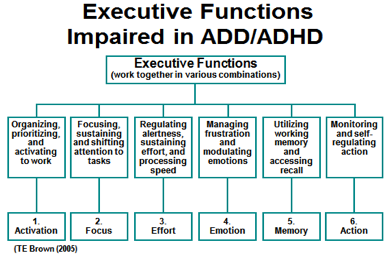
Decision making is an executive function, and involves a lot of steps! Knowing what options you are deciding between, predicting how each decision may pan out, assessing what each decision requires to complete…
Autism, ADHD, traumatic brain injuries, mental illnesses, etc. can all influence your executive functioning. And those executive functioning skills are mainly controlled in the frontal lobe of the brain, which isn’t fully developed until roughly 25 years of age. Which isn’t to suggest that once someone becomes 25 years old their executive functioning difficulties disappear, just that all younger people may face struggles here and those with certain disorders/neurotypes may face particular difficulty both prior to full frontal lobe development and beyond.
Followers?
YES! This is an autism thing? Because I find it so hard and I just figured I was a very indecisive person

 ifesbob