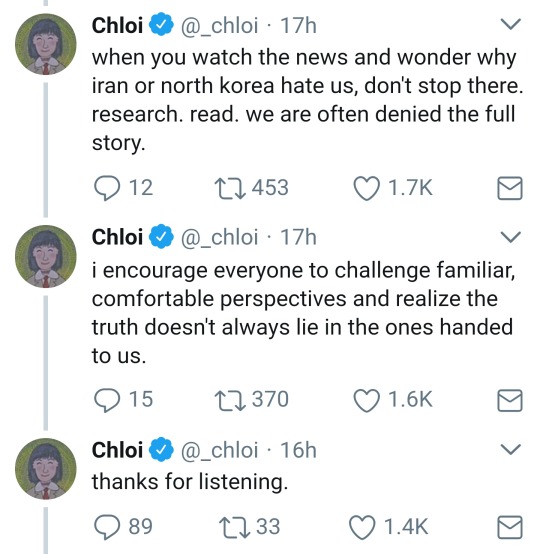
There was a great deal of discussion about this, in academia and even in parts of the mainstream media immediately following 9/11. It was sort of a guilty secret kind of discussion because nobody wanted to appear unsympathetic to the victims of terrorism, but it was there. Then it got shut down by the whole Pearl Harbor cultivated patriotism effect that was getting everyone to accept the Iraq and Afghan wars (which are still going on), where you aren’t allowed to say anything negative about the United States or its past or how that past contributes to its current problems, and by the destruction of decent corporate journalism that occurred in 2002-2003.
It sounds dumb to say that people know these things but won’t talk about them, but the people with enough education and experience to know are part of professional frameworks, and those frameworks and career paths are heavily ideologically and financially gated, and so people with knowledge don’t speak up or talk about things like this because people who do that don’t stick around or advance. And the people who know but are outside of “respectable” career positions, civilian or government, aren’t relevant and nobody listens to them because there’s nothing to gain and everything to lose by doing so. That’s how it has worked in the United States since World War II. That’s why no one learns, and why government has turned into a patriotism purity feedback loop of destruction.
I learned about a lot of this stuff (US destabilizing the middle east) in school last year but I understand most people aren’t which I find abhorrent. If you’re going to teach US history, actually teach US history. It’s really nothing to be proud of.



 ifesbob